
What is the difference between open flat and original s355mc auto steel material equivalent
A comprehensive technical guide comparing S355MC open flat and original plates, detailing mechanical properties, equivalents, and automotive applications.
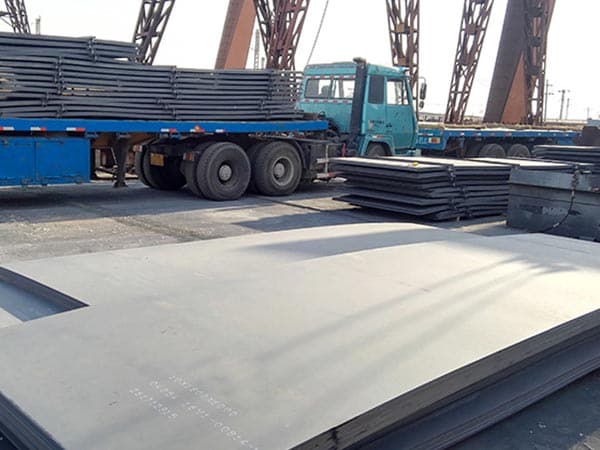
Understanding S355MC: The Thermomechanical Powerhouse
S355MC is a high-strength, low-alloy (HSLA) steel grade specifically engineered for cold forming in the automotive and structural sectors. Governed by the EN 10149-2 standard, the "MC" suffix denotes that the material is thermomechanically rolled (M) and is intended for cold forming (C). This steel is prized for its exceptional balance of high yield strength and superior ductility, making it a staple for chassis components, suspension systems, and structural frames. However, when sourcing this material, engineers and procurement specialists often face a critical choice: open flat (decoiled) material or original mill plate (quarto plate). While they may share the same grade designation, their manufacturing pedigree and physical characteristics diverge significantly.
The Manufacturing Divide: Open Flat vs. Original Plate
The primary difference lies in the production route. Open flat material, also known as decoiled plate, originates as a massive hot-rolled coil. This coil is produced on a continuous strip mill, where the steel is rolled to the desired thickness and then wound. To produce flat sheets, the coil is later processed through a decoiling and leveling line, where it is unrolled, flattened by rollers, and cut to specific lengths. This process is efficient and cost-effective for thinner gauges, typically ranging from 1.5mm to 20mm.
In contrast, original plate (or quarto plate) is produced on a reversing plate mill. Each plate is rolled individually from a slab. This method allows for much tighter control over the rolling reduction in both longitudinal and transverse directions. Quarto plates are generally available in much greater thicknesses than coils and do not undergo the stresses of being wound and unwound. This fundamental difference in the production cycle introduces variations in internal stress, surface quality, and dimensional precision.
Mechanical Integrity and Internal Stress Profiles
One of the most significant technical distinctions between open flat and original S355MC is the residual stress profile. During the decoiling process, the steel is subjected to plastic deformation as it is leveled. While modern leveling machines are highly sophisticated, they cannot entirely eliminate the "memory" of the coil. When these sheets are later processed—especially during laser cutting or heavy machining—the release of residual stresses can cause the material to bow or warp. Original plates, having never been coiled, exhibit much lower internal stress, ensuring superior stability during complex fabrication processes.
From a metallurgical perspective, S355MC relies on a fine-grained microstructure achieved through thermomechanical rolling. The continuous rolling process used for coils often results in a more uniform grain structure across the length of the strip, whereas quarto plates might show slight variations from the center to the edges of the plate. However, for automotive applications where consistency is paramount, both forms must meet the strict requirements of EN 10149-2.
| Property | S355MC (EN 10149-2) Requirements | Open Flat Characteristics | Original Plate Characteristics |
|---|---|---|---|
| Yield Strength (ReH MPa) | Min 355 | Highly consistent | Excellent across thickness |
| Tensile Strength (Rm MPa) | 430 - 550 | Uniform in coil length | Uniform in plate area |
| Elongation (A5 %) | Min 19 (t < 3mm) | High ductility | High ductility |
| Residual Stress | N/A | Moderate (from leveling) | Low (stress-free) |
| Surface Finish | Pickled/Oiled or Black | Smooth, consistent | May have mill scale |
Global Equivalents: Navigating International Standards
Identifying the correct equivalent for S355MC is crucial for global supply chain management. While S355MC is a European designation, other regions have developed similar grades under different standards. It is important to note that "equivalent" does not always mean "identical." Differences in chemical composition limits and testing protocols must be evaluated.
- ASTM A572 Grade 50: A common North American structural steel. While it shares a similar yield strength, it lacks the specific micro-alloying and thermomechanical processing requirements of S355MC, making it less suitable for extreme cold forming.
- GB/T 1591 Q355MC: The Chinese equivalent, which closely mirrors the EN standard in terms of chemistry and mechanical properties, specifically designed for automotive use.
- JIS G3134 SPFH 540: A Japanese standard for hot-rolled high-strength steel sheets for automobile structural uses, offering comparable forming characteristics.
- SAE J1392 050 XLF: A specialized North American automotive grade that emphasizes extra-low carbon and fine-grain structure for improved weldability and formability.
Chemical Composition and Weldability
The performance of S355MC is rooted in its chemistry. To maintain high strength without sacrificing weldability, the carbon content is kept extremely low (typically below 0.12%). Strength is instead derived from micro-alloying elements such as Niobium (Nb), Titanium (Ti), and Vanadium (V). These elements promote grain refinement and precipitation hardening.
Because of this low Carbon Equivalent Value (CEV), S355MC—whether open flat or original plate—exhibits excellent weldability. It can be joined using standard MIG/MAG, TIG, or submerged arc welding without the need for preheating in most thicknesses. However, when welding open flat material, the heat input must be carefully controlled to prevent the localized release of residual stresses, which could lead to dimensional distortion of the welded assembly.
Application Dynamics in the Automotive Sector
The choice between open flat and original plate often depends on the specific automotive component being manufactured. For high-volume production of smaller parts like brackets, cross-members, and reinforced plates, open flat S355MC is the preferred choice. Its availability in long coils allows for continuous feeding into progressive stamping dies, maximizing efficiency and reducing scrap.
For heavy-duty applications such as truck chassis rails, crane booms, or large structural sections of specialized vehicles, original S355MC plate is often specified. These components require the superior flatness and predictable behavior during laser cutting that only quarto plates can provide. Furthermore, original plates are available in thicknesses exceeding 20mm, which is the typical limit for decoiled products.
Processing Optimization: Bending and Cutting
When working with S355MC, the minimum bending radius is a critical parameter. The EN 10149-2 standard specifies bending radii based on the thickness of the material. For S355MC, the minimum recommended inside bend radius is typically 0.5 times the thickness (0.5t) for transverse bending and 1.0t for longitudinal bending. Using open flat material requires extra attention to the rolling direction, as the mechanical properties can be slightly anisotropic due to the continuous rolling process.
In laser cutting operations, the "flatness memory" of open flat material can be a challenge. As the laser removes material, the internal stresses redistribute, potentially causing the part to tilt and strike the laser head. Original plates are far more stable in this regard, making them the "premium" choice for high-precision laser-cut components. However, advancements in leveling technology (such as tension leveling) have made high-quality open flats increasingly competitive even for precision applications.
Economic Considerations and Supply Chain Logistics
From a cost perspective, open flat S355MC is generally more economical. The continuous production of coils and the high-speed decoiling process result in lower per-ton processing costs. Additionally, coils offer better logistics for high-volume users, as they occupy less warehouse space per ton and allow for automated handling. Original plates carry a price premium due to the slower, more labor-intensive quarto mill process and the superior dimensional stability they offer. For many manufacturers, the decision hinges on whether the processing advantages of original plate justify the higher material cost.
Ultimately, S355MC remains one of the most versatile and reliable grades in the automotive engineer's toolkit. By understanding the nuances between open flat and original plate, and by correctly identifying global equivalents, manufacturers can optimize their production lines for both quality and cost-efficiency. Whether it is a decoiled sheet for a stamped bracket or a quarto plate for a heavy-duty chassis, S355MC provides the structural integrity required for the demanding environments of modern transportation.
Leave a message