
automotive industry used steel S355MC chemical and mechanical property
Deep dive into S355MC steel properties, chemical composition, and mechanical performance for the automotive industry, focusing on lightweighting and weldability.
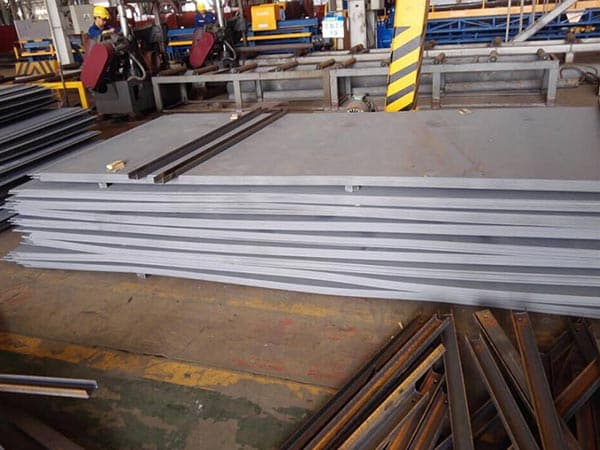
The Strategic Role of S355MC in Modern Automotive Architecture
As the global automotive industry shifts toward more efficient, lightweight, and crash-resistant vehicle designs, the selection of structural materials has become a critical engineering decision. S355MC steel, governed by the EN 10149-2 standard, stands as a cornerstone in this evolution. This thermomechanically rolled, high-yield-strength steel is specifically engineered for cold forming, offering a unique balance of high load-bearing capacity and excellent processability. Unlike traditional carbon steels, S355MC provides the necessary strength to reduce component thickness without compromising structural integrity, directly contributing to fuel efficiency and reduced carbon emissions.
Chemical Composition: The Foundation of Micro-Alloyed Performance
The superior performance of S355MC is not accidental; it is the result of precise metallurgical control. By utilizing micro-alloying techniques, manufacturers can achieve high strength without the brittleness often associated with high carbon content. The chemical architecture of S355MC focuses on maintaining a low carbon equivalent to ensure exceptional weldability while using elements like Niobium (Nb) and Titanium (Ti) for grain refinement.
| Element | Maximum Content (%) | Role in the Alloy |
|---|---|---|
| Carbon (C) | 0.12 | Maintains weldability and prevents hardness peaks. |
| Manganese (Mn) | 1.50 | Increases strength and improves hardenability. |
| Silicon (Si) | 0.50 | Acts as a deoxidizer and enhances yield strength. |
| Phosphorus (P) | 0.025 | Kept low to prevent cold shortness. |
| Sulfur (S) | 0.020 | Minimized to improve lamellar tearing resistance. |
| Aluminium (Al) | 0.015 (min) | Grain size control and deoxidation. |
| Nb/Ti/V | Trace amounts | Micro-alloying for precipitation hardening and grain refinement. |
The low carbon content (max 0.12%) is particularly vital for automotive manufacturers. It ensures that during high-speed automated welding processes, such as laser welding or MAG welding, the heat-affected zone (HAZ) does not become excessively brittle. The addition of Niobium and Vanadium facilitates the formation of fine-grained structures during the thermomechanical rolling process, which is the primary mechanism for achieving a minimum yield strength of 355 MPa.
Mechanical Properties: Balancing Yield and Ductility
For automotive structural components like chassis frames, cross members, and longitudinal beams, the material must withstand significant static and dynamic loads. S355MC is defined by its mechanical resilience. The "355" in its designation refers to the minimum yield strength of 355 N/mm², but its utility extends far beyond a single number.
| Property | Value (Thickness ≤ 3mm) | Value (Thickness > 3mm) |
|---|---|---|
| Yield Strength (ReH) | Min 355 MPa | Min 355 MPa |
| Tensile Strength (Rm) | 430 - 550 MPa | 430 - 550 MPa |
| Elongation (A80mm) | Min 19% | Min 23% (A5) |
| Bending Radius (180°) | 0.5t | 0.5t to 1.0t |
The high elongation values (typically 19% to 23%) indicate that S355MC possesses significant ductility. In the event of a vehicle collision, this ductility allows the steel to absorb energy through plastic deformation rather than catastrophic fracturing. This energy absorption capacity is a fundamental requirement for modern crash safety standards. Furthermore, the tight range of tensile strength (430-550 MPa) allows for predictable spring-back during stamping and bending operations, which is essential for maintaining dimensional tolerances in mass production.
Cold Forming and Process Performance
One of the primary reasons S355MC is favored over standard S355J2 is its superior cold-forming capability. The "C" in S355MC stands for Cold forming. Automotive parts often feature complex geometries with tight radii. S355MC can be bent, flanged, and deep-drawn without surface cracking, provided the minimum bending radii are respected.
- Excellent Surface Quality: The thermomechanical rolling process results in a fine, consistent surface scale that is easily removed via pickling (S355MC+P), providing an ideal substrate for E-coating or galvanizing.
- Laser Cutting Precision: Due to its low internal stress and consistent chemical homogeneity, S355MC exhibits minimal distortion during laser cutting, allowing for the production of intricate brackets and supports with high edge quality.
- Weldability: As a low-carbon, micro-alloyed steel, it does not require pre-heating or post-weld heat treatment in typical automotive thicknesses. This facilitates high-throughput robotic welding lines.
Environmental Adaptability and Fatigue Resistance
Automotive components are subjected to harsh environmental conditions, including road salt, moisture, and extreme temperature fluctuations. While S355MC is not inherently corrosion-resistant like stainless steel, its clean internal structure (low sulfur and phosphorus) makes it highly receptive to modern anti-corrosion treatments. When paired with hot-dip galvanizing or advanced zinc-nickel plating, S355MC components can exceed 15-year service life requirements in corrosive environments.
Fatigue resistance is another critical attribute. Chassis components undergo millions of stress cycles during a vehicle's lifespan. The fine-grained microstructure of S355MC inhibits the initiation and propagation of fatigue cracks. This allows engineers to design thinner, lighter parts that still meet the rigorous durability cycles required by heavy-duty truck and passenger car manufacturers.
Extending Beyond Passenger Vehicles
While S355MC is a staple in passenger car subframes, its application extends into the broader transportation and heavy machinery sectors. In the production of commercial trailers and heavy-duty trucks, S355MC is used for side rails and cross-members where weight reduction is directly tied to increased payload capacity. The agricultural industry also utilizes this grade for high-stress components in harvesters and tractors, where the material must withstand both high torque and abrasive environments.
The versatility of S355MC also finds a home in the construction of specialized lifting equipment and telescopic booms. The ability to maintain strength while being formed into U-profiles or C-channels makes it an economical alternative to more expensive high-strength quenched and tempered steels when the extreme strength of S700MC is not required.
Strategic Selection: Why S355MC Wins
Choosing S355MC over lower-grade steels like S235 or DC01 allows for a weight reduction of approximately 20-30% in structural applications. This "down-gauging" is the most cost-effective method for automotive OEMs to meet stringent emission targets. By understanding the interplay between its thermomechanical processing, micro-alloyed chemistry, and mechanical toughness, engineers can optimize designs for both performance and manufacturability. S355MC remains a premier choice for those seeking a reliable, high-performance material that bridges the gap between commodity carbon steels and ultra-high-strength specialized alloys.
Leave a message