
How to choose the s355 hot rolled automotive steel grade thickness
Expert guide on selecting the optimal thickness for S355 hot rolled automotive steel, analyzing mechanical properties, forming processes, and weight reduction strategies for vehicle engineering.
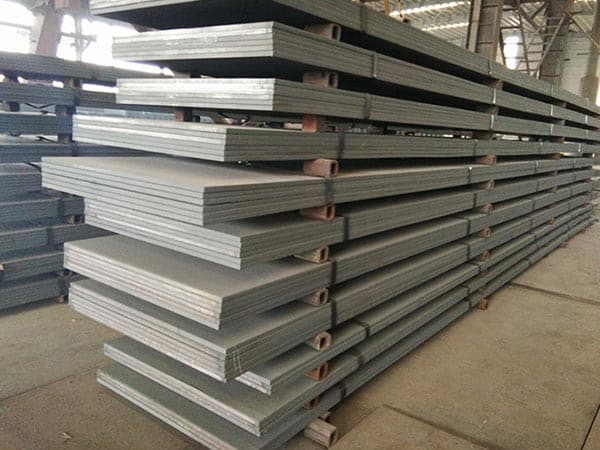
Understanding the S355 Grade Spectrum in Automotive Engineering
Selecting the correct thickness for S355 hot rolled automotive steel requires a deep understanding of the material's metallurgical profile and its behavior under dynamic loads. Unlike standard structural steels, the S355 variants used in the automotive sector, specifically S355MC (thermomechanically rolled), are engineered for high yield strength and exceptional cold forming properties. When engineers evaluate thickness, they are not merely looking at a dimensional value; they are balancing the weight of the vehicle against the safety and longevity of the chassis or structural components.
The S355 grade is categorized as a High Strength Low Alloy (HSLA) steel. Its popularity in the automotive industry stems from its ability to provide a minimum yield strength of 355 MPa while maintaining a fine-grained microstructure. This microstructure is critical when determining thickness because it influences how the material distributes stress. A thinner sheet of S355MC can often replace a thicker sheet of traditional S235 or S275 steel, facilitating the industry's drive toward lightweighting without compromising structural integrity.
Mechanical Properties and Their Influence on Thickness Selection
The primary driver for thickness selection is the load-bearing requirement of the specific automotive part. For components like truck chassis frames, crane arms, or cross members, the thickness must be calculated based on the maximum expected stress levels, including a safety factor. S355 steel offers a robust profile of mechanical properties that allow for tighter tolerances in design.
| Property | S355MC (ISO/EN Standard) | Impact on Thickness Choice |
|---|---|---|
| Yield Strength (ReH) | min 355 MPa | Allows for gauge reduction compared to lower grades. |
| Tensile Strength (Rm) | 430 - 550 MPa | Determines the ultimate failure point under extreme tension. |
| Elongation (A5) | min 19% (for t < 3mm) | Ensures the material can be formed without cracking at lower thicknesses. |
| Impact Strength | 27J at -20°C (J2 grade) | Critical for thickness selection in cold-climate vehicle operation. |
When choosing thickness, one must account for the yield strength reduction that can occur as the plate thickness increases in certain S355 sub-grades. However, for S355MC, which is typically available in thicknesses ranging from 1.5mm to 20mm, the yield strength remains remarkably consistent due to the thermomechanical rolling process. This consistency allows designers to use thinner sections with higher confidence.
The Physics of Weight Reduction and Gauge Optimization
In modern automotive design, the "lightweighting" trend is paramount. Reducing the thickness of a steel component directly translates to improved fuel efficiency and increased payload capacity for commercial vehicles. S355 hot rolled steel provides the perfect entry point for this optimization. By utilizing the high strength-to-weight ratio of S355, engineers can often reduce the gauge by 15% to 25% compared to mild steel alternatives.
However, reducing thickness increases the risk of buckling and vibration. When selecting a thinner S355 grade, it is essential to utilize geometric stiffening techniques, such as adding ribs or swages, to maintain the component's stiffness. The choice of thickness is therefore a multi-variable equation involving the material's modulus of elasticity and the geometric moment of inertia of the final part.
Processing Performance: Bending and Welding Considerations
The thickness of S355 hot rolled steel significantly impacts its manufacturability. S355MC is specifically designed for cold forming. As thickness increases, the minimum internal bending radius also increases. For instance, a 3mm S355MC sheet might require a 0.5t bending radius, whereas a 10mm plate might require a 1.5t radius to prevent surface cracking.
- Springback Control: Thinner S355 sections exhibit more springback after bending than thicker sections. This must be compensated for in the tool design.
- Weldability: S355 has a low carbon equivalent (CEV), making it highly weldable. However, thicker plates (above 12mm) may require preheating or specific cooling rate controls to avoid hydrogen-induced cracking in the heat-affected zone (HAZ).
- Surface Quality: Hot rolled S355 often comes with a scale layer. For automotive applications requiring high-quality finishes or precise welding, pickled and oiled (P&O) surfaces are preferred, especially in thinner gauges where surface imperfections are more critical.
Environmental Adaptation and Fatigue Resistance
Automotive components are subjected to harsh environments, including corrosive road salts and constant cyclic loading. The thickness of the S355 steel must include a corrosion allowance if the part is not adequately coated. While S355 has decent atmospheric corrosion resistance, it is not stainless. In structural chassis components, an extra 0.5mm to 1.0mm of thickness is sometimes added as a safety buffer against long-term oxidation.
Fatigue life is another critical factor. Most automotive failures are due to fatigue rather than static overload. Thicker sections of S355 provide a larger cross-sectional area to dissipate cyclic stresses, but they also introduce more potential for internal micro-defects. The fine-grain structure of S355MC helps in resisting crack initiation, allowing for thinner designs that still meet the 1-million-cycle fatigue requirements common in the heavy truck industry.
Industry-Specific Thickness Benchmarks
Different sectors within the automotive industry have established standard thickness ranges for S355 steel based on historical performance and safety data. For passenger car structural reinforcements, thicknesses usually range from 2.0mm to 4.0mm. In contrast, the heavy-duty trailer industry utilizes S355 in thicknesses of 6.0mm to 12.0mm for main longitudinal beams.
When specifying thickness for a new project, it is advisable to consult with the steel mill to understand the rolling tolerances. A nominal thickness of 5mm might actually range from 4.8mm to 5.2mm depending on the standard (like EN 10051). For precision automotive assemblies, specifying restricted thickness tolerances can prevent assembly issues and ensure consistent crash-test performance.
Strategic Selection Criteria
To choose the right S355 thickness, start by performing a Finite Element Analysis (FEA) to identify high-stress zones. If the stress exceeds 70% of the yield strength (approx. 250 MPa for S355), consider increasing the thickness or upgrading to a higher grade like S420MC or S500MC. Conversely, if the stress levels are low, thinning the material can yield significant cost savings and environmental benefits.
The synergy between material grade and thickness is the key to high-performance automotive engineering. S355 hot rolled steel remains a versatile and cost-effective choice, providing the reliability needed for the most demanding vehicle applications while offering the flexibility to push the boundaries of modern design.
Leave a message