
s500mc en 10149-2 freight rose
A comprehensive technical analysis of S500MC EN 10149-2 steel, focusing on its mechanical properties, processing advantages, and critical role in the modernization of high-load freight and logistics infrastructure.
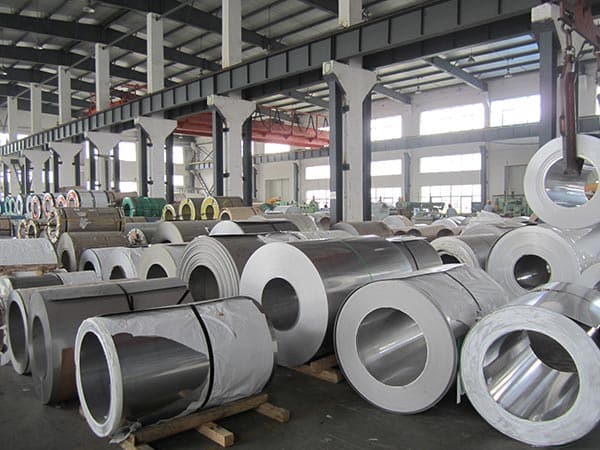
Understanding S500MC: The High-Strength Standard of EN 10149-2
S500MC represents a pinnacle of metallurgical engineering within the EN 10149-2 specification. This standard defines the requirements for hot-rolled flat products made of high yield strength steels specifically designed for cold forming. The "S" prefix denotes structural steel, while "500" indicates a minimum yield strength of 500 MPa. The "MC" suffix is critical; "M" signifies thermomechanically rolled delivery conditions, and "C" highlights its suitability for cold-forming processes. For the freight industry, this material is not just a commodity but a strategic asset that enables the construction of lighter, stronger, and more efficient transport units.
The evolution of S500MC steel has been driven by the dual demand for weight reduction and increased load-bearing capacity. By utilizing thermomechanical rolling, manufacturers can achieve a fine-grained microstructure that traditional normalizing processes cannot replicate. This microstructure is the foundation of the steel's superior strength-to-weight ratio, making it an ideal candidate for the "Freight Rose"—a metaphorical concept representing the blossoming of efficient, durable, and sustainable logistics solutions.
Chemical Composition: The Foundation of Performance
The exceptional properties of S500MC are rooted in its precise chemical makeup. Unlike conventional carbon steels, S500MC employs micro-alloying techniques to enhance its physical characteristics without compromising weldability or formability. The inclusion of elements such as Niobium (Nb), Vanadium (V), and Titanium (Ti) plays a pivotal role in grain refinement and precipitation hardening.
| Element | Max % (S500MC) | Function in Metallurgy |
|---|---|---|
| Carbon (C) | 0.12 | Ensures strength while maintaining excellent weldability. |
| Manganese (Mn) | 1.60 | Increases hardness and tensile strength. |
| Silicon (Si) | 0.50 | Acts as a deoxidizer and strengthens the ferrite. |
| Phosphorus (P) | 0.025 | Controlled to prevent brittleness. |
| Sulfur (S) | 0.015 | Kept low to improve ductility and surface quality. |
| Aluminium (Al) | 0.015 (min) | Refines grain size and fixes nitrogen. |
| Nb + V + Ti | 0.22 | Micro-alloying for grain refinement and strength. |
The low carbon content is particularly significant for the freight sector. It ensures that the steel remains highly weldable, even in demanding assembly line environments. The controlled sulfur and phosphorus levels contribute to the steel's isotropic properties, meaning it performs consistently regardless of the direction of the load or the orientation of the bend during fabrication.
Mechanical Integrity: Beyond the 500 MPa Yield Strength
While the nominal yield strength is the headline figure, the mechanical performance of S500MC is multi-dimensional. It offers a unique balance of high yield strength, significant tensile strength, and sufficient elongation to allow for complex shaping. This balance is what allows freight equipment to withstand the dynamic stresses of long-haul transport.
| Property | Value Range | Significance for Freight |
|---|---|---|
| Minimum Yield Strength (ReH) | 500 MPa | Prevents permanent deformation under heavy loads. |
| Tensile Strength (Rm) | 550 - 700 MPa | Determines the ultimate breaking point of the structure. |
| Min. Elongation (A80mm) | 12% - 14% | Allows for energy absorption and safe deformation. |
| Bending Radius (180°) | 1.0t - 1.5t | Enables tight bends without cracking in chassis parts. |
In the context of heavy-duty freight, these mechanical values translate into structural reliability. A chassis built from S500MC can be significantly thinner than one built from S355MC, yet it will offer the same or higher load capacity. This reduction in dead weight directly correlates to increased payload or reduced fuel consumption, providing a clear economic advantage for logistics operators.
Advanced Processing: Cold Forming and Weldability
One of the standout features of EN 10149-2 S500MC is its exceptional cold-forming capability. Engineers can design complex geometries with tight radii, which is essential for modern trailer cross-members and longitudinal beams. The fine-grained structure prevents the "orange peel" effect and cracking during the bending process, even when the bend is perpendicular to the rolling direction.
Weldability is another cornerstone of S500MC's utility. Due to its low carbon equivalent (CEV), it can be welded using all standard methods, including MAG, TIG, and laser welding. Unlike some high-strength steels that suffer from softening in the Heat Affected Zone (HAZ), S500MC maintains its structural integrity when proper welding parameters are followed. This is crucial for the longevity of freight equipment, where weld joints are often the points of highest stress concentration.
- Minimal Preheating: Generally, S500MC does not require preheating for standard thicknesses, speeding up production cycles.
- Narrow HAZ: The thermomechanical treatment results in a stable structure that resists excessive grain growth during welding.
- Consistency: The uniformity of the material ensures that automated welding robots can operate with high precision and low defect rates.
Environmental Adaptability and Fatigue Resistance
Freight equipment operates in some of the harshest environments on Earth, from salt-sprayed coastal roads to freezing alpine passes. S500MC exhibits commendable environmental adaptability. While it is not a weathering steel per se, its clean chemical composition provides a stable substrate for advanced coating systems, such as hot-dip galvanizing or high-performance cathodic e-coating.
Furthermore, fatigue resistance is a critical factor for the "Freight Rose" concept. Logistics assets are subjected to millions of load cycles over their lifespan. The fine-grained ferrite-pearlite (or sometimes bainitic) microstructure of S500MC provides excellent resistance to fatigue crack initiation and propagation. This ensures that the structural components do not fail prematurely due to the constant vibration and shifting loads inherent in freight transport.
Strategic Applications in the Freight Industry
The application of S500MC spans the entire spectrum of the transportation industry. Its primary use is in the manufacturing of components where weight saving is paramount without sacrificing safety. In the world of heavy-duty freight, this includes:
- Truck Chassis and Frames: Longitudinal and transverse beams that form the backbone of the vehicle.
- Trailer Construction: Side members, cross-bearers, and mounting plates for axles and suspension.
- Crane and Lifting Equipment: Telescopic booms and support structures where high strength and low weight are essential for stability.
- Container Structures: Corner posts and floor structures for intermodal containers that must withstand stacking loads.
- Agricultural Machinery: Frames for large-scale harvesters and trailers that operate in rugged terrain.
By replacing traditional S355 grade steels with S500MC, manufacturers can achieve weight savings of up to 25-30% in specific components. This "lightweighting" is the engine of innovation in the modern freight sector, allowing for the design of vehicles that are both environmentally friendly and economically superior.
Economic Impact and Lifecycle Value
From a procurement and lifecycle perspective, S500MC offers a compelling return on investment. While the initial cost per ton may be higher than lower-grade structural steels, the total cost of ownership is often lower. The reduction in material volume required for a given design offsets the higher unit price. Additionally, the operational savings—reduced fuel, lower carbon taxes, and increased payload—accumulate over the years of service.
Moreover, the durability of S500MC reduces maintenance intervals. High-strength steel structures are less prone to bending or warping under accidental overloads, which is a common occurrence in the demanding freight environment. This robustness ensures that the "Freight Rose" continues to perform reliably throughout its intended service life, maintaining high resale values for fleet operators.
Future Trends: The Path to S700MC and Beyond
As the freight industry moves toward even more stringent efficiency standards, the role of high-strength steels like S500MC is expanding. We are seeing a trend where S500MC serves as the baseline, with even higher grades like S700MC being used for specialized, ultra-lightweight components. However, S500MC remains the "sweet spot" for many engineers, offering the perfect compromise between extreme strength and ease of processing.
Technical advancements in thermomechanical rolling are also allowing for better surface finishes and even tighter thickness tolerances. This precision is vital for the next generation of freight vehicles, which will incorporate more automated and modular designs. S500MC EN 10149-2 is not just a material of the present; it is a foundational technology for the future of global logistics, ensuring that the infrastructure of trade remains strong, flexible, and efficient.
Leave a message