
How to calculate the weight of grade 500 steel properties
Master the precise methods for calculating Grade 500 steel weight. This guide covers mechanical properties, density factors, and industry-standard formulas for engineers.
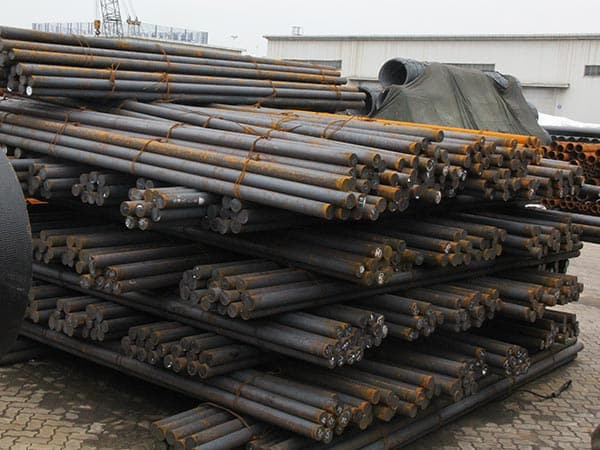
The Fundamentals of Grade 500 Steel and Its Importance in Engineering
Grade 500 steel represents a benchmark in high-strength reinforcement and structural applications. Characterized by a minimum yield strength of 500 MPa, this material is engineered to provide superior load-bearing capacity while optimizing the volume of steel required in concrete structures. Understanding how to calculate the weight of Grade 500 steel is not merely a mathematical exercise; it is a critical skill for cost estimation, logistics planning, and structural integrity verification. The weight of steel directly influences the dead load of a building and the overall carbon footprint of a construction project.
Defining Grade 500 Steel Properties: Beyond Yield Strength
To accurately calculate weight, one must first understand the physical and chemical nature of Grade 500 steel. While the '500' refers to the yield strength, the material's density is the primary driver of weight. Most Grade 500 variants, such as B500B, B500C, or AS/NZS 500N, share a consistent density. However, their ductility and carbon equivalent values vary to suit specific environmental conditions like seismic activity or sub-zero temperatures.
- Yield Strength: Minimum 500 MPa, providing high resistance to permanent deformation.
- Tensile Strength: Typically 1.05 to 1.15 times the yield strength, depending on the ductility class (Class A, B, or C).
- Density: Standardized at 7,850 kg/m³ (or 7.85 g/cm³), which is the constant used in all weight formulas.
- Weldability: Controlled carbon equivalent (CEV) ensures that weight-bearing joints remain secure under stress.
The Essential Formula for Grade 500 Rebar Weight Calculation
In the reinforcement industry, Grade 500 steel is most commonly found in the form of deformed bars (rebar). The weight of rebar is calculated based on its nominal diameter. Because rebar has ribs to enhance bonding with concrete, the "nominal" diameter is used to calculate a theoretical cross-sectional area, which is then multiplied by the density of steel.
The universal formula for the weight of Grade 500 rebar per meter is:
Weight (kg/m) = (d² / 162.2)
Where 'd' is the nominal diameter of the bar in millimeters. This formula is derived from the volume of a cylinder (πr²h) multiplied by the density (7,850 kg/m³).
| Nominal Diameter (mm) | Cross-Sectional Area (mm²) | Theoretical Weight (kg/m) | Weight per 12m Length (kg) |
|---|---|---|---|
| 8 | 50.27 | 0.395 | 4.74 |
| 10 | 78.54 | 0.617 | 7.40 |
| 12 | 113.10 | 0.888 | 10.66 |
| 16 | 201.06 | 1.578 | 18.94 |
| 20 | 314.16 | 2.466 | 29.59 |
| 25 | 490.87 | 3.853 | 46.24 |
| 32 | 804.25 | 6.313 | 75.76 |
| 40 | 1256.64 | 9.865 | 118.38 |
Calculating Weight for Grade 500 Steel Plates and Flat Bars
When Grade 500 steel is utilized in structural plates or flat bars (often seen in heavy machinery or bridge girders), the calculation shifts to a volume-based approach. The precision of this calculation depends on the accuracy of the thickness, width, and length measurements.
Formula: Weight (kg) = Thickness (mm) × Width (m) × Length (m) × 7.85
For example, a Grade 500 steel plate that is 20mm thick, 2 meters wide, and 6 meters long would be calculated as follows:
20 × 2 × 6 × 7.85 = 1,884 kg.
The Impact of Rolling Tolerances on Actual Weight
It is vital to distinguish between theoretical weight and actual weight. During the hot-rolling process of Grade 500 steel, manufacturers operate within specific tolerance bands defined by international standards like BS 4449 or AS/NZS 4671. These tolerances allow for slight variations in the diameter or thickness of the steel.
If a batch of Grade 500 rebar is rolled to the "minus" side of the tolerance, the actual weight delivered will be less than the theoretical weight calculated using the d²/162 formula. Conversely, "plus" tolerance rolling increases the weight. For large-scale infrastructure projects, a 2-3% deviation in rolling tolerance can result in several tons of difference, impacting both the project budget and the structural load calculations.
Environmental Adaptability and Weight Considerations
Grade 500 steel is often treated with protective coatings to enhance its lifespan in corrosive environments, such as coastal bridges or chemical plants. Galvanization (zinc coating) or epoxy coating adds a negligible but measurable amount of weight to the steel.
- Hot-Dip Galvanizing: Typically adds between 2% to 5% to the total weight of the steel member, depending on the surface area-to-volume ratio.
- Epoxy Coating: Adds a very thin layer (usually 170 to 300 microns), which generally does not significantly alter the weight for structural calculations but must be considered in precision logistics.
Advanced Applications: Why Weight Accuracy Matters
In modern high-rise construction, the use of Grade 500 steel allows for thinner columns and lighter beams compared to Grade 250 or 300 steel. This reduction in material weight—while maintaining high strength—enables architects to design more open spaces and reduces the requirements for the building's foundation. Accurate weight calculation ensures that the crane capacities on-site are not exceeded and that the transport fleet is utilized efficiently.
Furthermore, in seismic design, the mass of the structure (which is largely determined by the steel and concrete weight) dictates the inertial forces the building will experience during an earthquake. Engineers use the calculated weight of Grade 500 steel to fine-tune the dynamic response of the structure, ensuring safety and compliance with modern building codes.
Procurement and Quality Control Verification
When purchasing Grade 500 steel, the theoretical weight serves as a primary tool for quality control. By weighing a known length of steel and comparing it to the theoretical weight, buyers can verify if the material meets the specified dimensions. If the actual weight is significantly lower than the theoretical weight, it may indicate that the bar diameter is undersized, potentially compromising the structural integrity of the project.
Always request a Mill Test Certificate (MTC) which details the chemical composition and the actual mass per meter of the specific heat lot. This document provides the empirical data needed to validate your manual calculations and ensures that the Grade 500 steel properties align with the engineering requirements.
Leave a message