
Who is the professioal 1.0972 flat bar supplier
Discover the technical superiority of 1.0972 (S355MC) high-strength steel. This guide covers chemical composition, mechanical properties, and how to identify a professional supplier.
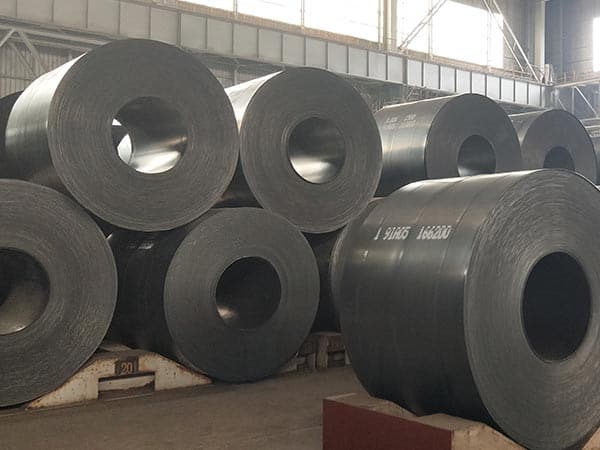
The Technical Essence of 1.0972 (S355MC) Material
Identifying a professional 1.0972 flat bar supplier requires a deep understanding of what this material represents in the hierarchy of high-strength low-alloy (HSLA) steels. Known technically as 1.0972 or more commonly by its EN 10149-2 designation, S355MC, this steel is a product of sophisticated thermomechanical rolling. Unlike traditional hot-rolled structural steels, 1.0972 is engineered for applications where weight reduction, high load-bearing capacity, and exceptional cold-forming properties are non-negotiable.
The "MC" suffix denotes that the steel is thermomechanically rolled (M) and possesses a chemistry optimized for cold forming (C). This process involves precise temperature control during the rolling stages, which results in a fine-grained microstructure that cannot be achieved through simple heat treatment. For engineers and procurement specialists, sourcing this grade from a professional supplier ensures that the material maintains its integrity even under extreme stress and complex shaping operations.
Chemical Composition and Micro-Alloying Precision
The performance of 1.0972 flat bars is rooted in a meticulously balanced chemical profile. A professional supplier must provide Mill Test Certificates (MTC) that verify the following elements are within strict tolerances. The low carbon content is particularly vital for weldability and toughness.
| Element | Maximum Percentage (%) |
|---|---|
| Carbon (C) | 0.12 |
| Manganese (Mn) | 1.50 |
| Silicon (Si) | 0.03 |
| Phosphorus (P) | 0.025 |
| Sulfur (S) | 0.020 |
| Aluminum (Al) | Min 0.015 |
| Niobium (Nb) | 0.09 |
| Vanadium (V) | 0.20 |
| Titanium (Ti) | 0.15 |
The inclusion of micro-alloying elements like Niobium, Vanadium, and Titanium is what sets 1.0972 apart. These elements act as grain refiners, preventing grain growth during the rolling process. This fine-grained structure is the primary reason why 1.0972 flat bars can achieve a high yield strength of 355 MPa while remaining ductile enough for sharp bending and folding. A professional supplier understands that even minor deviations in these trace elements can lead to cracking during fabrication.
Mechanical Superiority and Structural Efficiency
The primary motivation for selecting 1.0972 flat bars is the opportunity for lightweight construction. By utilizing a material with a higher yield point than standard S235 or S275 grades, designers can reduce the thickness of components without sacrificing structural safety. This leads to lower material costs, reduced transport weight, and improved energy efficiency in mobile machinery.
- Yield Strength (Reh): Minimum 355 MPa.
- Tensile Strength (Rm): 430 to 550 MPa.
- Elongation (A80mm): Minimum 19% to 23% depending on thickness.
- Impact Strength: Often tested at -20°C or -40°C to ensure low-temperature reliability.
When evaluating a supplier, it is essential to confirm that their 1.0972 flat bars meet these mechanical thresholds consistently across different batches. Professional suppliers utilize advanced testing equipment to ensure that the longitudinal and transverse properties of the flat bars are uniform, which is critical for automated manufacturing processes.
Cold Forming and Processing Versatility
One of the standout attributes of 1.0972 is its excellent cold formability. Flat bars made from this grade can be bent to very small radii. For thicknesses under 3mm, the minimum internal bending radius is often 0.25 to 0.5 times the thickness, which is significantly better than standard structural steels. This allows for the creation of complex geometries in chassis components, brackets, and support frames.
Beyond bending, 1.0972 exhibits superior performance in laser and plasma cutting. The low silicon and controlled sulfur content ensure a clean edge with minimal dross, reducing the need for secondary grinding. Furthermore, the material's weldability is exceptional. Due to its low carbon equivalent (CEV), 1.0972 can be welded using all standard methods—including MIG, MAG, and TIG—without the need for preheating in most thickness ranges. This efficiency in the workshop is a key reason why professional fabricators seek out high-quality 1.0972 stock.
Environmental Adaptation and Fatigue Resistance
1.0972 flat bars are frequently used in outdoor and high-stress environments. The fine-grained structure contributes not only to static strength but also to fatigue resistance. In applications like crane booms or truck trailers, the material must withstand millions of load cycles. The uniformity of 1.0972 minimizes internal stress concentrators, extending the service life of the equipment.
While 1.0972 is not a dedicated "weathering steel," its dense surface structure provides a good substrate for protective coatings. Whether it is hot-dip galvanizing, powder coating, or specialized industrial painting, the material bonds well with protective layers, ensuring long-term corrosion resistance in humid or saline environments. A professional supplier can often provide advice on the best surface treatments for specific environmental conditions.
Broadening the Scope: Specialized Industry Applications
The versatility of 1.0972 flat bars extends into numerous high-performance sectors. It is not merely a structural component but a critical enabler of modern engineering feats.
- Automotive and Transport: Used in the manufacturing of longitudinal beams, cross members, and chassis parts for heavy-duty trucks and trailers where weight reduction directly impacts payload capacity.
- Lifting and Handling Equipment: Essential for telescopic cranes, forklifts, and aerial work platforms that require high strength-to-weight ratios.
- Agricultural Machinery: Applied in the frames of plows, harvesters, and seeders that face abrasive soil conditions and high mechanical shock.
- Renewable Energy: Used in the structural supports for solar tracking systems and wind turbine internal components.
Professional suppliers of 1.0972 recognize these diverse needs and maintain stock in various widths and thicknesses to accommodate the specific requirements of these varied industries.
What Defines a Professional 1.0972 Flat Bar Supplier?
Sourcing 1.0972 is not just about finding the lowest price; it is about finding a partner who understands the technical nuances of HSLA steels. A professional supplier distinguishes themselves through several key capabilities. First is traceability. Every flat bar should be traceable back to its original heat number, supported by EN 10204 3.1 certification. This ensures that the material's chemical and mechanical claims are verified by the mill.
Second is processing capability. A top-tier supplier does not just deliver raw bars; they offer precision sawing, deburring, and perhaps even preliminary punching or laser cutting. This allows manufacturers to integrate the material directly into their production lines. Third is logistical expertise. High-strength steels like 1.0972 must be handled carefully to avoid surface damage or deformation during transport. Professional suppliers use specialized packaging and reliable freight partners to ensure the material arrives in pristine condition.
Finally, a professional supplier acts as a technical consultant. They can help you determine if 1.0972 is the optimal choice for your project or if a higher grade like S420MC or S500MC might offer even better performance. They stay updated on the latest changes in European standards and can provide insights into market trends and material availability. When you find a supplier that combines deep metallurgical knowledge with robust supply chain management, you have found a professional partner capable of supporting your most ambitious engineering projects.
Leave a message