
What is the difference between high strength steel and S500MC
A comprehensive technical comparison between the broad category of high strength steel and the specific S500MC grade, focusing on metallurgy, processing, and industrial applications.
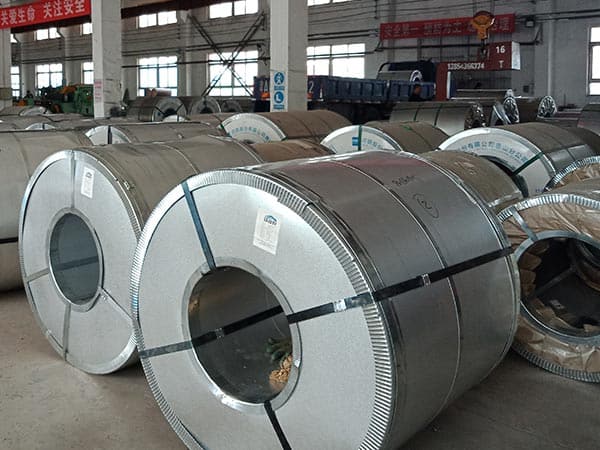
The Relationship Between High Strength Steel and S500MC
High strength steel (HSS) is an expansive umbrella term that encompasses a wide variety of steel alloys designed to provide superior mechanical properties compared to standard carbon steels. Within this vast category, S500MC represents a specific, standardized grade of high-yield-strength steel intended for cold forming. To understand the difference, one must recognize that S500MC is a subset of the HSS family, specifically falling under the High Strength Low Alloy (HSLA) classification. While HSS can refer to anything from advanced high-strength steels (AHSS) used in passenger safety cages to ultra-high-strength steels (UHSS) used in ballistic protection, S500MC is a workhorse of the transport and structural engineering sectors, governed by the European standard EN 10149-2.
Metallurgical Foundations and the MC Designation
The primary distinction lies in the 'MC' suffix of S500MC. The 'M' stands for Thermomechanically Rolled, and the 'C' indicates it is suitable for Cold Forming. Unlike traditional high strength steels that might achieve their hardness through high carbon content or intensive heat treatment (like quenching and tempering), S500MC gains its strength through a sophisticated thermomechanical rolling process. This involves precise temperature control during the rolling stages, which refines the grain structure of the steel. A finer grain size directly correlates to higher yield strength and improved toughness without the need for excessive alloying elements.
Standard high strength steels often rely on a higher carbon equivalent to reach strength targets, which can compromise weldability and ductility. S500MC, however, utilizes micro-alloying elements such as Niobium (Nb), Vanadium (V), and Titanium (Ti). These elements form carbides and nitrides that pin grain boundaries, preventing grain growth during processing. This metallurgical strategy allows S500MC to maintain a very low carbon content (typically ≤0.12%), ensuring that the material remains exceptionally ductile and easy to weld compared to other HSS grades with similar strength levels.
Mechanical Performance Comparison
When comparing S500MC to general high strength steels, the mechanical benchmarks are critical. S500MC is defined by a minimum yield strength of 500 MPa. For perspective, standard structural steel like S355 has a yield strength of approximately 355 MPa. The jump to 500 MPa allows engineers to reduce the thickness of components by up to 30% while maintaining the same load-bearing capacity.
| Property | S500MC (EN 10149-2) | Typical HSS (Generic) | s355jr (Standard Structural) |
|---|---|---|---|
| Yield Strength (min) | 500 MPa | 420 - 700+ MPa | 355 MPa |
| Tensile Strength | 550 - 700 MPa | Varies widely | 470 - 630 MPa |
| Elongation (A80mm) | min 12% (t < 3mm) | 10% - 20% | min 20% |
| Carbon Content (max) | 0.12% | 0.18% - 0.25% | 0.24% |
The tensile strength of S500MC ranges between 550 and 700 MPa. While some high strength steels can reach 1500 MPa (such as Boron steels used in automotive pillars), S500MC occupies a 'sweet spot' where strength is balanced with high elongation and impact resistance. This makes it far more versatile for structural components that require bending or complex shaping during fabrication.
Processing and Fabrication Advantages
One of the most significant differences between S500MC and other high strength steels is its behavior during fabrication. Many HSS grades are notorious for 'springback'—the tendency of a metal to return to its original shape after bending. S500MC is specifically engineered to minimize this effect. Its consistent grain structure and low alloy content provide predictable deformation patterns, which is essential for automated manufacturing environments.
- Cold Forming: S500MC can be bent to very tight radii. For thicknesses under 3mm, a 0.5t bending radius is often achievable, whereas standard HSS might require 1.5t or 2.0t to avoid cracking.
- Weldability: Due to its low Carbon Equivalent Value (CEV), S500MC does not typically require pre-heating or post-weld heat treatment. It is compatible with MIG, TIG, and laser welding processes, maintaining the integrity of the Heat Affected Zone (HAZ) better than high-carbon HSS.
- Cutting: The material is excellent for laser and plasma cutting. The lack of internal stresses (thanks to the MC process) prevents the plate from warping or 'jumping' during the cutting process, ensuring high dimensional accuracy.
Environmental Adaptability and Durability
In terms of environmental performance, S500MC offers distinct advantages in weight-sensitive applications. By allowing for thinner sections, it reduces the overall mass of vehicles and machinery, which directly leads to lower fuel consumption and reduced CO2 emissions. This 'lightweighting' capability is a primary driver for its adoption in the green economy.
Furthermore, S500MC exhibits good low-temperature toughness. While some high strength steels become brittle in cold climates, S500MC can be specified with guaranteed impact energy values at temperatures as low as -20°C or -40°C. This makes it suitable for equipment operating in arctic conditions or high-altitude environments. However, it is important to note that S500MC is not a 'weathering steel' like Corten; it still requires proper surface treatment, such as galvanizing or painting, to prevent corrosion in humid or saline environments.
Industrial Applications and Sector Growth
The application of S500MC is diverse, yet it is most prominent where the strength-to-weight ratio is the deciding factor. In the commercial vehicle industry, it is the standard choice for truck chassis frames, longitudinal beams, and cross members. Using S500MC allows truck manufacturers to increase payload capacity without exceeding gross vehicle weight limits.
In the lifting and mobile equipment sector, S500MC is used for crane booms, trailer frames, and agricultural machinery. The ability to withstand high dynamic loads while remaining light enough for mobility is a key differentiator. Unlike some higher-grade HSS (like S700MC), S500MC provides a more cost-effective solution for components that do not require extreme yield limits but still need to outperform standard mild steel.
The construction industry also utilizes S500MC for cold-pressed profiles and light-gauge steel framing. Its superior formability allows for the creation of complex geometries that would be impossible with stiffer, higher-strength steels, providing architects and engineers with more design flexibility.
Selection Criteria: When to Choose S500MC
Choosing between a generic high strength steel and S500MC depends on the specific requirements of the project. If the priority is absolute maximum strength (e.g., armor plating), a quenched and tempered HSS is superior. However, if the project involves extensive welding, tight bending, or mass production of structural parts, S500MC is usually the better choice. It offers a unique combination of high yield strength, excellent surface finish, and exceptional workability that generic HSS often lacks. Engineers must also consider the thickness; S500MC is typically available in hot-rolled coils and sheets ranging from 2mm to 20mm, making it ideal for sheet metal work but less common for heavy plate applications over 50mm.
Leave a message