
S460MC price is relatively stable
A comprehensive analysis of S460MC steel price stability, mechanical properties, thermomechanical rolling processes, and its strategic value in automotive and heavy machinery manufacturing.
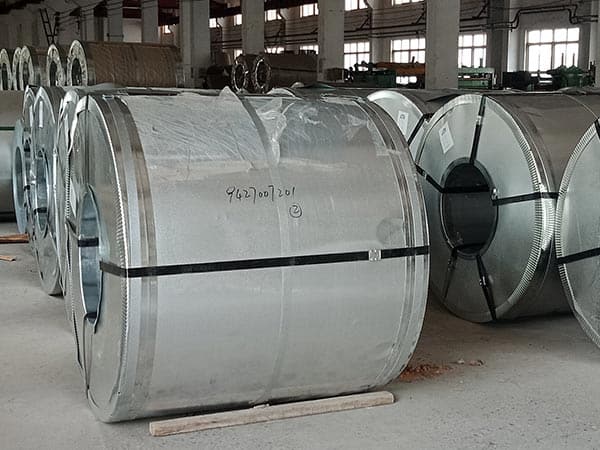
Understanding the Market Equilibrium: Why S460MC Price is Relatively Stable
The global steel market often experiences volatile fluctuations, yet S460MC has recently demonstrated a remarkable level of price resilience. This stability is not merely a result of market demand but is deeply rooted in the mature production technology and the specific niche it occupies in the high-strength low-alloy (HSLA) steel segment. As a thermomechanically rolled steel for cold forming, S460MC balances cost-efficiency with high-end performance, making it a predictable choice for procurement managers in the automotive and construction sectors.
Unlike commodity-grade steels that are highly sensitive to raw material spikes, the S460MC price is relatively stable because its value proposition is tied to weight reduction and processing efficiency. Manufacturers are willing to maintain long-term contracts based on the material's ability to lower overall production costs, even if the base price per ton is higher than standard S355 grades. This steady demand creates a buffer against the typical 'boom and bust' cycles of the broader steel market.
Micro-Alloying and the Science of Strength
The technical foundation of S460MC lies in its chemical composition and the Thermomechanically Controlled Processing (TMCP) it undergoes. By utilizing minute amounts of niobium (Nb), vanadium (V), and titanium (Ti), steelmakers achieve a fine-grained microstructure that provides high yield strength without sacrificing weldability or toughness. This micro-alloying strategy is more cost-effective than traditional quenching and tempering, contributing to the price stability seen in today's market.
| Element | Carbon (C) max | Manganese (Mn) max | Silicon (Si) max | Phosphorus (P) max | Sulfur (S) max | Al (total) min |
|---|---|---|---|---|---|---|
| Percentage (%) | 0.12 | 1.60 | 0.50 | 0.025 | 0.015 | 0.015 |
The low carbon equivalent (CEV) is a critical factor for engineers. It ensures that S460MC can be welded using standard methods without the need for extensive preheating, which directly reduces labor costs and energy consumption in the workshop. When the S460MC price is relatively stable, it allows manufacturers to accurately forecast these secondary processing costs, leading to better margin management.
Mechanical Integrity and Cold Forming Capabilities
One of the primary reasons S460MC remains a staple in heavy-duty applications is its exceptional cold forming performance. Despite its high yield strength of 460 MPa, the material retains sufficient ductility to be bent and shaped into complex geometries. This eliminates the need for hot forming in many cases, further stabilizing the total cost of ownership for the end-user.
- Yield Strength: Minimum 460 MPa, providing a robust safety margin for structural components.
- Tensile Strength: Ranging between 520 and 670 MPa, ensuring the material can withstand significant dynamic loads.
- Elongation: Minimum 14% (for thicknesses < 3mm), which is impressive for a steel of this strength class.
- Bending Radius: Capable of achieving tight bends (typically 0.5t to 1.0t) without surface cracking.
These mechanical properties are consistent across batches due to the precision of modern rolling mills. Consistency is a key driver of price stability; when a material performs predictably, there is less waste and fewer rejections, which stabilizes the supply chain and prevents artificial price hikes caused by scarcity of 'prime' quality material.
Strategic Application in the Automotive and Logistics Industry
The drive for lightweighting in the transport industry has made S460MC an indispensable asset. By replacing traditional s355jr steel with S460MC, engineers can reduce the thickness of chassis components by up to 20-30% while maintaining the same structural integrity. This weight reduction translates directly into higher payload capacities and lower fuel consumption for commercial vehicles.
In the production of truck frames, cross members, and cold-pressed parts, S460MC offers a 'sweet spot' of performance. It is stronger than conventional structural steels but more affordable and easier to process than ultra-high-strength grades like S700MC. This middle-ground positioning ensures a broad and steady customer base, which is why the S460MC price is relatively stable compared to more specialized alloys.
Environmental Adaptability and Fatigue Resistance
Beyond its initial mechanical specs, S460MC demonstrates excellent environmental adaptability. Its fine-grained structure provides superior resistance to brittle fracture, even at lower temperatures. This makes it suitable for equipment operating in diverse climates, from construction machinery in tropical regions to transport trailers in sub-zero environments.
Fatigue resistance is another critical attribute. In dynamic loading scenarios, such as the constant vibration and stress cycles experienced by a crane boom or a trailer chassis, S460MC performs exceptionally well. The clean steelmaking process reduces non-metallic inclusions, which are often the starting points for fatigue cracks. By extending the service life of the equipment, S460MC provides long-term economic value that far outweighs short-term price fluctuations.
Optimizing Procurement in a Stable Market
For businesses looking to capitalize on the fact that the S460MC price is relatively stable, the focus should shift from 'timing the market' to 'optimizing the application.' Since the base price is less likely to see wild swings, the real savings are found in leveraging the material's high strength to reduce total tonnage. Using less steel to achieve the same structural goal is the most effective way to hedge against any future price increases.
Furthermore, the compatibility of S460MC with modern laser cutting and automated welding systems allows for high-speed production. The surface quality of S460MC, typically delivered in a pickled and oiled condition, is ideal for direct painting or galvanizing, removing steps from the finishing process. This synergy between material properties and manufacturing technology reinforces why S460MC remains a preferred choice for high-volume industrial production.
The current market environment suggests that the S460MC price is relatively stable due to a mature supply chain and a clear understanding of its technical benefits among global manufacturers. By focusing on its superior yield strength, excellent formability, and the potential for significant weight savings, industries can continue to rely on S460MC as a cornerstone of modern engineering and cost-effective manufacturing.
Leave a message