
What is the asme material ZQS700L cold forming equivalent
Explore the ASME and international equivalents for ZQS700L high-strength cold-forming steel. This guide covers mechanical properties, chemical composition, and industrial applications.
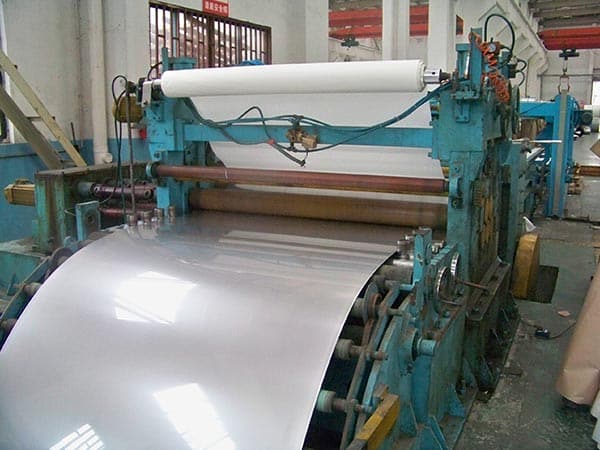
Technical Profile of ZQS700L High-Strength Steel
ZQS700L is a high-strength low-alloy (HSLA) steel grade specifically engineered for cold forming applications. Primarily used in the automotive and heavy machinery sectors, it belongs to a category of steels that offer an exceptional strength-to-weight ratio. The '700' designation refers to its minimum yield strength of 700 MPa, while the 'L' signifies its suitability for cold forming (bending and shaping). This material is often produced via thermo-mechanical rolling, a process that refines the grain structure to achieve high toughness and weldability without the need for excessive alloying elements.
Identifying the ASME Material ZQS700L Cold Forming Equivalent
When searching for an ASME (American Society of Mechanical Engineers) equivalent for ZQS700L, it is important to understand that ASME standards often adopt ASTM specifications for structural and pressure vessel steels. There is no single 1:1 identical match in the ASME code, but several grades serve as functional equivalents based on yield strength and formability requirements.
The most comparable standard under the ASME/ASTM umbrella is ASME SA-1011/SA-1011M Grade 100 (Class 1 or 2) or ASME SA-656/SA-656M Grade 100. While ZQS700L is frequently compared to the European EN 10149-2 S700MC, engineers working within ASME frameworks typically look toward these high-strength hot-rolled sheet and plate specifications. Below is a detailed comparison of the primary equivalent candidates.
| Standard | Grade | Yield Strength (min) | Tensile Strength | Elongation (min) |
|---|---|---|---|---|
| GB/T (Internal) | ZQS700L | 700 MPa | 750-950 MPa | 12-14% |
| ASME SA-1011 | Grade 100 | 690 MPa | 760 MPa | 12% |
| ASME SA-656 | Grade 100 | 690 MPa | 795 MPa | 15% |
| EN 10149-2 | S700MC | 700 MPa | 750-950 MPa | 12% |
Chemical Composition and Micro-Alloying Strategy
The performance of ZQS700L is dictated by its precise chemical balance. Unlike traditional carbon steels, ZQS700L utilizes micro-alloying elements such as Niobium (Nb), Vanadium (V), and Titanium (Ti). These elements facilitate grain refinement and precipitation hardening, allowing the steel to remain ductile even at high stress levels. The carbon content is kept low (typically below 0.12%) to ensure excellent weldability and to prevent the formation of brittle phases in the heat-affected zone (HAZ).
- Carbon (C): Low levels ensure high ductility and weldability.
- Manganese (Mn): Enhances strength and toughness through solid solution strengthening.
- Silicon (Si): Provides deoxidation and additional strength.
- Micro-alloys (Nb, V, Ti): Essential for controlling grain size during the rolling process.
Mechanical Properties and Cold Forming Capabilities
The 'L' in ZQS700L is a critical indicator of its cold-forming performance. High-strength steels often suffer from springback or cracking during tight radius bending, but ZQS700L is designed to mitigate these issues. Its fine-grained microstructure allows for a smaller minimum bending radius compared to standard structural steels of the same strength level. This makes it an ideal choice for complex geometries in truck chassis frames, crane booms, and cross members.
Impact Toughness: Many ZQS700L variants are tested for impact energy at sub-zero temperatures (e.g., -20°C or -40°C). This ensures that the material does not undergo brittle fracture in cold climates, a vital requirement for transport vehicles operating in northern regions.
Welding and Processing Considerations
One of the primary advantages of ZQS700L and its ASME equivalents is their low carbon equivalent (Ceq). This property simplifies the welding process, often eliminating the need for pre-heating in thinner sections. However, because the strength is derived from thermo-mechanical rolling, excessive heat input during welding can lead to localized softening in the heat-affected zone. Professionals recommend using low-heat-input welding techniques (such as MAG or laser welding) and high-strength filler metals that match the base material's properties.
Surface Treatment: ZQS700L is highly compatible with pickling and oiling processes, as well as galvanizing. Its clean surface finish reduces the need for extensive preparation before painting or coating, which is a significant cost-saving factor in mass production.
Environmental Adaptability and Sustainability
Using ZQS700L instead of traditional S355 or A36 steel allows for a significant reduction in material thickness without compromising structural integrity. This process, known as "lightweighting," is a cornerstone of modern green engineering. By reducing the weight of a vehicle or structure, fuel consumption and CO2 emissions are lowered throughout the product's lifecycle. Furthermore, the low alloy content makes ZQS700L highly recyclable, aligning with circular economy principles.
Primary Application Sectors
The unique combination of high yield strength and superior formability places ZQS700L at the forefront of several heavy-duty industries:
- Automotive Industry: Truck longitudinal beams, bumpers, and high-stress chassis components where weight reduction is critical.
- Lifting Equipment: Telescopic crane booms, aerial work platforms, and forklift components that require high rigidity and low weight.
- Transport and Logistics: Lightweight semi-trailers, container frames, and bulk carriers.
- Construction Machinery: Excavator arms, concrete pump trucks, and heavy-duty dumper bodies.
Critical Factors for Material Substitution
When substituting ZQS700L with an ASME equivalent like SA-1011 Grade 100, engineers must verify the specific project requirements regarding Directional Properties. High-strength steels can exhibit anisotropy, meaning their properties may differ slightly between the longitudinal and transverse rolling directions. ZQS700L is typically produced to ensure consistent bending performance in both directions, but this should always be cross-referenced with the ASME specification's testing protocols.
Another factor is the Minimum Bending Radius. While ZQS700L might support a 1.5t or 2.0t bend radius (where t is the thickness), certain ASME grades might have different recommendations. Always consult the mill test report (MTR) to ensure the specific heat of steel meets the ductility requirements of the intended fabrication process.
Advanced Manufacturing with ZQS700L
The integration of ZQS700L into modern manufacturing lines often involves laser cutting and CNC press brake bending. Its consistent thickness tolerances and flat surface profile ensure high precision during automated processing. Unlike lower-grade steels that might warp during cutting due to internal stresses, the controlled cooling during the production of ZQS700L results in a more stable plate, reducing scrap rates and improving overall production efficiency.
For structural designers, the shift from conventional steel to ZQS700L or its ASME equivalents represents a move toward sophisticated engineering. By leveraging the 700 MPa yield limit, designers can push the boundaries of load-bearing capacity while maintaining sleek, efficient designs that meet the rigorous demands of 21st-century infrastructure and transportation.
Leave a message