
Is stainless steel as strong as S315MC hot-rolled pickled strip?
Explore the critical differences between S315MC hot-rolled pickled strip and various stainless steel grades. This comprehensive analysis covers mechanical strength, environmental durability, and industrial applications to help you choose the right materia
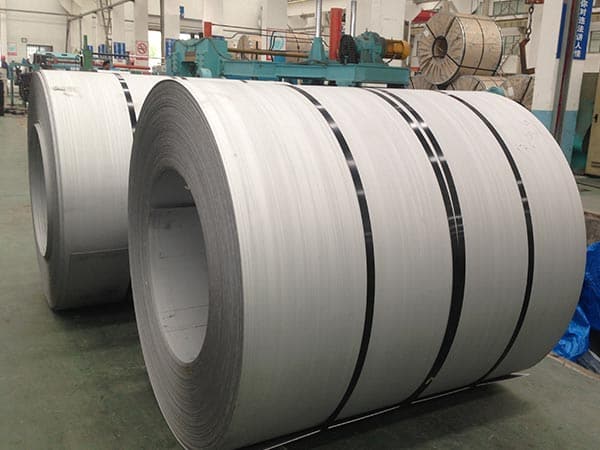
Understanding the Fundamental Strength of S315MC and Stainless Steel
When engineering components for modern machinery or automotive structures, the question of material strength often leads to a comparison between High-Strength Low-Alloy (HSLA) steels like S315MC and various grades of stainless steel. To answer whether stainless steel is as strong as S315MC hot-rolled pickled strip, we must first define what strength means in a structural context. Strength is not a singular metric; it encompasses yield strength, tensile strength, and the ability to maintain integrity under stress. S315MC, governed by the EN 10149-2 standard, is a thermomechanically rolled steel designed specifically for cold forming. Its strength is derived from a fine-grained microstructure achieved through precise temperature control during the rolling process. In contrast, stainless steel's strength varies significantly across its families: austenitic (like 304 or 316), ferritic (like 430), and martensitic or duplex grades. While some high-end stainless steels can surpass S315MC, the common austenitic grades often used in similar applications frequently fall short in terms of raw yield strength.
Mechanical Property Benchmarking: S315MC vs. Common Stainless Grades
The core of the comparison lies in the yield strength—the point at which a material begins to deform plastically. S315MC is named for its minimum yield strength of 315 MPa. For a hot-rolled pickled strip, this provides a robust baseline for structural loads. When we look at standard 304-grade stainless steel, the yield strength typically hovers around 210 to 250 MPa in its annealed state. This means that, pound for pound, a standard S315MC strip is physically stronger and can withstand higher loads before permanent deformation occurs than 304 stainless steel.
| Material Grade | Yield Strength (MPa) | Tensile Strength (MPa) | Elongation (%) |
|---|---|---|---|
| S315MC (Hot Rolled Pickled) | Min 315 | 390 - 510 | Min 20-24 |
| Stainless Steel 304 (Annealed) | Min 210 | 520 - 720 | Min 45 |
| Stainless Steel 316L (Annealed) | Min 200 | 500 - 700 | Min 40 |
| Stainless Steel 430 (Ferritic) | Min 240 | 450 - 600 | Min 22 |
As illustrated in the table, while stainless steel often exhibits higher ultimate tensile strength (the point of breakage) and superior elongation (ductility), the yield strength of S315MC makes it a more efficient choice for weight-bearing frames and structural members where deformation must be avoided at all costs. However, it is vital to note that cold-worked stainless steel can achieve much higher strength levels, but this comes at the expense of ductility and increased manufacturing costs.
The Role of the Pickling Process in S315MC Performance
The "pickled" aspect of the S315MC strip is more than just an aesthetic choice. Hot rolling creates a thick layer of iron oxide scale on the surface. Pickling involves passing the steel through an acid bath (typically hydrochloric acid) to remove this scale, followed by oiling to prevent corrosion. This process ensures that the S315MC strip has a clean, smooth surface that is ideal for precision laser cutting and welding. For manufacturers, this translates to less tool wear and better weld penetration compared to non-pickled hot-rolled steel. Stainless steel, by its nature, forms a passive chromium oxide layer. While both materials offer clean surfaces, the pickling of S315MC is a preparation for further processing (like painting or galvanizing), whereas stainless steel is often used in its natural state for its inherent resistance.
Environmental Adaptability and Corrosion Resistance
This is where the comparison shifts heavily in favor of stainless steel. S315MC is a carbon steel; despite being pickled and oiled, it possesses virtually no inherent corrosion resistance once the oil film is removed or the surface is exposed to moisture. It requires secondary protection such as powder coating, painting, or galvanizing to survive in outdoor or humid environments. Stainless steel, containing at least 10.5% chromium, creates a self-healing passive layer that resists oxidation and chemical attack. If the application involves exposure to salt spray, chemicals, or extreme weather, S315MC will fail due to rust long before its structural strength becomes an issue, unless it is heavily protected. Therefore, "strength" in a long-term environmental sense is a victory for stainless steel.
Processing and Fabricability: A Practical Evaluation
The ease of transforming a flat strip into a complex component is a critical factor for industrial efficiency. S315MC is specifically engineered for cold forming. Its low carbon equivalent and fine grain structure allow for tight bending radii without cracking. It behaves predictably under a press brake. Stainless steel, particularly the 300 series, has a high work-hardening rate. This means as you bend or shape it, the material becomes significantly harder and stronger, but also more difficult to work with. This can lead to springback issues and requires more powerful machinery. For high-volume production of complex structural brackets, S315MC often provides a more consistent and cost-effective fabrication path.
- Welding: S315MC has excellent weldability due to its low alloy content. It does not require preheating in most standard thicknesses. Stainless steel requires specific filler metals and careful heat management to avoid warping and maintain corrosion resistance in the heat-affected zone (HAZ).
- Surface Finishing: The pickled surface of S315MC is an excellent substrate for E-coating and powder paints, which are standard in the automotive industry. Stainless steel is often polished or brushed, providing a premium look without extra coatings.
- Tool Life: The abrasive nature of the chromium oxide layer on stainless steel can lead to faster wear on stamping dies compared to the oiled, pickled surface of S315MC.
Industry-Specific Application Scenarios
The choice between these materials is rarely based on a single property. In the automotive sector, S315MC is a staple for chassis components, seat frames, and cross-members where high yield strength and weight reduction are paramount, and the part will eventually be protected by the vehicle's coating system. In contrast, stainless steel is reserved for exhaust systems (due to heat resistance) or decorative trim and fuel tanks where internal corrosion is a concern. In the construction of heavy-duty shelving or warehouse racking, S315MC's strength-to-cost ratio is unbeatable. However, in food processing equipment or medical devices, the biological neutrality and cleaning-agent resistance of stainless steel make it the only viable option, regardless of the yield strength comparison.
Economic Analysis: Cost vs. Performance
From a procurement perspective, S315MC is significantly more economical than even the lowest-grade stainless steels. The high cost of nickel and chromium in stainless steel makes it a "specialty" material, whereas S315MC is a high-performance "commodity" steel. When a project requires the strength of S315MC but the budget is tight, engineers often use S315MC and apply a zinc-rich coating or hot-dip galvanizing. This hybrid approach provides the structural integrity of HSLA steel with a level of corrosion protection that approaches stainless steel at a fraction of the cost.
S315MC hot-rolled pickled strip is structurally stronger in terms of yield strength than standard annealed 304 or 316 stainless steel. It offers superior formability and weldability for structural applications. Stainless steel, however, dominates in tensile strength, ductility, and environmental longevity. The decision hinges on whether the primary challenge is mechanical load or environmental degradation. For structural frames and internal components, S315MC is the powerhouse; for exposure and hygiene, stainless steel remains the gold standard.
Leave a message