
What is the BS700MC high strength alloy steel raw material
Discover the comprehensive properties of BS700MC high-strength steel. This guide covers its chemical composition, mechanical performance, TMCP manufacturing, and applications in heavy-duty machinery and automotive engineering.
Understanding the Fundamentals of BS700MC High-Strength Steel
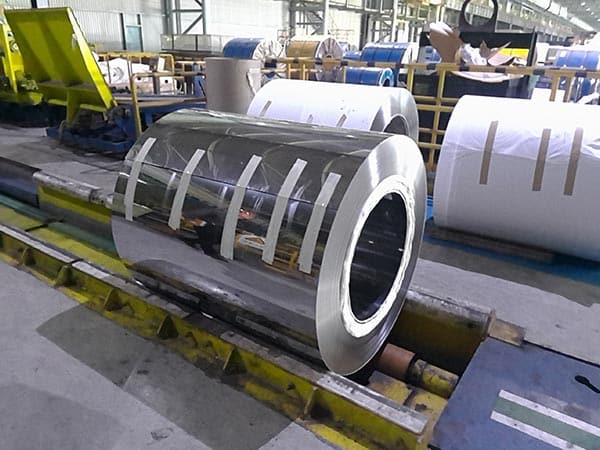
BS700MC is a high-strength, cold-formable structural steel produced through the Thermo-Mechanical Controlled Process (TMCP). The 'BS' prefix often denotes manufacturer-specific standards (such as Baosteel's enterprise standard), while '700' represents its minimum yield strength of 700 MPa. The 'MC' suffix indicates that the steel is thermomechanically rolled for cold forming. This material belongs to the category of High-Strength Low-Alloy (HSLA) steels, engineered to provide a superior strength-to-weight ratio compared to traditional carbon steels. Unlike conventional normalized steels, BS700MC achieves its exceptional properties through a combination of precise chemical alloying and controlled cooling during the rolling process, resulting in a fine-grained microstructure that balances hardness with ductility.
Chemical Composition and Metallurgical Design
The performance of BS700MC is rooted in its low-carbon, micro-alloyed design. By keeping the carbon content low, the material maintains excellent weldability and impact toughness. Micro-alloying elements such as Niobium (Nb), Vanadium (V), and Titanium (Ti) are added to refine the grain size and provide precipitation hardening. This metallurgical strategy ensures that the steel remains strong without becoming brittle. Below is a typical chemical composition breakdown for BS700MC:
| Element | Content (Max %) | Role in Metallurgy |
|---|---|---|
| Carbon (C) | 0.12 | Ensures basic strength while maintaining weldability. |
| Silicon (Si) | 0.50 | Provides solid solution strengthening and deoxidation. |
| Manganese (Mn) | 2.10 | Increases hardenability and strength. |
| Phosphorus (P) | 0.025 | Controlled to minimize grain boundary embrittlement. |
| Sulfur (S) | 0.015 | Kept low to improve transverse ductility and toughness. |
| Aluminum (Al) | 0.015 (Min) | Acts as a deoxidizer and grain refiner. |
| Nb + V + Ti | 0.22 | Micro-alloying for grain refinement and precipitation. |
Mechanical Performance: Strength, Ductility, and Toughness
The primary advantage of BS700MC is its high yield strength, which allows engineers to design thinner, lighter components without sacrificing structural integrity. This weight reduction is critical for the transport industry, where lower vehicle mass translates directly to fuel efficiency and increased payload capacity. The tensile strength typically ranges between 750 and 950 MPa, providing a robust safety margin for dynamic loading conditions. Despite its high strength, BS700MC retains a minimum elongation of 12-14%, allowing for complex bending and forming operations during fabrication. Furthermore, its impact energy at low temperatures (often tested at -20°C or -40°C) ensures reliability in harsh climatic environments, preventing brittle fracture in structural members.
Advanced Manufacturing: The TMCP Advantage
The production of BS700MC relies on Thermo-Mechanical Controlled Processing (TMCP). This involves strict control over the heating temperature, rolling reduction ratios, and the cooling rate after the final rolling pass. By finishing the rolling process in the non-recrystallization temperature range of austenite, the grains are flattened and elongated, creating a high density of nucleation sites for the subsequent transformation into a fine ferritic-bainitic microstructure. This fine grain size is the only strengthening mechanism that simultaneously improves both strength and toughness. Unlike traditional heat treatments like quenching and tempering, TMCP steel does not require secondary processing, making it more cost-effective and environmentally friendly due to reduced energy consumption.
Fabrication and Processing Capabilities
Fabricating components from BS700MC requires an understanding of its unique physical properties. Due to its high yield strength, the material exhibits higher springback during cold bending compared to standard structural steels. However, its excellent ductility allows for tight bending radii if the proper tools and techniques are applied. Cold Forming: When bending BS700MC, it is recommended to use a larger die opening and account for the material's elastic recovery. Welding: BS700MC features a low carbon equivalent (Cev), which significantly reduces the risk of cold cracking in the heat-affected zone (HAZ). It can be welded using standard processes such as GMAW (MIG/MAG), SAW, and Laser welding. It is crucial to control the heat input to avoid excessive grain growth in the HAZ, which could lead to a localized reduction in strength. Cutting: The steel is well-suited for laser, plasma, and waterjet cutting, providing clean edges and high dimensional accuracy for complex geometries.
Industry Applications and Strategic Value
BS700MC has become a staple material in industries where high performance and weight optimization are paramount. Its adoption allows for a reduction in material thickness by up to 30-50% when replacing conventional Q345 or S355 grades. Common applications include:
- Automotive Engineering: Used for truck chassis frames, cross members, and structural reinforcements where weight saving is essential for CO2 reduction.
- Lifting and Transport: Critical for mobile crane booms, telescopic arms, and trailer frames that must withstand extreme tensile stresses.
- Construction Machinery: Employed in the manufacturing of excavator buckets, concrete pump arms, and heavy-duty dumper bodies.
- Energy Sector: Utilized in wind turbine components and support structures that require high fatigue resistance and environmental durability.
Environmental Adaptability and Long-term Durability
Structural components made from BS700MC are often exposed to varying atmospheric conditions. While BS700MC is not a weathering steel by definition, its refined microstructure and clean chemical composition provide better uniform corrosion resistance than lower-grade carbon steels. For applications in highly corrosive environments, it serves as an excellent substrate for advanced coating systems, such as hot-dip galvanizing or high-performance epoxy paints. The stability of the micro-alloyed structure also ensures that the mechanical properties remain consistent over a wide temperature range, making it suitable for both tropical and arctic industrial applications. By enabling lighter designs, BS700MC contributes significantly to the lifecycle sustainability of industrial equipment by reducing the total carbon footprint during both the manufacturing and operational phases.
Leave a message