
S700MC steel for large truss truck boom prices plunged
Analysis of S700MC steel for large truss truck booms following price drops. Detailed look at mechanical properties, weldability, and industrial applications.
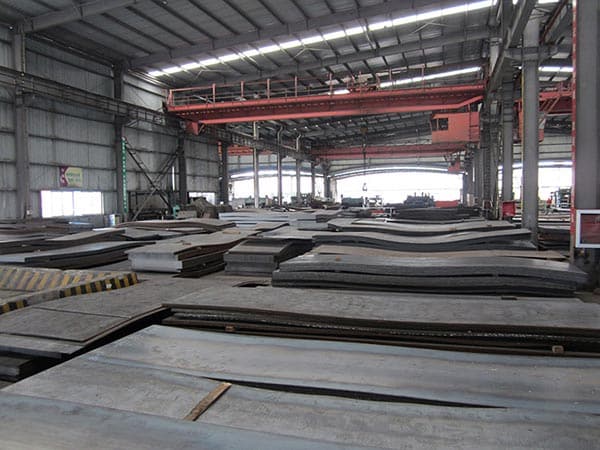
The Strategic Shift: Why S700MC Steel Prices for Large Truss Truck Booms are Fluctuating
The heavy machinery sector is currently witnessing a significant shift as S700MC high-strength steel prices for large truss truck booms have experienced a notable plunge. This market volatility presents a unique opportunity for manufacturers of mobile cranes, concrete pumps, and specialized transport vehicles to optimize their material procurement strategies. S700MC, a thermomechanically rolled structural steel, has long been the gold standard for applications requiring an exceptional strength-to-weight ratio. Understanding the technical nuances of this material is essential for leveraging the current price dip without compromising structural integrity.
Large truss truck booms are subjected to immense dynamic loads and complex stress distributions. The choice of S700MC is not merely about meeting a yield strength requirement; it is about the synergy of weight reduction and structural reliability. When prices for such high-grade alloys drop, the ripple effect reaches deep into the engineering design phase, allowing for more robust designs at lower cost points. However, procurement teams must remain vigilant about quality standards, as the 'plunge' in price should not equate to a compromise in metallurgical purity or grain refinement.
Decoding S700MC: The Engineering Powerhouse Behind High-Strength Booms
S700MC is governed by the EN 10149-2 standard, which specifies high yield strength steels for cold forming. The 'S' denotes structural steel, '700' represents the minimum yield strength of 700 MPa, and 'MC' indicates that the steel is thermomechanically rolled (M) and suitable for cold forming (C). This specific manufacturing process involves precise temperature control during rolling, which results in a fine-grained microstructure that traditional normalized steels cannot achieve.
For large truss truck booms, the fine-grain structure is critical. It provides the necessary toughness to resist crack initiation and propagation under cyclic loading. Unlike standard structural steels, S700MC achieves its strength through a combination of micro-alloying elements like Niobium (Nb), Vanadium (V), and Titanium (Ti), rather than high carbon content. This keeps the carbon equivalent low, which is a decisive factor for weldability and ductility.
Mechanical Integrity: Beyond Just High Yield Strength
While the headline figure for S700MC is its 700 MPa yield strength, its performance in a truss boom application depends on a broader spectrum of mechanical properties. The tensile strength typically ranges between 750 and 950 MPa, providing a significant safety margin against catastrophic failure. Furthermore, the elongation properties (typically A80 ≥ 10-12% depending on thickness) ensure that the material can absorb energy through plastic deformation before fracturing.
| Property | Value (Thickness ≤ 16mm) | Testing Standard |
|---|---|---|
| Yield Strength (ReH) | Min 700 MPa | EN ISO 6892-1 |
| Tensile Strength (Rm) | 750 - 950 MPa | EN ISO 6892-1 |
| Elongation (A80mm) | Min 10% | EN ISO 6892-1 |
| V-Notch Impact Energy | 40J at -20°C (Optional) | EN ISO 148-1 |
The fatigue resistance of S700MC is particularly relevant for truss structures. Truss booms consist of numerous welded joints and intersections that act as stress concentrators. The high purity of S700MC, with extremely low sulfur and phosphorus levels, reduces the presence of non-metallic inclusions, thereby enhancing the fatigue life of the entire assembly. This makes it superior to S355 or S460 when designing for long-term operational durability.
Fabrication Excellence: Cold Forming and Weldability of S700MC
One of the primary reasons S700MC is favored for large truss truck booms is its excellent cold forming capability. Despite its high strength, the material can be bent to tight radii without cracking. This allows manufacturers to create complex boom sections and chords with fewer welded seams, reducing both weight and production time. The minimum recommended bending radius is usually 2.0 to 2.5 times the plate thickness, depending on the bending angle and orientation relative to the rolling direction.
Weldability is another cornerstone of S700MC's utility. Because of its low carbon equivalent (CEV), it can be welded using standard processes such as MAG (Metal Active Gas), SAW (Submerged Arc Welding), and Laser welding. However, engineers must be cautious about the heat input. Excessive heat can cause grain coarsening in the Heat Affected Zone (HAZ), leading to a localized drop in strength and toughness. Precise control of cooling rates (t8/5 times) is required to maintain the integrity of the thermomechanical treatment.
- Low Carbon Equivalent: Minimizes the risk of cold cracking in the weld zone.
- High Dimensional Accuracy: Thermomechanical rolling ensures tight thickness tolerances and flatness, essential for automated welding of long boom sections.
- Surface Quality: Typically supplied with a descaled or pickled surface, which improves the quality of subsequent coating and painting processes.
Environmental Resilience: Operating in Extreme Conditions
Large truss truck booms are often deployed in harsh environments, from sub-zero arctic construction sites to scorching desert oil fields. S700MC is engineered to handle these extremes. Its low-temperature toughness is a critical safety feature. Many grades of S700MC are tested for impact energy at -20°C or even -40°C, ensuring the boom does not undergo brittle fracture when subjected to sudden loads in cold climates.
Corrosion resistance, while not as high as stainless steel, is manageable through advanced coating systems. The fine-grained surface of S700MC provides an excellent substrate for epoxy primers and polyurethane topcoats. In coastal or industrial environments, the material's structural integrity remains uncompromised as long as the protective barrier is maintained. The stability of the material under thermal expansion also ensures that the geometry of complex truss structures remains within tolerance during temperature fluctuations.
Economic Implications of the Price Plunge for Heavy Machinery Manufacturers
The recent plunge in S700MC prices is driven by a combination of increased global production capacity and a temporary slowdown in certain infrastructure sectors. For manufacturers of large truss truck booms, this represents a strategic window. By locking in lower material costs, companies can either improve their profit margins or offer more competitive pricing to end-users. This is particularly important in the crane industry, where material costs can account for a significant percentage of the total manufacturing expense.
Moreover, the price drop allows for "material upgrading." Engineers who previously settled for S460 or S500 due to budget constraints can now transition to S700MC. This transition enables the design of lighter booms that can carry heavier loads at greater heights, directly increasing the value proposition of the final machinery. Reducing the weight of the boom also reduces the counterweight requirement and the stress on the truck chassis, leading to lower fuel consumption and operational costs for the fleet owner.
Comparative Analysis: S700MC vs. Traditional Structural Steels
To fully appreciate the value of S700MC during this price dip, it must be compared to traditional alternatives like S355. While S355 is cheaper per ton, the total cost of ownership and the performance-to-weight ratio of S700MC are far superior. A boom constructed from S700MC can be up to 30-40% lighter than one made from S355, while maintaining the same load-bearing capacity.
| Feature | s355jr | S700MC | Advantage of S700MC |
|---|---|---|---|
| Yield Strength | 355 MPa | 700 MPa | ~100% Higher Strength |
| Weight for Same Load | 100% (Baseline) | ~65% | Significant Weight Reduction |
| Weldability | Excellent | Very Good (Low CEV) | Comparable with Proper Control |
| Cold Forming | Good | Excellent | Allows for complex geometries |
The price plunge effectively narrows the cost gap between these grades, making the high-performance option more accessible. For large truss structures where every kilogram of self-weight saved translates to more lifting capacity, the economic argument for S700MC becomes undeniable. Manufacturers should look beyond the price per ton and calculate the savings in welding consumables, transport costs, and long-term energy efficiency of the equipment.
Future-Proofing Designs with S700MC
As global regulations regarding vehicle emissions and road weight limits become stricter, the demand for lightweight, high-strength materials will only grow. S700MC is at the forefront of this trend. The current market correction in pricing should be viewed as an invitation to innovate. By integrating S700MC into the core of truss boom designs, manufacturers are not just saving money today; they are building the infrastructure for the next generation of heavy lifting technology.
Selecting the right supplier during a price plunge is vital. It is important to ensure that the S700MC being offered meets all certifications (such as 3.1 or 3.2 mill test certificates) and has undergone rigorous ultrasonic testing if required for critical boom components. The focus should remain on the metallurgical consistency and dimensional precision that high-end thermomechanical rolling provides. With the right material and the right engineering approach, the plunge in S700MC prices can be the catalyst for a new era of efficiency in the heavy machinery industry.
Leave a message