
What is the available size of S500MC thermomechanically rolled steels?
Discover the comprehensive size availability, technical specifications, and industrial applications of S500MC thermomechanically rolled steel. This guide covers dimensions, mechanical properties, and processing advantages for engineering excellence.
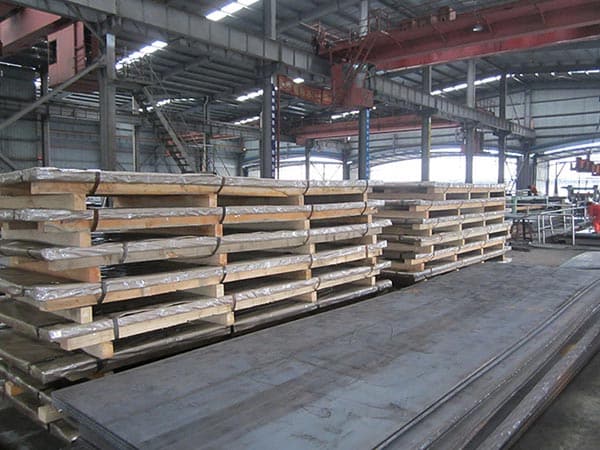
Understanding the Dimensional Landscape of S500MC Steel
S500MC represents a pinnacle of metallurgical engineering within the EN 10149-2 standard, categorized as a high-yield-strength steel for cold forming. The "S" denotes structural steel, "500" indicates a minimum yield strength of 500 MPa, and "MC" signifies its thermomechanically rolled (M) and cold-forming (C) suitability. The availability of sizes for S500MC is not merely a matter of stock lists but is deeply tied to the thermomechanical control process (TMCP) used during its production. This manufacturing method allows for a unique combination of high strength and excellent formability, which influences the thickness and width constraints found in the market.
Standard Thickness and Width Parameters
The primary production form of S500MC is hot-rolled strip, which is subsequently processed into sheets or coils. Most global steel mills offer S500MC in a thickness range starting from 1.5 mm up to 20 mm. For specialized heavy-duty applications, some high-end manufacturers can extend this range to 25 mm, though availability becomes more restricted as thickness increases due to the cooling rate requirements of the TMCP process.
In terms of width, the standard offerings typically align with industrial processing equipment. Common widths include 1000 mm, 1250 mm, and 1500 mm. Advanced rolling mills can produce S500MC at widths up to 2000 mm for thicknesses between 4 mm and 12 mm. Narrower strips, often used for precision automotive components, are achieved through slitting processes, allowing for widths as small as 20 mm with high dimensional accuracy.
| Product Form | Thickness Range (mm) | Standard Widths (mm) | Maximum Length (mm) |
|---|---|---|---|
| Hot Rolled Coil | 1.5 - 20.0 | 1000, 1250, 1500, 1800, 2000 | N/A (Continuous) |
| Cut-to-Length Sheet | 2.0 - 20.0 | Up to 2000 | Up to 16000 |
| Slit Strip | 1.5 - 8.0 | 20 - 600 | Coil Form |
The Impact of Thermomechanical Rolling on Size Availability
The thermomechanical rolling process is the heart of S500MC's superior properties. Unlike traditional normalized rolling, TMCP involves strict control of the temperature and deformation during the rolling process, often followed by accelerated cooling. This creates a fine-grained microstructure that provides high strength without the need for heavy alloying. However, this process imposes physical limits on plate thickness. As the plate gets thicker, achieving a uniform cooling rate through the entire cross-section becomes challenging. This is why S500MC is rarely found in thicknesses exceeding 25 mm; beyond this, the material properties might deviate from the EN 10149-2 requirements, and engineers often transition to grades like S500Q (quenched and tempered).
Mechanical Properties Across Different Sizes
The mechanical integrity of S500MC remains remarkably consistent across its available size range, provided the manufacturer adheres to the TMCP parameters. The fine-grained structure ensures that even at the thinner end of the spectrum (e.g., 2 mm), the steel maintains its 500 MPa yield strength while offering enough ductility for complex bending.
| Property | Value (Thickness ≤ 16mm) | Value (Thickness > 16mm) |
|---|---|---|
| Min. Yield Strength (MPa) | 500 | 480 |
| Tensile Strength (MPa) | 550 - 700 | 540 - 680 |
| Min. Elongation A80mm (%) | 12 (t < 3mm) | - |
| Min. Elongation A5 (%) | 14 (t ≥ 3mm) | 13 |
Chemical Composition and Grain Refinement
The ability to offer S500MC in various sizes while maintaining high strength is due to its low carbon equivalent and the use of micro-alloying elements like Niobium (Nb), Vanadium (V), and Titanium (Ti). These elements facilitate grain refinement during the rolling process. By keeping the carbon content low (typically ≤ 0.12%), the steel achieves excellent weldability and toughness, even in thicker sections where cooling rates are slower.
- Carbon (C): Max 0.12% - Ensures weldability and prevents brittleness.
- Manganese (Mn): Max 1.60% - Enhances strength and hardenability.
- Silicon (Si): Max 0.50% - Acts as a deoxidizer.
- Niobium (Nb) & Titanium (Ti): Combined max 0.22% - Essential for grain size control.
Processing Performance and Geometric Tolerances
When selecting the size of S500MC, engineers must consider the processing tolerances. Most S500MC products follow the EN 10051 standard for dimensional and shape tolerances of continuously hot-rolled uncoated plate/sheet and strip. This standard ensures that the thickness deviation is kept within tight limits, which is critical for automated welding and laser cutting processes.
Cold Forming and Bending: S500MC is renowned for its cold-forming capabilities. For a sheet with thickness (t), the minimum recommended inside bend radius is typically 1.0t for 90-degree bends transverse to the rolling direction. This tight radius allows for the design of compact and lightweight structural components in the automotive and crane industries.
Welding Compatibility: Due to its low alloy content, S500MC can be welded using all standard methods (GMAW, MMA, Laser). However, when dealing with thicker sizes (above 12 mm), it is vital to manage the heat input to avoid softening the heat-affected zone (HAZ), which could compromise the high-strength benefits provided by the original TMCP process.
Applications Based on Size and Strength
The versatility of S500MC sizes allows it to serve a wide array of heavy-duty industries. The choice of size is usually dictated by the specific stress requirements and weight-saving goals of the project.
- Automotive Industry: Thinner gauges (2 mm - 4 mm) are extensively used for chassis frames, cross members, and reinforcement parts where reducing vehicle weight is essential for fuel efficiency without sacrificing safety.
- Lifting and Transport: Medium thicknesses (6 mm - 12 mm) are ideal for crane booms, trailer frames, and agricultural machinery. The high yield strength allows for thinner sections compared to traditional S355 steel, leading to a significant reduction in deadweight.
- Construction and Infrastructure: Thicker plates (15 mm - 20 mm) find their place in structural profiles and cold-pressed sections for building frameworks where high load-bearing capacity is required.
Environmental Adaptability and Longevity
S500MC exhibits good environmental adaptability, particularly in low-temperature environments. While the standard EN 10149-2 focuses on strength and formability, many S500MC variants are tested for impact toughness at -20°C or even -40°C. This makes the steel suitable for equipment operating in arctic conditions or high-altitude environments. Furthermore, its clean internal structure, a result of the TMCP process, reduces the risk of lamellar tearing in complex welded joints, enhancing the long-term structural integrity of the components.
Selecting the Right Size for Your Project
Choosing the optimal size of S500MC involves balancing structural requirements with manufacturing constraints. Designers should prioritize standard widths and thicknesses to ensure cost-effectiveness and shorter lead times. When the design calls for non-standard dimensions, consulting with a steel specialist early in the design phase is recommended to verify mill capabilities and minimum order quantities. By leveraging the full range of available S500MC sizes, engineers can push the boundaries of modern design, creating structures that are lighter, stronger, and more sustainable.
Leave a message