
Sell 20mm plate alloy steel S355MC steel complete specifications
Discover the comprehensive technical specifications and industrial advantages of 20mm S355MC alloy steel plates. This guide covers mechanical properties, chemical composition, and processing performance for high-strength engineering applications.
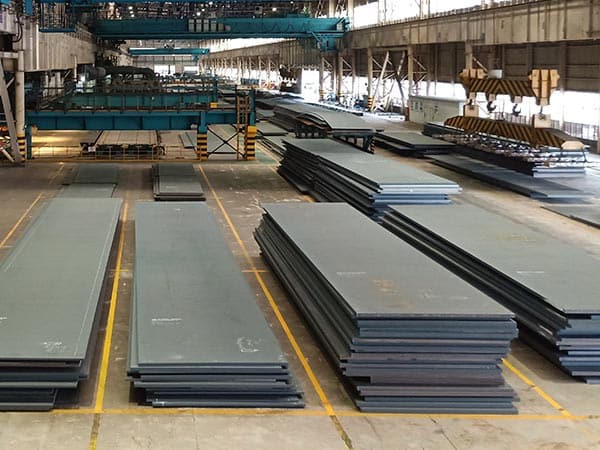
Understanding the Superiority of S355MC Alloy Steel Plates
S355MC is a high-yield strength, thermomechanically rolled steel specifically designed for cold forming. As a prominent grade under the EN 10149-2 standard, it represents a pinnacle of metallurgical engineering where strength meets ductility. When dealing with a 20mm plate, the material's internal structure becomes critical. Unlike standard structural steels, S355MC undergoes a controlled rolling process at specific temperatures, which refines the grain size to a microscopic level. This refinement is what allows a 20mm thick plate to maintain exceptional toughness while offering a minimum yield strength of 355 MPa. Procurement of this material requires a deep understanding of its thermomechanical origins to ensure that the structural integrity of the final application is never compromised.
Chemical Composition and the Role of Micro-alloying
The performance of S355MC is dictated by its precise chemical balance. To achieve high strength without increasing carbon content—which would negatively impact weldability—manufacturers utilize micro-alloying elements. For a 20mm plate, the distribution of these elements must be perfectly uniform to prevent localized weak spots. The inclusion of Niobium (Nb), Vanadium (V), and Titanium (Ti) allows for the formation of fine precipitates that pin grain boundaries during the rolling process. This prevents grain growth even during the cooling phase of a relatively thick 20mm section.
| Element | Maximum Content (%) | Functional Role |
|---|---|---|
| Carbon (C) | 0.12 | Ensures excellent weldability and prevents brittleness. |
| Manganese (Mn) | 1.50 | Increases hardness and tensile strength. |
| Silicon (Si) | 0.50 | Acts as a deoxidizer during the melting process. |
| Phosphorus (P) | 0.025 | Kept low to maintain impact toughness. |
| Sulfur (S) | 0.015 | Minimized to improve lamellar tearing resistance. |
| Al (Total) | 0.015 (Min) | Fine-grain practice element. |
The low carbon equivalent (CEV) of S355MC is a significant advantage for 20mm plates. It ensures that the material can be welded without the extensive preheating often required for traditional high-carbon alloy steels. This characteristic drastically reduces labor costs and increases throughput in heavy fabrication environments.
Mechanical Properties of 20mm S355MC Plates
When evaluating 20mm S355MC, the mechanical properties are tested transverse to the rolling direction. The thermomechanical rolling process ensures that even at this thickness, the plate exhibits isotropic properties better than many hot-rolled alternatives. The yield strength is the defining feature, providing the baseline for structural calculations. For engineers, this means the ability to reduce the weight of a structure by using thinner plates of S355MC compared to standard S235 or S355J2 grades, although in this specific case, the 20mm thickness is often chosen for its high load-bearing capacity in heavy-duty chassis and frames.
- Minimum Yield Strength (ReH): 355 MPa
- Tensile Strength (Rm): 430 - 550 MPa
- Minimum Elongation (A80mm): 19% (for thicknesses ≥ 3mm)
- Bending Radius: Excellent cold-forming capacity despite the 20mm gauge.
The high elongation percentage indicates that the material can undergo significant deformation before fracture. This is a critical safety feature in mobile machinery and transport equipment, where sudden impacts or overloads must be absorbed through plastic deformation rather than catastrophic brittle failure.
Advanced Processing: Bending, Cutting, and Welding
One of the primary reasons manufacturers seek out 20mm S355MC is its exceptional cold-forming performance. While a 20mm plate is substantial, S355MC allows for tighter bending radii compared to standard S355J2. This is due to the low impurity levels and fine grain structure which resist cracking at the outer tension zone of a bend. For a 20mm plate, a typical minimum internal bending radius of 1.5 to 2 times the thickness is achievable with the right equipment, depending on the orientation relative to the rolling direction.
Regarding thermal cutting, S355MC responds excellently to laser, plasma, and oxy-fuel cutting. Because of the low carbon content, the Heat Affected Zone (HAZ) remains relatively soft, preventing the formation of hard, brittle martensite on the cut edge. This is particularly beneficial if the edges are to be subsequently welded or if the part is subject to fatigue loading, as it eliminates the need for edge grinding in many applications.
Welding S355MC is straightforward. It can be joined using all standard methods, including MIG/MAG, TIG, and submerged arc welding. The material's chemistry is optimized to maintain toughness in the weld metal and the HAZ. For 20mm sections, ensuring proper heat input is vital to maintain the fine-grained structure that gives the steel its strength. Standard structural fillers matching the yield strength of the base metal are typically sufficient.
Environmental Adaptability and Durability
While S355MC is not a dedicated weathering steel, its refined structure provides a consistent substrate for protective coatings. The low silicon content is particularly advantageous for hot-dip galvanizing. Steels with high silicon levels can lead to the Sandelin effect, resulting in thick, brittle, and dull grey zinc coatings. S355MC's controlled chemistry ensures a predictable, aesthetic, and durable galvanized finish, which is essential for components exposed to harsh outdoor environments.
Furthermore, the low-temperature toughness of S355MC is noteworthy. Although the standard primarily focuses on yield strength and formability, the thermomechanical process inherently improves the Charpy V-notch impact energy values. This makes 20mm S355MC plates suitable for equipment operating in colder climates where traditional carbon steels might risk brittle fracture.
Strategic Industry Applications
The demand for 20mm S355MC is driven by industries that prioritize the strength-to-weight ratio. Within the heavy transport sector, it is the material of choice for trailer chassis, cross members, and longitudinal beams. The ability to utilize a 20mm plate in high-stress areas while maintaining the ability to form complex shapes allows for streamlined designs that reduce the overall weight of the vehicle, thereby increasing payload capacity and fuel efficiency.
In the construction and lifting equipment industry, S355MC is used for crane booms, outriggers, and telescopic sections. The 20mm gauge provides the necessary stiffness to resist buckling, while the high yield strength allows for the design of longer, lighter reaching arms. Similarly, in agricultural machinery, the material's resistance to fatigue and impact makes it ideal for plow frames, harvester components, and heavy-duty brackets that must endure constant vibration and varying soil conditions.
Procurement and Quality Assurance Standards
When sourcing 20mm S355MC, it is imperative to verify compliance with EN 10149-2. Every plate should be accompanied by a 3.1 mill test certificate (MTC) according to EN 10204, detailing the heat number, chemical analysis, and mechanical test results. Surface quality is another critical factor; S355MC is typically supplied with a surface finish meeting EN 10163-2 Class A, Subclass 1, ensuring it is free from cracks, shells, and scales that could interfere with high-precision laser cutting or robotic welding.
The dimensional tolerances for S355MC are governed by EN 10051. This standard ensures that the 20mm thickness is consistent across the entire width and length of the plate, which is vital for automated manufacturing processes where variations in thickness can lead to inconsistent bending angles or fit-up issues during welding. By choosing a supplier with complete specifications and a robust stock of 20mm plates, manufacturers can ensure the continuity of their production lines and the long-term reliability of their engineered products.
Leave a message