
What is the BS700MC steel for car parts thermo-mechanical condition
Detailed technical guide on BS700MC steel, exploring its thermomechanical production, mechanical properties, welding performance, and critical role in modern automotive lightweighting and safety components.
Understanding the Essence of BS700MC in Automotive Engineering
BS700MC represents a pinnacle of high-strength low-alloy (HSLA) steel technology, specifically engineered for the demanding requirements of the modern automotive industry. The "700" denotes its minimum yield strength of 700 MPa, while "MC" signifies its delivery condition: thermomechanically rolled (M) and suitable for cold forming (C). This material is not merely a piece of metal; it is the result of precise metallurgical control designed to balance extreme strength with the ductility required for complex automotive geometries. Unlike traditional hot-rolled steels that rely on heavy alloying or subsequent heat treatment, BS700MC achieves its superior properties through a sophisticated Thermomechanical Control Process (TMCP).
The shift toward electric vehicles (EVs) and more stringent fuel efficiency standards has placed immense pressure on manufacturers to reduce vehicle weight without compromising structural integrity. BS700MC serves as a primary solution, allowing for thinner gauge sections that can withstand higher loads. This transition from conventional S355 or Q345 steels to BS700MC can result in weight savings of up to 30% in structural components, directly impacting the energy efficiency and range of contemporary vehicles.
The Science of Thermomechanical Rolling (TMCP)
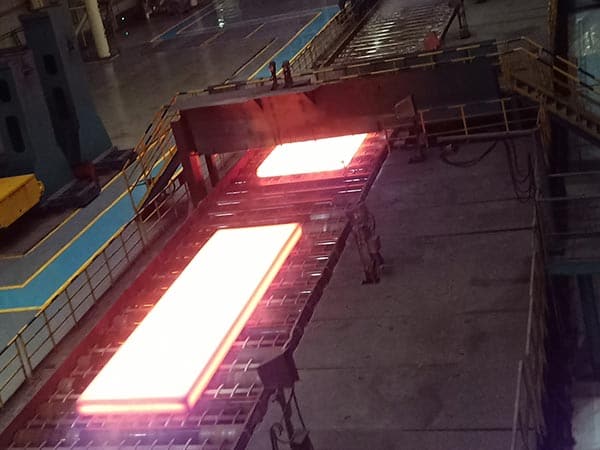
The "Thermo-mechanical condition" mentioned in the BS700MC specification refers to a rolling process where the final deformation is carried out within a specific temperature range. This range is carefully calibrated to lead to a material state with specific properties that cannot be achieved by heat treatment alone. During this process, the steel is rolled at temperatures where recrystallization is inhibited. This creates a highly refined, fine-grained microstructure, typically consisting of ferrite and fine pearlite or bainite.
By controlling the cooling rate after the final rolling pass, metallurgists can trigger the precipitation of micro-alloying elements like Niobium (Nb), Vanadium (V), and Titanium (Ti). These elements form extremely small carbides and nitrides that pin grain boundaries and impede dislocation movement, significantly boosting yield strength. Because the strength is derived from grain refinement and precipitation hardening rather than high carbon content, BS700MC maintains excellent weldability and toughness, even at sub-zero temperatures.
Chemical Composition and Metallurgical Balance
The performance of BS700MC is rooted in its low-carbon chemistry. High carbon content generally increases strength but at the cost of weldability and formability. BS700MC bypasses this trade-off by utilizing a lean chemical profile supplemented by micro-alloys. Below is a typical representation of the chemical requirements for this grade:
| Element | Max Content (%) | Function in BS700MC |
|---|---|---|
| Carbon (C) | 0.12 | Ensures basic strength while maintaining superior weldability. |
| Manganese (Mn) | 2.10 | Increases hardenability and contributes to solid solution strengthening. |
| Silicon (Si) | 0.50 | Deoxidizer and contributes to strength. |
| Phosphorus (P) | 0.025 | Kept low to prevent brittleness. |
| Sulfur (S) | 0.015 | Controlled to improve lamellar tearing resistance and ductility. |
| Aluminium (Al) | 0.015 (min) | Grain size control and deoxidation. |
| Nb + V + Ti | 0.22 | Micro-alloying for grain refinement and precipitation hardening. |
This lean composition ensures that the Carbon Equivalent (Ceq) remains low, which is critical for preventing cold cracking in the Heat Affected Zone (HAZ) during high-speed robotic welding processes common in automotive assembly lines.
Mechanical Properties and Performance Benchmarks
The primary reason for selecting BS700MC is its exceptional strength-to-weight ratio. However, for car parts, tensile strength is only part of the story. The material must also exhibit sufficient elongation to absorb energy during a collision and high fatigue resistance to endure the vibrations of a vehicle's lifespan.
| Property | Value Range | Significance for Car Parts |
|---|---|---|
| Yield Strength (ReH) | Min 700 MPa | Determines the point of permanent deformation; critical for chassis rigidity. |
| Tensile Strength (Rm) | 750 - 950 MPa | Ultimate load-bearing capacity before fracture. |
| Elongation (A80mm) | Min 10 - 12% | Indicates the ability to be formed into complex shapes without tearing. |
| Impact Energy (Charpy V-notch) | Typically 40J at -20°C | Ensures the part won't shatter in cold climates or during high-speed impacts. |
These properties make BS700MC an ideal candidate for "safety cage" components. In the event of a rollover or side-impact, parts made from this steel maintain their shape, protecting the occupants by diverting energy through the vehicle's structural pillars and beams.
Advanced Processing: Cold Forming and Bending
Despite its high strength, BS700MC is designed for cold forming. Manufacturers can use standard hydraulic presses and roll-forming machines to shape this steel. However, because the yield strength is significantly higher than mild steel, certain adjustments are necessary. The "Springback" effect is more pronounced in BS700MC; when the forming pressure is released, the material tends to return slightly toward its original shape. Engineering the dies with appropriate compensation is essential for dimensional accuracy.
The minimum bending radius is a crucial parameter for designers. For BS700MC, the recommended minimum bending radius (r) relative to the sheet thickness (t) is generally 2.0t for a 90-degree bend. This ensures that the outer fibers of the bend do not develop micro-cracks, which could later become points of fatigue failure under operational stress.
Welding Characteristics in Automotive Production
BS700MC is highly compatible with modern welding techniques, including Metal Active Gas (MAG) welding, Laser welding, and Resistance Spot Welding (RSW). The low carbon content means that preheating is rarely required, even for thicker sections. However, the high-strength properties are partially derived from the TMCP grain structure, which can be sensitive to excessive heat input.
When welding BS700MC, it is vital to control the heat input to prevent "softening" in the Heat Affected Zone. If the cooling rate is too slow, the refined grains may grow, leading to a localized drop in yield strength. Using low-heat input settings and high-speed welding techniques (like laser welding) helps preserve the integrity of the thermomechanical condition across the joint. Matching or slightly over-matching filler metals are typically used to ensure the weld bead itself meets the 700 MPa requirement.
Diverse Applications in the Automotive Sector
The versatility of BS700MC has led to its widespread adoption across various vehicle segments, from light passenger cars to heavy-duty commercial trucks. Its application is most prominent where structural strength and weight reduction are paramount.
- Chassis and Frames: Longitudinal and cross members of truck frames benefit from the high yield strength, allowing for heavier payloads without increasing the vehicle's dead weight.
- Bumper Reinforcements: These parts require high energy absorption and resistance to deformation during low-speed impacts.
- Seat Frames: Reducing the weight of internal components like seat structures contributes to overall vehicle efficiency while maintaining passenger safety.
- Crane Arms and Lifting Equipment: While not strictly a "car part," the automotive supply chain often produces mobile cranes and recovery vehicles that utilize BS700MC for boom sections to maximize reach and lift capacity.
- Suspension Components: Control arms and brackets made from BS700MC offer the durability needed to withstand constant road vibrations and dynamic loading.
Environmental Adaptability and Sustainability
BS700MC exhibits good atmospheric corrosion resistance compared to standard carbon steels, though it is typically galvanized or E-coated in automotive applications to ensure long-term durability. Its environmental impact is also noteworthy from a sustainability perspective. By enabling the use of less steel to achieve the same structural performance, BS700MC reduces the total carbon footprint of the vehicle production process. Less raw material extraction, lower transport energy, and improved fuel economy during the vehicle's life cycle make it a "green" choice in the context of modern metallurgical engineering.
Furthermore, the fine-grained structure provides excellent resistance to hydrogen-induced cracking, a common concern in high-strength steels. This makes BS700MC reliable in various climates, from the humid tropics to the freezing arctic, ensuring that the structural integrity of the vehicle remains uncompromised throughout its service life.
Technical Challenges and Implementation Strategies
Adopting BS700MC requires a shift in manufacturing mindset. Tooling must be made from higher-grade materials to resist the increased wear associated with stamping high-strength sheets. Lubrication strategies during forming must be optimized to handle the higher pressures and temperatures generated at the tool-workpiece interface.
From a design perspective, utilizing Finite Element Analysis (FEA) is highly recommended. FEA allows engineers to simulate the behavior of BS700MC during both the manufacturing process and crash scenarios. This predictive modeling helps in optimizing the thickness and geometry of parts, ensuring that the unique properties of the thermomechanically rolled steel are fully exploited. The result is a vehicle that is lighter, safer, and more efficient, fulfilling the complex demands of the 21st-century transport industry.
Leave a message