
The trading of S500MC inventory in peak season is lower than expected
An expert analysis of S500MC high-strength steel, exploring why peak season trading is lower than expected despite its superior mechanical properties, weldability, and cold-forming capabilities in heavy-duty manufacturing.
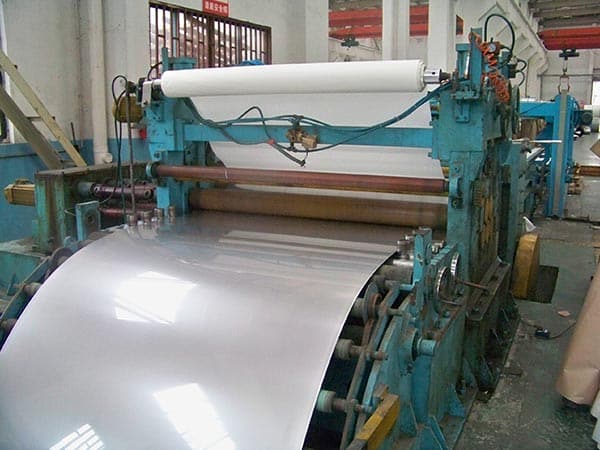
Understanding the Disconnect in S500MC Market Dynamics
The steel industry traditionally anticipates a surge in demand during the autumn months, yet current data indicates that the trading of S500MC inventory in peak season is lower than expected. S500MC, a high-yield-strength steel for cold forming governed by the EN 10149-2 standard, serves as a critical backbone for the automotive and heavy machinery sectors. The sluggish movement of stock is not a reflection of the material's utility but rather a complex interplay of macroeconomic shifts, inventory cycles, and evolving manufacturing requirements. To understand why this high-performance alloy is seeing slower turnover, we must first dissect the technical attributes that make it indispensable and the external factors dampening its market velocity.
The Metallurgical Excellence of S500MC
S500MC is a thermomechanically rolled steel, a process that yields a fine-grained microstructure through controlled rolling and cooling rates. This metallurgical approach allows for a low carbon content (typically below 0.12%), which is crucial for maintaining weldability without sacrificing strength. The inclusion of micro-alloying elements such as Niobium (Nb), Vanadium (V), and Titanium (Ti) facilitates grain refinement and precipitation hardening. This unique combination ensures that S500MC offers a minimum yield strength of 500 MPa, significantly higher than standard structural steels like S355, while maintaining the ductility required for complex cold-forming operations.
| Element | Carbon (C) | Manganese (Mn) | Silicon (Si) | Phosphorus (P) | Sulfur (S) | Aluminium (Al) |
|---|---|---|---|---|---|---|
| Max % | 0.12 | 1.60 | 0.50 | 0.025 | 0.015 | 0.015 |
The low carbon equivalent (CEV) of S500MC is a primary selling point. In industrial applications, this translates to a reduced risk of cold cracking in the heat-affected zone (HAZ) during welding. However, the current market stagnation suggests that manufacturers are prioritizing the depletion of existing stocks or are facing a slowdown in downstream projects, such as commercial vehicle chassis production and crane boom fabrication, where S500MC is most prevalent.
Mechanical Performance and Structural Efficiency
The mechanical properties of S500MC are engineered for weight reduction—a critical factor in modern transport logistics. By utilizing S500MC, engineers can reduce the thickness of structural components without compromising the load-bearing capacity. This "lightweighting" effect is essential for increasing payload efficiency and reducing fuel consumption in heavy-duty trucks.
| Property | Yield Strength (ReH MPa) | Tensile Strength (Rm MPa) | Elongation (A50mm %) | Bending Radius (180°) |
|---|---|---|---|---|
| S500MC Values | Min 500 | 550 - 700 | Min 12 - 14 | 0.5t to 1.0t |
Despite these advantages, the trading volume remains suppressed. One technical reason could be the precision required in processing. While S500MC is highly formable, its high yield strength results in significant springback during bending. Manufacturers must employ sophisticated CNC press brakes and precise springback compensation algorithms. If the downstream manufacturing sector lacks the capital to upgrade machinery or is operating at reduced capacity, the demand for high-spec materials like S500MC naturally dips, regardless of the season.
Advanced Processing: Welding and Laser Cutting
S500MC excels in modern fabrication environments. Its clean internal structure and low impurity levels make it an ideal candidate for high-speed laser cutting. Unlike lower-grade hot-rolled steels, S500MC exhibits minimal distortion and a consistent edge quality, which reduces the need for secondary grinding operations. In welding, the material is compatible with standard MIG/MAG and submerged arc welding processes. Because the strength is derived from thermomechanical rolling rather than high carbon content, the weld joints maintain excellent toughness even at low temperatures.
Key Processing Advantages:
- Excellent Weldability: No preheating is typically required for standard thicknesses, reducing energy costs and cycle times.
- Superior Surface Quality: The controlled rolling process results in a tight mill scale that is easily removed by pickling or shot blasting.
- Consistency: Uniform mechanical properties across the width and length of the coil ensure predictable performance in automated production lines.
The paradox of the current market is that while these efficiencies should drive demand during a peak season, the high cost of financing inventory and the volatility of raw material prices have led to a "just-in-time" procurement strategy. Buyers are no longer stockpiling S500MC, leading to the observed lower-than-expected trading volumes in traditional inventory hubs.
Environmental Adaptation and Fatigue Resistance
S500MC is frequently deployed in environments where vibration and cyclic loading are constant. The fine-grained structure provides a natural barrier to crack propagation, giving it superior fatigue resistance compared to traditional s355jr grades. This makes it the material of choice for cross-members in truck frames and structural parts for agricultural machinery. Furthermore, its performance in low-temperature environments is robust, often meeting impact toughness requirements at -20°C or even -40°C depending on the specific sub-grade and manufacturer specifications.
The shift toward green energy and sustainable infrastructure also opens new avenues for S500MC. In the solar industry, high-strength steel is used for torque tubes and mounting structures to withstand wind loads while minimizing material usage. However, the expansion into these sectors has not yet offset the contraction in traditional heavy manufacturing, contributing to the current inventory surplus.
Analyzing the Peak Season Trading Deficit
The expectation of a "peak season" is often based on historical cycles of infrastructure spending and automotive model year launches. Several factors are currently disrupting this cycle for S500MC. First, the global transition toward electric vehicles (EVs) has shifted the focus of automotive R&D. While S500MC remains relevant, the structural designs of EV chassis differ significantly from traditional internal combustion engine (ICE) trucks, leading to a temporary lull as production lines are reconfigured.
Second, the global supply chain has become more fragmented. Inventory that was once held by regional distributors is now being managed more conservatively. The high yield strength of S500MC means it is often produced to order for specific large-scale projects. When these projects face delays due to high interest rates or geopolitical uncertainty, the inventory sits idle, creating the perception of a market slowdown.
Strategic Outlook for S500MC Utilization
Moving forward, the value proposition of S500MC remains unchallenged. As carbon taxes and environmental regulations become more stringent, the pressure to reduce vehicle weight and improve material efficiency will only intensify. S500MC is perfectly positioned to meet these demands. The current trading slump should be viewed as a structural realignment rather than a decline in the material's relevance. Fabricators who take advantage of the current inventory availability may find themselves at a competitive advantage when demand inevitably rebounds.
Industry Applications for S500MC:
- Heavy Transportation: Chassis frames, side members, and reinforcement brackets for trailers and trucks.
- Construction Machinery: Crane jibs, telescopic booms, and excavator components where high strength-to-weight ratios are vital.
- Storage Solutions: High-load racking systems and cold-formed sections for warehouse automation.
- Renewable Energy: Support structures for wind turbines and solar tracking systems.
The technical superiority of S500MC, characterized by its 500 MPa yield strength and exceptional cold-formability, ensures its long-term dominance in the high-strength low-alloy (HSLA) market. While the trading of S500MC inventory in peak season is lower than expected, the underlying fundamentals of the material—its weldability, fatigue resistance, and processing efficiency—continue to provide the engineering solutions required for the next generation of industrial infrastructure. The market is currently navigating a period of price discovery and inventory correction, but the intrinsic value of S500MC as a high-performance engineering material remains as strong as ever.
Leave a message