
What is the laser cutting tolerance for S700MC price
Explore the technical nuances of laser cutting S700MC high-strength steel, focusing on precision tolerances, metallurgical behavior, and the factors influencing market pricing for heavy-duty industrial applications.
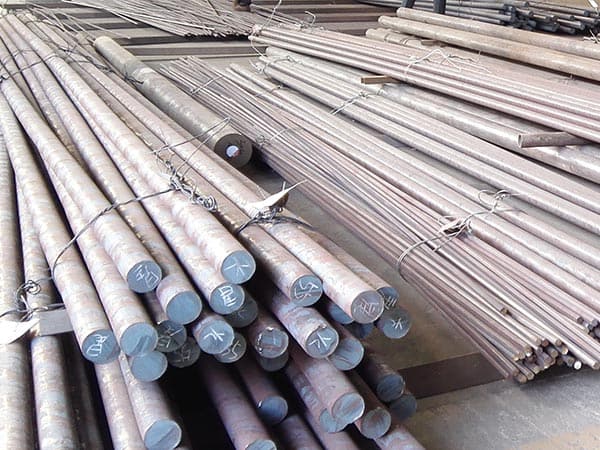
Understanding the Metallurgical Profile of S700MC High-Strength Steel
S700MC is a high-strength, low-alloy (HSLA) steel grade produced through thermomechanically controlled rolling (TMCP). Governed by the EN 10149-2 standard, this material is engineered to offer a minimum yield strength of 700 MPa. Unlike traditional structural steels, S700MC achieves its remarkable strength-to-weight ratio through a fine-grained microstructure, facilitated by micro-alloying elements such as niobium (Nb), vanadium (V), and titanium (Ti). This metallurgical design ensures that while the material is exceptionally strong, it retains excellent cold-forming properties and weldability, making it a staple in the automotive, lifting, and transport sectors.
The choice of S700MC is often driven by the need for weight reduction without compromising structural integrity. In the manufacturing of truck chassis, crane booms, and heavy-duty trailers, using S700MC allows for thinner sections compared to S355 or S460, directly impacting fuel efficiency and payload capacity. However, the high strength of the material introduces specific challenges during secondary processing, particularly in laser cutting and subsequent bending operations.
Laser Cutting Tolerance for S700MC: Precision and Standards
When manufacturers ask, "What is the laser cutting tolerance for S700MC?", they are essentially looking for the limits of dimensional accuracy achievable when processing this high-strength grade. Laser cutting precision is not merely a function of the machine but is deeply influenced by the material's internal stress levels and surface quality. For S700MC, which is typically supplied in thicknesses ranging from 3mm to 12mm (though heavier gauges exist), the laser cutting tolerance generally adheres to ISO 9013 standards.
Under standard industrial conditions using modern fiber laser systems, the following tolerances are typical for S700MC:
- Thickness 3mm - 6mm: Tolerance of ±0.1mm to ±0.2mm.
- Thickness 8mm - 12mm: Tolerance of ±0.2mm to ±0.3mm.
- Thickness >12mm: Tolerance of ±0.4mm to ±0.5mm depending on the beam quality and gas pressure.
Achieving these tolerances requires precise control over the laser's focal point and the selection of assist gases. Oxygen cutting is common for thicker S700MC plates to enhance cutting speed, but it leaves a thin oxide layer. Nitrogen cutting, while more expensive due to gas consumption, provides a clean, oxide-free edge that is ideal for parts requiring immediate painting or high-precision welding. The inherent flatness of S700MC, a result of the TMCP process, helps in maintaining a consistent standoff distance for the laser head, which is critical for maintaining tight tolerances across large-format plates.
The Correlation Between S700MC Price and Processing Quality
The S700MC price is influenced by a complex interplay of raw material costs, energy consumption during the thermomechanical rolling process, and the specific alloy surcharges for niobium and titanium. Unlike commodity steels like S235, S700MC is a premium product. When sourcing this material, the price is often quoted per ton, but the "true cost" must include the efficiency of the cutting process. High-quality S700MC with low internal stress levels prevents the plate from "bowing" or "springing" during laser cutting, which can otherwise cause head crashes or dimensional deviations.
| Feature | Specification (S700MC) | Impact on Processing |
|---|---|---|
| Yield Strength | Min. 700 MPa | Requires high-tonnage bending equipment. | Tensile Strength | 750 - 950 MPa | Influences the shear resistance during cutting. | Elongation (A5) | Min. 12% (depending on thickness) | Ensures crack resistance during tight-radius bends. | Carbon Equivalent (CEV) | Approx. 0.39 | Excellent weldability and low HAZ hardening. |
Market fluctuations in the S700MC price are also tied to the automotive production cycle. As a material favored for light-weighting, a surge in commercial vehicle demand can tighten supply and drive up premiums. Procurement specialists must also account for the "width and length" extras, as larger plates required for crane booms often carry higher price points due to the specialized rolling mills required for their production.
Thermal Impact and Edge Quality in Laser Cutting
One of the critical aspects of processing S700MC is the Heat Affected Zone (HAZ). Because S700MC derives its strength from a specific microstructural arrangement achieved during rolling, excessive heat input can locally soften the material. Laser cutting, characterized by its high power density and localized heat, minimizes the HAZ compared to plasma or oxy-fuel cutting. This is vital for maintaining the 700 MPa yield strength near the cut edge.
Laser cutting tolerance for S700MC also extends to the perpendicularity and roughness of the cut edge. According to ISO 9013, Class 1 or Class 2 cuts are achievable. A Class 1 cut on S700MC ensures that the edge is nearly perfectly square, which is essential for components that will be robotically welded. If the edge is beveled or rough, the fit-up during welding becomes inconsistent, leading to potential structural weaknesses in the final assembly.
Environmental Adaptability and Long-term Performance
S700MC is not inherently corrosion-resistant like stainless steel, but its chemistry is optimized for surface treatments. The low silicon content is specifically designed to facilitate high-quality hot-dip galvanizing or sophisticated E-coating. This environmental adaptability makes it suitable for chassis components exposed to road salt and harsh weather conditions. When the laser cutting tolerance is held tightly, the subsequent protective coatings adhere more uniformly to the smooth, clean-cut edges, extending the service life of the component.
Furthermore, the fatigue strength of S700MC is superior to standard structural steels. In dynamic loading environments, such as the telescopic sections of a crane, the precision of the laser-cut edge is paramount. Any micro-cracks or excessive roughness can act as stress concentrators, leading to premature fatigue failure. Therefore, the investment in high-precision laser cutting, even if it adds to the initial processing cost, pays dividends in the safety and longevity of the machine.
Optimizing Production: Balancing Tolerance and Cost
To optimize the S700MC price-to-performance ratio, manufacturers should focus on nesting efficiency and cutting parameters. Since S700MC is a high-value material, reducing scrap through tight nesting on the laser bed is essential. Modern CAD/CAM software can maintain a narrow kerf (the width of the cut), allowing parts to be placed closer together. Because the material is so strong, even small webs of remaining steel can hold the skeleton together during the cutting process, allowing for higher material utilization rates.
The interaction between the laser beam and the micro-alloyed elements in S700MC requires fine-tuning. For instance, the presence of titanium can slightly alter the plasma plume during cutting. Experienced operators adjust the frequency and duty cycle of the laser to ensure that the melt is ejected cleanly, preventing the formation of "dross" or burrs on the bottom edge. A burr-free cut eliminates the need for secondary grinding, which is a significant labor cost-saver.
Strategic Sourcing and Industry Applications
The strategic sourcing of S700MC involves more than just finding the lowest price per kilogram. It requires a partner who understands the nuances of the EN 10149-2 standard and can provide mill test certificates (MTC) that guarantee the chemical and mechanical properties. In industries like agricultural machinery, where equipment must withstand high torque and impact, the reliability of S700MC is non-negotiable. Here, the laser cutting tolerance ensures that complex interlocking parts fit perfectly, reducing assembly time and improving the overall structural rigidity of the machinery.
As the industry moves toward more sustainable manufacturing, the role of S700MC becomes even more prominent. By enabling lighter designs, it reduces the carbon footprint of the entire lifecycle of a vehicle—from the energy required for material production to the fuel consumed during decades of operation. The precision of laser cutting is the bridge that allows these advanced metallurgical properties to be translated into high-performance engineering reality.
Leave a message