
What is the asme material s700mc steel density equivalent
Discover the technical specifications, density, and ASME equivalents of S700MC steel. This guide provides an in-depth analysis of its mechanical properties, welding performance, and industrial applications for high-strength engineering projects.
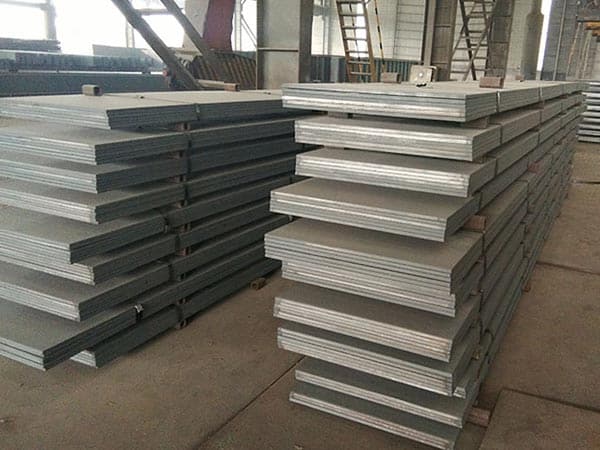
Understanding the Physical Constants: S700MC Steel Density
In the precision-driven world of structural engineering and heavy machinery manufacturing, the density of a material is more than just a physical constant; it is a critical variable for weight-to-strength ratio calculations. For S700MC, a high-strength low-alloy (HSLA) steel produced via thermomechanical rolling, the density is approximately 7.85 g/cm³ (7850 kg/m³). This value is standard for most carbon and low-alloy steels, yet the strategic advantage of S700MC lies in how this density is leveraged. By utilizing a material with a yield strength of 700 MPa at the same density as traditional S355 steel, engineers can significantly reduce the volume of material required, leading to lighter, more efficient structures without compromising safety.
When calculating the theoretical weight of S700MC plates or coils, the formula remains consistent: Weight (kg) = Thickness (mm) × Width (m) × Length (m) × 7.85. This predictability allows for seamless integration into existing CAD/CAE workflows where material mass properties are essential for stress analysis and dynamic simulation. However, the true complexity arises when attempting to find an ASME (American Society of Mechanical Engineers) or ASTM equivalent for this European-standard (EN 10149-2) material.
Identifying ASME and ASTM Equivalents for S700MC
Technically, S700MC is defined under the EN 10149-2 standard, which focuses on hot-rolled flat products made of high yield strength steels for cold forming. ASME codes, particularly Section II, do not always provide a direct 1:1 carbon-copy equivalent for every EN grade. However, when searching for an ASME material S700MC equivalent, engineers typically look toward ASTM A656 Grade 100 or ASTM A1011/A1018 HSLAS-F Grade 80, depending on the specific application requirements.
While S700MC boasts a minimum yield strength of 700 MPa (approx. 101.5 ksi), ASTM A656 Grade 100 offers a similar yield threshold of 100 ksi. It is important to note that while the mechanical properties may align, the chemical compositions and processing routes (such as the specific thermomechanical rolling parameters) might differ slightly. Therefore, any substitution in an ASME-coded vessel or structure must be validated by a Professional Engineer (PE) to ensure compliance with specific project safety factors.
| Property | S700MC (EN 10149-2) | ASTM A656 Grade 100 | ASTM A1011 HSLAS-F Gr 80 |
|---|---|---|---|
| Yield Strength (min) | 700 MPa | 690 MPa (100 ksi) | 550 MPa (80 ksi) |
| Tensile Strength | 750-950 MPa | 790 MPa (min) | 620 MPa (min) |
| Elongation (min) | 10-12% | 15% | 12% |
| Density | 7.85 g/cm³ | 7.85 g/cm³ | 7.85 g/cm³ |
The Metallurgical Edge: Thermomechanical Rolling (MC)
The "MC" suffix in S700MC denotes that the steel is thermomechanically rolled. This process is a sophisticated metallurgical technique that combines precise temperature control with specific deformation sequences. Unlike traditional normalized steels, thermomechanical rolling creates a fine-grained microstructure that is exceptionally tough and weldable despite its high strength. This process allows for a lower carbon equivalent (CEV), which is the primary reason why S700MC exhibits superior weldability compared to quenched and tempered steels of similar strength levels.
The micro-alloying elements, typically small additions of Niobium (Nb), Vanadium (V), and Titanium (Ti), play a pivotal role. These elements facilitate grain refinement and precipitation hardening. From a practical standpoint, this means that during fabrication, the heat-affected zone (HAZ) remains more stable, and the risk of cold cracking is significantly reduced. This environmental adaptability makes it a preferred choice for equipment operating in sub-zero temperatures, where traditional steels might suffer from brittle fracture.
Mechanical Performance and Structural Integrity
Beyond the headline yield strength of 700 MPa, the mechanical profile of S700MC is characterized by its remarkable ductility and impact toughness. For thicknesses less than 3mm, the minimum elongation is typically around 10%, while thicker sections offer better values. This ductility is crucial for cold forming operations. Engineers often specify S700MC when they need to perform tight-radius bending without the risk of surface cracking or springback issues that plague lower-quality high-strength steels.
The impact energy values are also a critical metric. S700MC is often tested at -20°C or -40°C to ensure it maintains its toughness in harsh climates. This makes it an ideal candidate for mobile cranes, truck chassis, and agricultural machinery that must endure dynamic loads in unpredictable outdoor environments. The consistency of these mechanical properties across the entire plate surface is a testament to the advanced cooling and rolling technologies used in modern steel mills.
Advanced Fabrication: Welding, Cutting, and Bending
Fabricating with S700MC requires an understanding of its unique metallurgical state. Because its strength is derived from the thermomechanical process rather than heat treatment, excessive heat input during welding can potentially soften the material in the HAZ. To maintain structural integrity, it is recommended to use low heat input welding techniques and to select consumables that match or slightly exceed the base metal's strength.
- Welding: Conventional methods like MAG (Metal Active Gas), SAW (Submerged Arc Welding), and Laser Beam Welding are highly effective. Preheating is generally not required for thinner sections due to the low carbon equivalent.
- Cold Forming: S700MC is designed for cold forming. It is essential to follow the manufacturer's guidelines for minimum bending radii (typically 1.0 to 2.0 times the thickness) to prevent micro-fractures.
- Laser and Plasma Cutting: The clean chemical composition of S700MC results in excellent edge quality during thermal cutting, which reduces the need for secondary grinding operations.
Strategic Applications Across Global Industries
The adoption of S700MC has revolutionized several heavy industries by enabling the "lightweighting" trend. In the transport sector, using S700MC for trailer chassis and longitudinal beams allows for an increase in payload capacity while reducing fuel consumption. Every kilogram saved in the vehicle's tare weight translates directly into operational profit and a lower carbon footprint.
In the lifting and energy sectors, the material is indispensable. Telescopic crane booms require extreme stiffness and high yield strength to reach greater heights with heavier loads. S700MC provides the necessary performance without the massive weight penalty of traditional structural steels. Similarly, in the mining and construction industry, components like excavator buckets and support structures benefit from the abrasion resistance and high fatigue strength inherent in this grade.
Looking at the broader perspective, the shift toward S700MC and its equivalents reflects a move toward sustainable engineering. By using less steel to achieve the same or better structural performance, manufacturers reduce the total energy consumed in production, transportation, and end-use operation. This alignment with modern ESG (Environmental, Social, and Governance) goals ensures that S700MC remains a cornerstone of high-performance material selection for years to come.
Leave a message