
What are the basic requirements for en 10149-2 cold forming autobobile steel grade s420mc cutting and after-cutting
Comprehensive guide on cutting and post-processing EN 10149-2 S420MC high-strength steel for automotive applications, covering thermal cutting, mechanical shearing, and edge treatment.
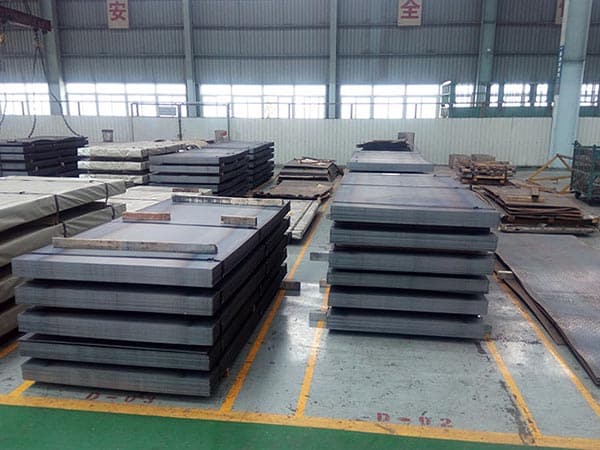
Understanding S420MC: The High-Strength Foundation for Automotive Engineering
EN 10149-2 S420MC is a thermomechanically rolled, high-yield-strength steel designed specifically for cold forming. In the modern automotive industry, where weight reduction and structural integrity are paramount, S420MC serves as a critical material for chassis parts, cross-members, and longitudinal beams. The 'S' stands for structural steel, '420' denotes a minimum yield strength of 420 MPa, and 'MC' indicates it is suitable for cold forming and produced through thermomechanical rolling.
The unique microstructure of S420MC—achieved through controlled rolling and cooling—results in a fine-grained ferritic-pearlitic structure. This microstructure provides an excellent balance of high strength, ductility, and toughness. However, these same properties impose specific requirements on how the material is cut and processed afterward to ensure that the final component maintains its design specifications and safety margins.
Chemical Composition and Mechanical Foundations
Before diving into cutting techniques, it is essential to understand the chemical profile of S420MC. The low carbon content and the addition of micro-alloying elements like niobium (Nb), vanadium (V), and titanium (Ti) are what give this steel its superior weldability and formability.
| Element | C (max %) | Mn (max %) | Si (max %) | P (max %) | S (max %) | Al (min %) |
|---|---|---|---|---|---|---|
| S420MC | 0.12 | 1.60 | 0.50 | 0.025 | 0.015 | 0.015 |
The mechanical properties are equally critical for determining the cutting strategy. High yield strength means the material resists deformation more than standard mild steel, requiring higher forces during mechanical cutting and specific heat management during thermal cutting.
Thermal Cutting Requirements: Precision and Heat Management
Thermal cutting, particularly laser and plasma cutting, is the most common method for shaping S420MC in automotive production. Because S420MC is a thermomechanically rolled steel, it is sensitive to excessive heat input, which can alter its localized microstructure.
Laser Cutting: This is the preferred method for S420MC due to its high precision and narrow Heat-Affected Zone (HAZ). For S420MC, nitrogen (N2) is often preferred as the assist gas over oxygen (O2) when a clean, oxide-free edge is required for subsequent welding or coating. Oxygen cutting can lead to a harder edge due to oxidation, which might require additional grinding if the part undergoes extreme cold bending later.
Plasma Cutting: When dealing with thicker sections of S420MC, plasma cutting is efficient. However, the HAZ is wider than that of laser cutting. It is vital to control the cutting speed to minimize the time the material is exposed to high temperatures. Excessive heat can lead to grain growth in the HAZ, potentially reducing the yield strength and impact toughness at the edge.
- Edge Hardening: Thermal cutting naturally increases the hardness of the cut edge. For S420MC, this hardening must be monitored. If the edge hardness exceeds 350-400 HV, the risk of micro-cracking during subsequent cold forming increases significantly.
- Slag Removal: Modern high-definition plasma and laser systems minimize dross, but any residual slag must be removed mechanically to prevent stress concentrators.
Mechanical Cutting and Shearing: Force and Clearance
Mechanical shearing and punching are widely used for high-volume production of S420MC components. Due to the high yield strength of 420 MPa, the machinery must be robust.
Shearing Clearance: The gap between the upper and lower blades (clearance) is critical. For S420MC, a clearance of 8% to 12% of the material thickness is generally recommended. Too small a clearance increases tool wear and energy consumption; too large a clearance results in excessive burrs and a deformed edge profile.
Tool Quality: Hardened tool steels are required for cutting S420MC. The high strength of the material can cause rapid blunting of standard blades, leading to 'tearing' rather than 'shearing' of the metal. A torn edge is a primary site for crack initiation during the bending process.
Post-Cutting Requirements: Preparing for the Next Phase
What happens after the cut is just as important as the cut itself. S420MC is designed to be bent, stretched, and formed into complex shapes. The quality of the cut edge directly dictates the success of these operations.
Edge Grinding and Deburring: For automotive structural components, burrs are not just an aesthetic issue; they are functional hazards. Burrs act as stress raisers. During cold forming, a burr on the outer radius of a bend can lead to premature splitting. Mechanical deburring or edge rounding is highly recommended for S420MC, especially when the bend radius is tight.
Cold Forming and Bend Radius: S420MC offers excellent cold formability. According to EN 10149-2, the minimum recommended bend radius (r) depends on the thickness (t). For S420MC, the typical minimum bend radius for a 90-degree bend is:
- For t ≤ 3mm: r = 0.5t
- For 3mm < t ≤ 6mm: r = 1.0t
- For t > 6mm: r = 1.5t
Environmental Adaptability and Surface Treatment
S420MC is often used in the 'as-rolled' or 'pickled and oiled' condition. After cutting, the exposed edges are vulnerable to oxidation. In automotive applications, these parts usually undergo E-coating (electrophoretic coating) or galvanizing.
Surface Cleanliness: After thermal cutting, the edges may have a thin oxide layer. If the part is to be painted or coated, this oxide must be removed via pickling or mechanical abrasion. Failure to do so will result in poor coating adhesion, leading to localized corrosion in the vehicle's chassis over time.
Welding Compatibility: S420MC is exceptionally well-suited for welding. However, after cutting, the edges must be free of oil, moisture, and heavy oxides. Because of the low carbon equivalent (CEV), preheating is generally not required for S420MC, but maintaining a low heat input during welding is advised to preserve the fine-grained structure of the base metal.
Quality Control and Inspection Standards
To ensure that the cutting and after-cutting processes have not compromised the material, several inspection steps are necessary:
- Dimensional Accuracy: Ensuring the cut parts meet the tight tolerances required for robotic assembly in automotive lines.
- Visual Inspection: Checking for cracks, deep gouges, or excessive dross on the cut edges.
- Hardness Testing: Periodically checking the HAZ hardness to ensure the cutting process (especially plasma) isn't creating brittle zones.
- Bend Testing: Performing sample bends on cut pieces to verify that the edge quality is sufficient for the intended forming strain.
Optimizing S420MC for Advanced Manufacturing
Utilizing S420MC effectively requires a holistic view of the production chain. By selecting the right cutting parameters and ensuring meticulous edge preparation, manufacturers can leverage the full weight-saving potential of this high-strength steel. The transition from a flat sheet to a complex automotive structural component relies on the integrity of the cut edge. Whether using fiber lasers for intricate geometries or heavy-duty shears for straight blanks, the goal remains the same: preserving the superior mechanical properties that EN 10149-2 S420MC was engineered to provide.
Leave a message