
What is the s420 steel mechanical properties cold bending
Discover the comprehensive guide to S420 steel mechanical properties and cold bending performance. Learn about yield strength, tensile limits, and technical requirements for forming.
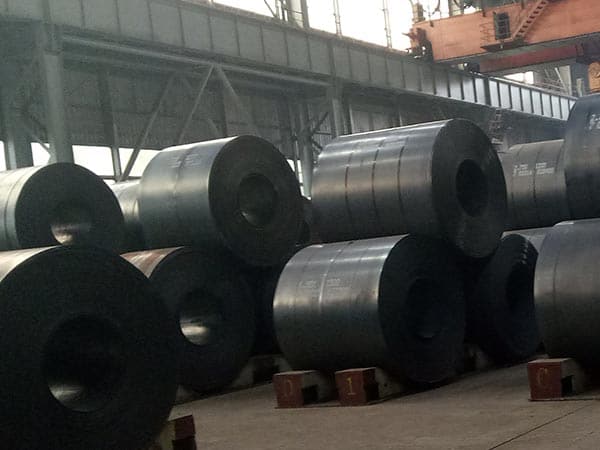
Understanding the Fundamentals of S420 Structural Steel
S420 steel represents a significant milestone in the evolution of high-strength low-alloy (HSLA) structural steels. Governed primarily by the EN 10025-3 and EN 10025-4 standards, this material is engineered to bridge the gap between standard carbon steels like S355 and ultra-high-strength quenched and tempered grades. The 'S' denotes structural use, while '420' signifies its minimum yield strength of 420 MPa for thicknesses up to 16mm. Understanding the relationship between its mechanical properties and cold bending behavior is essential for engineers and fabricators aiming to optimize weight-to-strength ratios in complex structures.
Mechanical Properties Breakdown: Beyond the Yield Point
The mechanical integrity of S420 steel is defined by its fine-grained microstructure, achieved through either normalized (N) or thermomechanically rolled (M) processes. These processing routes directly influence how the material reacts under stress during cold forming operations.
| Property | S420N / S420M (t ≤ 16mm) | S420NL / S420ML (t ≤ 16mm) |
|---|---|---|
| Minimum Yield Strength (MPa) | 420 | 420 |
| Tensile Strength (MPa) | 520 - 680 | 520 - 680 |
| Minimum Elongation (%) | 19 | 19 |
| Impact Energy (KV) | 40J at -20°C | 27J at -50°C |
Yield Strength and Tensile Strength: The high yield strength of 420 MPa allows for the design of lighter components compared to S355, reducing overall material consumption. However, this increased strength necessitates higher forces during the cold bending process. The tensile-to-yield ratio is also a critical factor; a narrower gap between these two values often indicates a more challenging forming environment.
Ductility and Elongation: With a minimum elongation of approximately 19%, S420 maintains sufficient plasticity for most structural applications. This ductility is the primary enabler for cold bending, allowing the outer fibers of the steel plate to stretch without initiating micro-cracks.
Cold Bending Characteristics of S420 Steel
Cold bending S420 steel requires a precise understanding of the material's internal stress distribution. Unlike milder steels, S420 exhibits significant work hardening and elastic recovery (springback). When a plate is bent, the inner radius is subjected to compression while the outer radius undergoes tension. The success of this operation depends on the material's ability to redistribute these stresses.
Minimum Bending Radius: To prevent cracking on the tension side, fabricators must adhere to minimum bending radii. For S420, the recommended radius is typically larger than that of S355. For thicknesses (t) up to 20mm, a common guideline for the internal bending radius (r) is:
- Bending transverse to rolling direction: r ≥ 2.0t
- Bending parallel to rolling direction: r ≥ 3.0t
Using a radius smaller than these values significantly increases the risk of surface tearing or orange-peel effects, especially if the plate edges have not been properly deburred or ground smooth. The grain orientation plays a vital role; bending transverse to the rolling direction is always preferred as the material is more resistant to longitudinal splitting.
The Impact of Springback and Force Requirements
One of the most technical aspects of cold bending S420 is managing springback. Because S420 has a higher yield point, the amount of elastic energy stored during the bending process is greater than in lower-grade steels. Once the bending force is released, the steel attempts to return to its original shape more aggressively.
Springback Compensation: Operators must 'over-bend' the part by several degrees to achieve the final desired angle. The degree of springback is influenced by the ratio of the bending radius to the plate thickness (r/t) and the yield strength of the specific heat of steel. High-precision CNC press brakes with integrated angle measurement systems are highly recommended for S420 to ensure consistency across batches.
Press Force: The force required to bend S420 is approximately 20-30% higher than that required for S355 of the same thickness. This places higher demands on the tooling and the machine's structural rigidity. Using hardened dies and ensuring proper lubrication can reduce friction and improve the surface finish of the bend.
Chemical Composition and Its Influence on Formability
The cold bending performance of S420 is a direct result of its sophisticated chemistry. By keeping carbon levels low (typically ≤ 0.20%) and utilizing micro-alloying elements like Niobium (Nb), Vanadium (V), and Titanium (Ti), manufacturers can achieve high strength without sacrificing toughness or weldability.
- Manganese (Mn): Enhances strength and helps in grain refinement.
- Niobium and Vanadium: Form carbides and nitrides that pin grain boundaries, ensuring a fine-grained structure that is more resilient during the stretching phases of cold bending.
- Sulfur Control: Low sulfur content (often ≤ 0.015%) is critical. High sulfur leads to manganese sulfide inclusions, which can act as initiation points for cracks during tight-radius bending.
Environmental Adaptability and Long-term Performance
S420 steel is frequently selected for environments where low-temperature toughness is mandatory. The 'L' variants (S420NL and S420ML) are tested for impact energy at temperatures as low as -50°C. This ensures that even if the material has been cold-worked (which slightly increases the ductile-to-brittle transition temperature), it remains safe from brittle fracture in arctic or offshore conditions.
Furthermore, the fine-grained structure provides a degree of atmospheric corrosion resistance that is superior to standard hot-rolled plates, although it is not a substitute for weathering steel or protective coatings. In structural applications like bridge girders or wind turbine towers, the ability of S420 to withstand cyclic loading after being cold-formed is a major advantage.
Advanced Applications and Industry Expansion
The unique combination of high yield strength and reliable cold formability has made S420 a staple in several heavy industries. In the Offshore and Marine sector, it is used for jack-up rig components and deck structures where weight reduction is critical for buoyancy and stability. The Construction Machinery industry utilizes S420 for crane booms and chassis frames, where components must be bent into complex shapes to maximize structural efficiency.
In the Renewable Energy sector, specifically wind power, S420 is used in the fabrication of tower sections. The ability to cold-roll thick S420 plates into large-diameter cylinders with high precision is vital for the structural integrity of these tall towers. The Transportation industry also benefits, using S420 for heavy-duty trailer frames and railway wagons, where the increased strength allows for higher payloads.
Technical Recommendations for Successful Fabrication
To maximize the benefits of S420 steel during cold bending, certain workshop practices should be implemented. First, ensure that the temperature of the workpiece is at least 20°C. Bending steel in cold environments (below 5°C) significantly increases the risk of brittle failure. Second, the edges of the plate in the bend zone should be ground to remove any hardened layers caused by plasma or laser cutting. This 'edge conditioning' prevents the initiation of cracks from the plate periphery.
Finally, always verify the material test report (MTR) to understand the specific rolling process (N vs M). Thermomechanically rolled S420M often exhibits slightly better cold formability and weldability due to its lower carbon equivalent (CEV) value compared to the normalized S420N grade. By aligning the fabrication strategy with the specific metallurgical properties of the steel, engineers can produce high-performance, durable components that leverage the full potential of S420 high-strength steel.
Leave a message