
Which steel grade is equivalent to s420mc steel equivalent
Explore the comprehensive guide to S420MC steel equivalents. Learn about its mechanical properties, chemical composition, and global standard comparisons for industrial applications.
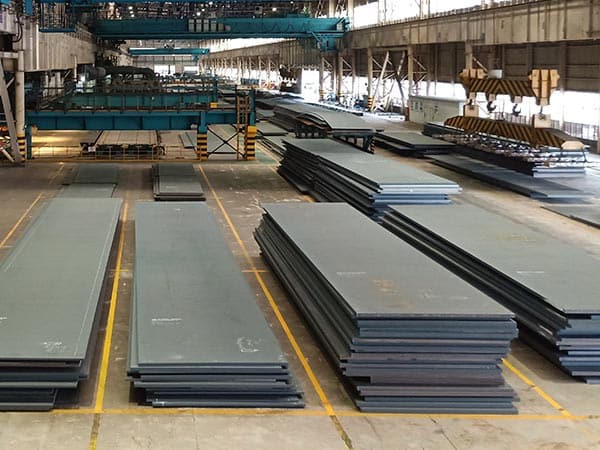
Understanding the Fundamentals of S420MC Steel
S420MC is a high-strength cold-forming steel produced through a thermomechanical rolling process, strictly governed by the EN 10149-2 European standard. The 'S' denotes structural steel, '420' represents the minimum yield strength of 420 MPa, and 'MC' indicates it is thermomechanically rolled (M) and suitable for cold forming (C). This material is part of the High Strength Low Alloy (HSLA) family, designed to offer a superior strength-to-weight ratio compared to traditional carbon steels. Engineers and procurement specialists often seek equivalents to ensure supply chain flexibility across different geographical regions, such as North America (ASTM), China (GB), or Japan (JIS).
The Chemical Architecture of S420MC
The performance of S420MC is rooted in its precise chemical composition. Unlike standard structural steels that rely on high carbon content for strength, S420MC utilizes micro-alloying elements. These elements, including Niobium (Nb), Vanadium (V), and Titanium (Ti), refine the grain structure during the thermomechanical rolling process. This grain refinement is the primary reason why S420MC maintains high ductility despite its high yield strength.
| Element | Maximum Content (%) |
|---|---|
| Carbon (C) | 0.12 |
| Manganese (Mn) | 1.60 |
| Silicon (Si) | 0.50 |
| Phosphorus (P) | 0.025 |
| Sulfur (S) | 0.015 |
| Aluminum (Al) | 0.015 |
| Nb + V + Ti | 0.22 |
The low carbon content (max 0.12%) is particularly significant. It ensures excellent weldability and prevents the formation of brittle phases in the heat-affected zone (HAZ). The controlled addition of manganese enhances hardenability and strength without compromising toughness.
Global Equivalents: Finding the Right Match
When searching for an equivalent to S420MC, it is vital to recognize that 'equivalent' does not always mean 'identical.' Different standards emphasize different properties. For instance, while EN 10149-2 focuses on thermomechanical rolling for cold forming, ASTM standards might focus more on general structural requirements.
- ASTM A656 Grade 60 (USA): This is often considered the closest American equivalent. It offers a similar yield strength (approx. 415-420 MPa) and is also a micro-alloyed HSLA steel.
- GB/T 1591 Q420L (China): In the Chinese standard, Q420L is specifically designed for automotive and structural applications requiring high strength and good cold-forming properties.
- JIS G3134 SPFH 590 (Japan): This Japanese Industrial Standard covers hot-rolled high strength steel sheets for automobile structural uses, aligning closely with the mechanical demands of S420MC.
- ISO 6930-2 PW420: The International Organization for Standardization provides a direct counterpart that mirrors the thermomechanical processing requirements.
| Standard | Grade Designation | Similarity Level |
|---|---|---|
| EN 10149-2 | S420MC | Reference |
| ASTM | A656 Grade 60 / A1011 HSLAS-F 60 | High |
| GB/T (China) | Q420L / Q420BF | High |
| JIS (Japan) | SPFH 590 | Moderate-High |
| ISO | 6930-2 PW420 | Very High |
Mechanical Performance and Structural Integrity
The primary reason for selecting S420MC is its mechanical profile. It provides a significant weight reduction potential for structural components. By using a 420 MPa yield steel instead of a standard S235 or S355, manufacturers can reduce the thickness of parts while maintaining the same load-bearing capacity.
- Yield Strength: Minimum 420 MPa (for thicknesses ≤ 16mm).
- Tensile Strength: 480 to 620 MPa.
- Elongation: Minimum 16% to 19% depending on thickness, ensuring the material can be bent and formed without cracking.
- Impact Toughness: Often tested at -20°C or -40°C to ensure performance in cold climates, although EN 10149-2 does not always mandate impact testing unless specified.
Processing Characteristics: Welding and Cold Forming
Weldability: S420MC is exceptionally easy to weld using standard methods such as MIG, TIG, and submerged arc welding. Because of its low Carbon Equivalent Value (CEV), it does not typically require preheating for standard thicknesses. This reduces production time and energy costs in large-scale manufacturing environments.
Cold Forming: The 'C' in S420MC stands for cold forming. This steel is designed to be bent, flanged, and cold-pressed. It has a very tight minimum bending radius, which is essential for complex automotive chassis components and crane booms. When substituting with an equivalent, one must verify that the replacement grade offers the same minimum bend radius to avoid manufacturing defects.
Expanding Industrial Applications
The versatility of S420MC and its equivalents allows it to dominate several heavy-duty industries. Its adoption is driven by the global trend toward 'lightweighting' to improve fuel efficiency and reduce material costs.
Automotive and Transportation: Used extensively in truck frames, chassis members, and cross-beams. The high fatigue strength of S420MC ensures that these components can withstand the constant vibrations and cyclic loading of long-haul transport.
Lifting and Excavation: In the production of mobile cranes, telescopic booms, and excavator arms, S420MC provides the necessary strength to lift heavy loads while keeping the equipment's self-weight low enough for road transport.
Agricultural Machinery: Plows, trailers, and harvesting equipment benefit from the abrasion resistance and structural rigidity of this grade, especially when operating in harsh soil conditions.
Environmental Adaptability and Longevity
While S420MC is not a 'weathering steel' like Corten, its fine-grain structure provides a degree of uniformity that helps in consistent coating application. Whether it is hot-dip galvanizing or industrial painting, the surface of thermomechanically rolled steel provides an excellent substrate for corrosion protection systems. This adaptability ensures that structures built with S420MC can achieve a long service life even in humid or mildly corrosive industrial environments.
Key Factors for Material Substitution
When a project specifies S420MC but local availability forces a substitution with an equivalent like ASTM A656 Grade 60, several technical checks are mandatory. First, compare the yield-to-tensile ratio. A higher ratio might indicate less work-hardening capacity, which affects deep drawing. Second, check the sulfur content; lower sulfur levels in S420MC (max 0.015%) often result in better transverse toughness compared to some older ASTM grades. Finally, ensure the delivery condition matches—thermomechanical rolling (M) provides different grain structures than normalized (N) rolling, even if the yield strengths are identical. Selecting the wrong processing state can lead to springback issues during bending or different reactions during laser cutting.
Strategic Sourcing and Quality Assurance
Sourcing S420MC or its equivalents requires a focus on mill certification. Always request an EN 10204 3.1 certificate to verify the actual chemical heat analysis and mechanical test results. In a globalized market, many mills now dual-certify their products (e.g., meeting both EN 10149-2 S420MC and GB/T 1591 Q420L standards). This dual certification is the gold standard for international projects, as it guarantees compliance across multiple regulatory frameworks and simplifies the engineering approval process.
Leave a message