
What is the best grade 460 steel equivalent quality
A comprehensive guide to Grade 460 steel equivalents, comparing EN S460, GB Q460, and ASTM standards. Learn about mechanical properties, weldability, and industrial applications.
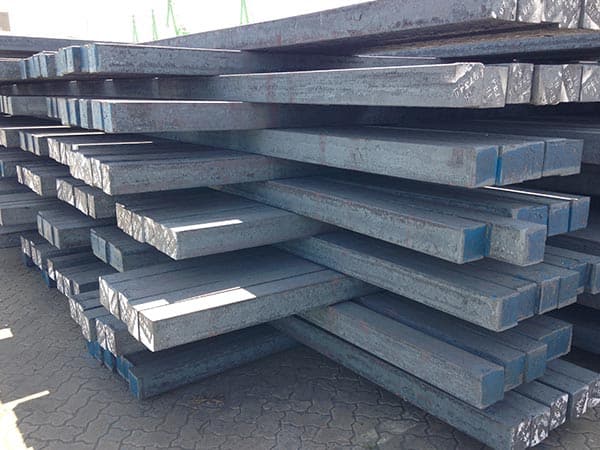
Understanding the Core of Grade 460 Steel Performance
Grade 460 steel represents a pivotal threshold in structural engineering, marking the transition from conventional carbon steels to high-strength low-alloy (HSLA) materials. With a minimum yield strength of 460 MPa, this material class allows engineers to reduce cross-sectional thickness without compromising structural integrity, leading to significant weight savings in massive constructions. However, determining the best equivalent quality is not a simple matter of matching numbers; it requires a deep dive into metallurgical processing, chemical composition, and environmental resilience.
The Global Landscape of 460 MPa Yield Strength Equivalents
When searching for an equivalent to Grade 460, we primarily look at three major international standards: the European EN 10025, the Chinese GB/T 1591, and the American ASTM. Each standard approaches the '460' requirement with different delivery conditions, which fundamentally alters the steel's behavior during fabrication.
| Standard | Equivalent Grade | Delivery Condition | Key Characteristics |
|---|---|---|---|
| EN 10025-3 | S460N / S460NL | Normalized / Normalized Rolled | Fine grain structure, excellent impact toughness at low temperatures. |
| EN 10025-4 | S460M / S460ML | Thermomechanically Rolled (TMCP) | Lower carbon equivalent (CEV), superior weldability, higher efficiency. |
| GB/T 1591 | Q460C / Q460D / Q460E | Normalized or TMCP | Widely used in heavy machinery and power transmission towers. |
| ASTM A572 | Grade 65 | As-rolled | Yield strength ~450 MPa, common in North American structural projects. |
| ASTM A656 | Grade 70 | TMCP / Controlled Rolled | High formability, used for truck frames and heavy equipment. |
S460M vs. S460N: Which 'Best' Quality Should You Choose?
In the European EN 10025 standard, the distinction between 'M' (Thermomechanically Rolled) and 'N' (Normalized) is critical. S460M is often considered the superior choice for modern high-rise and offshore applications. The TMCP process allows the steel to achieve high strength with a much lower carbon content compared to the normalized S460N.
- Weldability: S460M has a lower Carbon Equivalent Value (CEV), which reduces the risk of cold cracking and often eliminates the need for expensive preheating during welding.
- Toughness: The 'L' suffix (e.g., S460ML or S460NL) indicates tested impact properties at -50°C, making them the 'best' quality for Arctic or sub-zero environments.
- Processing: S460N is more stable if the material needs to undergo subsequent hot forming, as TMCP steels (S460M) lose their mechanical properties if reheated above 580°C.
Chemical Composition and the Role of Micro-Alloying
The 'quality' of a 460-grade equivalent is defined by its micro-alloying elements. To reach 460 MPa without making the steel brittle, manufacturers add small amounts of Niobium (Nb), Vanadium (V), and Titanium (Ti). These elements facilitate grain refinement during the rolling process.
For instance, Q460D from the Chinese standard utilizes a precise balance of Manganese and Niobium. This ensures that even in thick plates (up to 100mm or more), the yield strength remains consistent. When evaluating an equivalent, checking the Pcm (Parameter for Crack Measurement) value is as important as the yield strength, especially for thick-walled structural components in bridge engineering.
Mechanical Performance Beyond Yield Strength
While 460 MPa is the headline figure, the Tensile Strength typically ranges between 520 and 670 MPa. Elongation is another vital factor; high-quality 460 equivalents should maintain an elongation of at least 17% to 19% to ensure the structure can absorb energy during seismic events or accidental loading.
In heavy lifting and crane manufacturing, the Z-direction properties (Z15, Z25, Z35) are often requested. This refers to the steel's resistance to lamellar tearing in the thickness direction. The 'best' equivalent in this context is one that has undergone vacuum degassing and calcium treatment to minimize non-metallic inclusions.
Environmental Adaptation and Corrosion Resistance
Grade 460 steel is frequently deployed in harsh environments. While standard S460 or Q460 does not have the same atmospheric corrosion resistance as weathering steel (like S355J0W), its fine-grained structure provides a better substrate for modern coating systems. In offshore wind turbine foundations, S460ML is the gold standard because it resists the fatigue cycles induced by wave action while maintaining structural integrity in salt-spray environments.
Industrial Application Expansion
The shift toward Grade 460 equivalents is driven by the 'Lightweighting' trend. In the Heavy Machinery sector, replacing S355 with S460 allows for a 20-30% reduction in plate thickness for boom arms and chassis, directly increasing the payload capacity of mobile cranes and mining trucks.
In High-Rise Construction, using Q460 or S460 in lower-floor columns reduces the footprint of the structural members, maximizing the leasable floor space. For Bridge Engineering, the high strength-to-weight ratio enables longer spans with fewer supporting piers, reducing the overall environmental impact of the project.
Critical Considerations for Fabrication and Welding
Selecting the best equivalent quality also means considering the workshop's capabilities. High-strength steel requires precision.
- Heat Input: When welding S460M, the heat input must be strictly controlled. Too much heat can soften the Heat Affected Zone (HAZ), reducing the strength below the 460 MPa threshold.
- Cold Forming: Due to higher yield strength, S460 requires significantly more force for bending compared to S355. Springback is also more pronounced, requiring adjusted tooling geometries.
- Cutting: Laser and plasma cutting are highly effective, but for very thick plates, oxygen-fuel cutting may require preheating to prevent edge hardening.
Strategic Selection for Project Success
Identifying the 'best' Grade 460 equivalent requires a holistic view of the project lifecycle. If the priority is ease of welding and weight reduction in a controlled environment, S460M or Q460MC is typically the winner. If the project involves hot galvanizing or post-weld heat treatment, the normalized S460N or Q460D (Normalized) offers better stability.
Ultimately, the best quality is the one that aligns with the specific standard requirements of the region while offering the lowest total cost of ownership—factoring in material price, welding consumables, and labor time. By moving from S355 to a high-quality 460 equivalent, industries are not just changing a material; they are evolving toward more efficient, sustainable, and daring engineering feats.
Leave a message