
What is the yield strength of s460 steel equivalent astm
Comprehensive guide on S460 steel yield strength, comparing EN 10025 standards with ASTM A572 and A913 equivalents, covering mechanical properties and industrial applications.
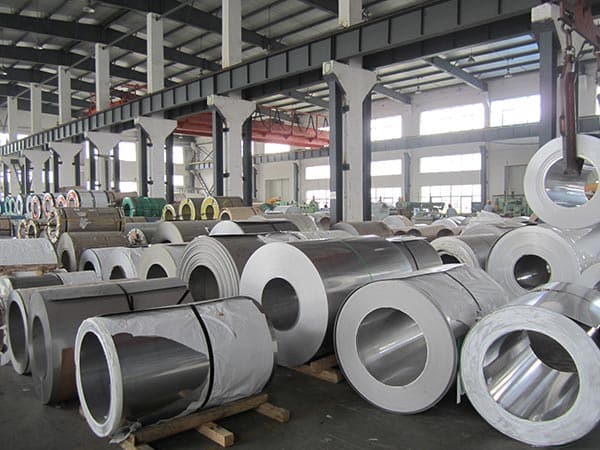
Understanding S460 steel Yield Strength and Standard Designations
S460 steel is a high-strength structural steel grade governed by the European standard EN 10025. The numeric designation "460" directly refers to its minimum yield strength of 460 Megapascals (MPa) for material thicknesses less than or equal to 16 mm. As thickness increases, the yield strength slightly decreases due to the cooling rates during the manufacturing process, a critical factor for engineers to consider during the design phase of heavy-duty structures. This steel belongs to the High-Strength Low-Alloy (HSLA) family, designed to provide superior load-bearing capacity while maintaining a relatively low weight compared to traditional carbon steels like S235 or S355.
The classification of S460 is further divided into sub-grades based on the delivery condition and impact toughness requirements. For instance, S460N and S460NL refer to normalized or normalized-rolled conditions, where the "L" indicates specified minimum values of impact energy at temperatures as low as -50°C. Conversely, S460M and S460ML designate thermomechanically rolled steel, which utilizes a sophisticated cooling process to achieve high strength and excellent weldability with a lower carbon equivalent than normalized steels. Understanding these nuances is essential when seeking an ASTM equivalent, as the American standards categorize materials based on different metallurgical processing and testing protocols.
Direct ASTM Equivalents: A572 Grade 65 and A913 Grade 65
When transitioning from European projects to those governed by American standards, the most frequent question is identifying the ASTM equivalent to S460. The closest match in terms of yield strength is ASTM A572 Grade 65. ASTM A572 is a standard specification for high-strength low-alloy columbium-vanadium structural steel. Grade 65 provides a minimum yield strength of 65,000 psi (approximately 450 MPa). While 450 MPa is slightly lower than the 460 MPa specified for S460, it is often accepted in structural calculations as the functional equivalent, especially when considering the safety factors integrated into AISC (American Institute of Steel Construction) designs.
Another highly relevant equivalent is ASTM A913 Grade 65. ASTM A913 covers high-strength low-alloy steel shapes of structural quality, produced by the quenching and self-tempering (QST) process. This grade is particularly comparable to the S460M/ML series because both rely on advanced thermal processing to achieve high strength without excessive alloying. ASTM A913 Grade 65 is frequently specified for heavy wide-flange columns in high-rise buildings and long-span structures due to its exceptional weldability and toughness, mirroring the performance characteristics of S460 in European offshore and bridge engineering.
Mechanical Property Comparison: EN 10025 vs. ASTM Standards
Comparing the mechanical properties requires looking beyond just the yield strength. Tensile strength, elongation, and impact resistance vary between the European and American systems. S460 typically exhibits a tensile strength range of 540 to 720 MPa. In comparison, ASTM A572 Grade 65 specifies a minimum tensile strength of 80 ksi (550 MPa), which aligns well with the lower end of the S460 spectrum.
| Property | S460 (EN 10025-3/4) | ASTM A572 Grade 65 | ASTM A913 Grade 65 |
|---|---|---|---|
| Min Yield Strength (MPa) | 460 MPa | 450 MPa (65 ksi) | 450 MPa (65 ksi) |
| Tensile Strength (MPa) | 540 - 720 MPa | 550 MPa (80 ksi) min | 550 MPa (80 ksi) min |
| Min Elongation (%) | 17% (on 5.65√So) | 15% (in 8 in.) | 17% (in 2 in.) |
| Processing Method | Normalized or TMCP | Hot Rolled | QST (Quenched & Self-Tempered) |
Elongation values are also a point of divergence. S460 usually requires a minimum elongation of 17%, whereas ASTM A572 Grade 65 may allow for 15% depending on the specimen geometry. These differences are often negligible in standard structural applications but become vital in seismic design where ductility and energy dissipation are paramount. Engineers must verify that the chosen ASTM equivalent meets the specific ductility requirements of the project's seismic zone.
Chemical Composition and Weldability Factors
The weldability of S460 and its ASTM counterparts is determined largely by the Carbon Equivalent Value (CEV). S460M (thermomechanically rolled) is specifically designed to have a low CEV, typically around 0.41% to 0.45%, which facilitates welding without the need for extensive preheating. ASTM A913 Grade 65 also emphasizes a low carbon equivalent through the QST process, making it highly compatible with modern high-speed welding techniques used in skyscraper construction.
ASTM A572 Grade 65, however, may have a slightly higher carbon and manganese content to achieve its strength if not produced via TMCP (Thermomechanical Controlled Processing). This can lead to a higher CEV, requiring stricter adherence to preheat and interpass temperature controls. When substituting S460 with A572 Gr 65, it is standard practice to request a Mill Test Report (MTR) to verify the actual chemical composition and ensure it aligns with the welding procedure specifications (WPS) developed for the project.
Environmental Adaptation and Low-Temperature Performance
Structural integrity in cold climates or offshore environments necessitates high impact toughness. S460NL and S460ML are tested for impact energy at -50°C, ensuring the material does not undergo brittle fracture in extreme conditions. Standard ASTM A572 Grade 65 does not inherently include low-temperature impact testing unless specifically requested via Supplementary Requirement S5 (Charpy V-Notch Impact Test). In contrast, ASTM A709 Grade 65, which is the bridge-building version of A572, often includes specific toughness requirements tailored to different temperature zones.
For projects involving offshore platforms or wind turbine foundations, S460 is often the preferred choice in Europe because of its standardized toughness grades. To achieve a similar level of safety with ASTM materials, designers must specify ASTM A913 or add rigorous Charpy V-notch testing requirements to A572 orders. This ensures that the equivalent material can withstand dynamic loading and thermal stresses without risk of catastrophic failure.
Industrial Applications and Market Availability
The use of S460 and its ASTM equivalents is expanding as the demand for sustainable and efficient construction grows. By using higher-strength steel, engineers can reduce the cross-sectional area of structural members, leading to a reduction in total steel weight. This weight saving translates to lower transportation costs, reduced foundation loads, and a smaller carbon footprint for the overall project.
- High-Rise Construction: ASTM A913 Grade 65 is the industry standard for columns in American skyscrapers, providing the same benefits as S460 in European high-rise designs.
- Bridge Engineering: ASTM A709 Grade 65 (and HPS 70W for even higher strength) serves as the equivalent for S460 in large-scale infrastructure projects, offering the necessary fatigue resistance.
- Offshore Structures: S460G1 and G2 (under EN 10225) are specialized for offshore use, with ASTM A131 Grade DH65 or EH65 serving as the marine-certified equivalents.
- Heavy Machinery: The frames of mining trucks and cranes often utilize S460 or ASTM A572 Grade 65 to handle massive payloads while maintaining structural portability.
Market availability often dictates the choice between these standards. While S460 is readily available in the European and Asian markets, ASTM A572 and A913 dominate the North and South American markets. For global projects, it is common to see specifications that allow for "S460 or approved equivalent such as ASTM A572 Grade 65," provided that the specific toughness and chemical requirements are reconciled during the procurement process.
Technical Considerations for Material Substitution
When substituting S460 with an ASTM grade, several technical hurdles must be cleared. First, the thickness limitations vary; EN 10025-3 defines properties for S460 up to 250 mm, whereas ASTM A572 Grade 65 is typically limited to a maximum thickness of 1.25 inches (32 mm) for plates in some applications, although heavier sections can be produced under specific conditions. Second, the testing frequency and sampling methods differ between the two standards, which may affect the statistical reliability of the material properties in high-risk applications.
Finally, the tolerance standards (EN 10029 for plates and EN 10056 for angles) are slightly different from ASTM A6 tolerances. These dimensional variations can impact fit-up during fabrication, especially in automated welding cells. A thorough review by a materials engineer is always recommended to ensure that the substitute ASTM grade meets the original design intent of the S460 specification, maintaining the safety and longevity of the structure.
Leave a message