
What are the effects of phosphorus in S650MC steel for construction machinery
Detailed analysis of how phosphorus influences the mechanical properties, weldability, and environmental durability of S650MC high-strength steel used in construction machinery.
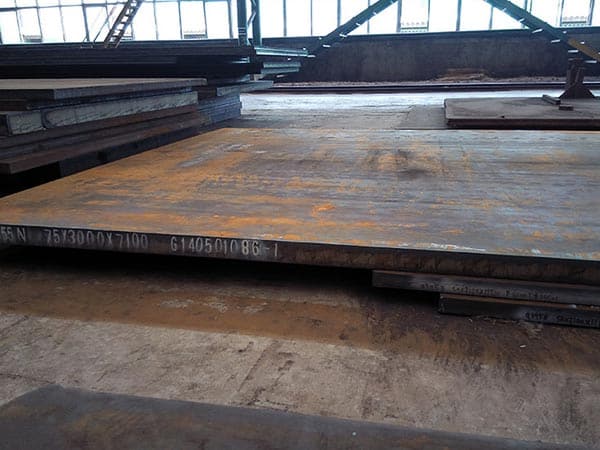
The Role of Phosphorus in S650MC High-Strength Steel
S650MC steel, governed by the EN 10149-2 standard, represents a pinnacle of thermomechanically rolled high-yield strength steel designed specifically for cold forming. Within the complex chemistry of this micro-alloyed steel, phosphorus (P) often occupies a dual role. While typically categorized as an impurity that must be strictly limited, its presence—even in minute quantities—exerts a profound influence on the structural integrity and performance of construction machinery components. Understanding these effects is paramount for engineers designing crane booms, truck chassis, and heavy-duty support structures where weight reduction and high load-bearing capacity are non-negotiable.
Chemical Composition and the Phosphorus Threshold
In the production of S650MC, the chemical composition is meticulously balanced to ensure a minimum yield strength of 650 MPa. According to international standards, phosphorus is generally capped at a maximum of 0.025%. This limit is not arbitrary; it is the result of decades of metallurgical research into how phosphorus interacts with the iron matrix and other alloying elements like Manganese (Mn), Niobium (Nb), and Titanium (Ti).
| Element | Max Content (%) | Primary Function in S650MC |
|---|---|---|
| Carbon (C) | 0.12 | Strength and hardness |
| Manganese (Mn) | 2.00 | Hardenability and sulfur control |
| Silicon (Si) | 0.50 | Deoxidation |
| Phosphorus (P) | 0.025 | Solid solution strengthening / Impurity control |
| Sulfur (S) | 0.015 | Inclusion control |
| Aluminium (Al) | 0.015 (min) | Grain refinement |
Solid Solution Strengthening vs. Ductility Loss
Phosphorus is one of the most potent solid solution strengtheners available in steel metallurgy. It dissolves in the ferrite phase, significantly increasing the hardness and tensile strength of the base metal. For S650MC, this might initially seem beneficial. However, the strengthening comes at a steep price: a significant reduction in ductility and toughness. When phosphorus levels exceed the optimal threshold, the steel becomes increasingly brittle. In the context of construction machinery, which is subjected to dynamic loads and vibrations, excessive phosphorus can lead to sudden, catastrophic failures without prior plastic deformation.
The mechanism behind this is the segregation of phosphorus atoms to the grain boundaries during the cooling process. This segregation weakens the cohesive strength of the boundaries, making the steel susceptible to intergranular fracture. For S650MC, which relies on a fine-grained microstructure achieved through thermomechanical rolling, maintaining low phosphorus is critical to preserving the benefits of its refined grain structure.
The Phenomenon of Cold Shortness
One of the most critical effects of phosphorus in S650MC is "cold shortness"—a sharp increase in the ductile-to-brittle transition temperature (DBTT). Construction machinery often operates in extreme environments, from the scorching heat of desert mines to the sub-zero temperatures of arctic construction sites. If phosphorus levels are too high, S650MC may lose its impact toughness at low temperatures.
- Impact Energy: High phosphorus content drastically reduces the Charpy V-notch impact values, particularly at -20°C or -40°C.
- Structural Risk: A crane boom made of S650MC with high phosphorus might perform adequately in summer but could snap under load during a cold winter morning due to brittle cleavage.
- Safety Factors: Manufacturers of heavy-duty equipment must ensure that the P content is kept well below the 0.025% limit to guarantee a safety margin for global exports across diverse climates.
Weldability and Hot Cracking Sensitivities
S650MC is prized for its excellent weldability, allowing for the fabrication of complex, lightweight structures. However, phosphorus is a known enemy of high-quality welds. During the welding process, phosphorus promotes the formation of low-melting-point eutectics, particularly when sulfur is also present. These liquid films remain at the grain boundaries of the weld metal and the heat-affected zone (HAZ) even after the rest of the weld has solidified.
As the weld cools and shrinks, the resulting tensile stresses can pull these liquid films apart, leading to solidification cracking or "hot cracking." For construction machinery where welds are the primary joining method for critical load-bearing joints, any micro-cracking induced by phosphorus can act as a stress riser, leading to fatigue failure over time. Therefore, maintaining ultra-low phosphorus levels is a prerequisite for high-integrity welding in S650MC applications.
Influence on Cold Forming and Bending
The "MC" in S650MC stands for thermomechanically rolled (M) and cold forming (C). This steel is designed to be bent and folded into complex shapes, such as U-beams or telescopic boom sections. Phosphorus significantly impacts the minimum bending radius. Because phosphorus increases work hardening rates and reduces uniform elongation, high-P steel is more likely to develop cracks on the outer radius of a bend.
When S650MC is processed through CNC press brakes, the presence of phosphorus-rich inclusions or segregated zones can lead to "orange peel" effects or macro-cracking. For high-precision machinery manufacturing, consistent phosphorus control ensures that the steel behaves predictably during forming, reducing scrap rates and ensuring dimensional accuracy.
Atmospheric Corrosion Resistance: A Subtle Benefit?
Interestingly, phosphorus is not always a villain. In certain weathering steels, phosphorus is intentionally added to improve atmospheric corrosion resistance. It helps in the formation of a dense, protective patina layer that slows down the oxidation process. In S650MC, while not classified as a weathering steel, the residual phosphorus does contribute slightly to its environmental resilience compared to pure carbon steels.
However, this benefit is usually overshadowed by the negative impact on toughness in construction machinery. Most machinery is painted or coated, making the intrinsic corrosion resistance of the steel less critical than its structural reliability. Consequently, metallurgical focus remains on minimizing P to maximize safety and formability rather than leveraging it for corrosion protection.
Fatigue Life in Dynamic Loading Scenarios
Construction machinery is defined by cyclic loading. Whether it is an excavator arm digging or a trailer chassis navigating uneven terrain, the steel is constantly under fatigue stress. Phosphorus negatively impacts the fatigue life of S650MC by promoting the initiation of fatigue cracks at grain boundaries. The embrittling effect of P makes it easier for micro-cracks to propagate under lower stress intensities.
By keeping phosphorus levels at an absolute minimum (often below 0.015% in premium batches), manufacturers can significantly extend the service life of the equipment. This reduction in phosphorus ensures that the steel maintains its
Leave a message