
Will S355MC tensile test price continue rising
Explore the technical attributes of S355MC steel and the factors influencing the rising costs of tensile testing and material certification in the global market.
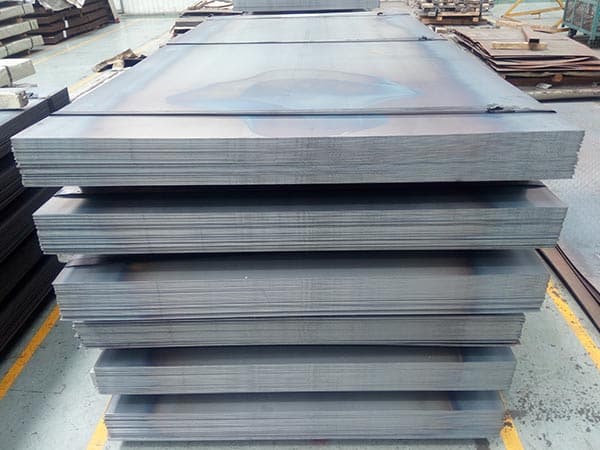
The Dynamics of S355MC Steel and Testing Cost Projections
Understanding the price trajectory of S355MC tensile testing requires a deep dive into the metallurgical complexity of the material and the rigorous standards governing its certification. S355MC, a high-strength low-alloy (HSLA) steel defined by the EN 10149-2 standard, is specifically designed for cold-forming applications where weight reduction and structural integrity are paramount. The cost associated with verifying its mechanical properties is not merely a reflection of laboratory labor but is intricately tied to global energy prices, the precision required in specimen preparation, and the increasing demand for high-performance materials in the automotive and heavy machinery sectors.
Metallurgical Foundations of S355MC
The performance of S355MC is rooted in its thermomechanically rolled (TMCP) process. Unlike traditional normalized steels, S355MC achieves its strength through a combination of controlled rolling temperatures and micro-alloying elements. The inclusion of Niobium (Nb), Vanadium (V), and Titanium (Ti) facilitates grain refinement, which is the primary mechanism for increasing yield strength without sacrificing ductility. This fine-grained structure is what makes the tensile test results so critical; any deviation in the rolling process can lead to non-uniformity, making frequent and precise testing a necessity for quality assurance.
Mechanical Properties and Tensile Test Significance
The tensile test for S355MC measures several key parameters: the upper yield strength (ReH), the tensile strength (Rm), and the percentage elongation after fracture (A). For a material with a nominal thickness of less than 3 mm, the minimum yield strength is strictly 355 MPa. However, as manufacturers push the limits of design, the consistency of these values across different batches becomes a focal point of procurement strategies. The rising cost of these tests is often linked to the need for ISO 17025 accredited laboratories to provide high-resolution stress-strain curves that go beyond simple pass/fail metrics.
| Property | Value (Thickness ≤ 16mm) | Testing Standard |
|---|---|---|
| Yield Strength (ReH) | Min 355 MPa | EN ISO 6892-1 |
| Tensile Strength (Rm) | 430 - 550 MPa | EN ISO 6892-1 |
| Elongation (A80mm) | Min 19% (t < 3mm) | EN ISO 6892-1 |
| Elongation (A5.65) | Min 23% (t ≥ 3mm) | EN ISO 6892-1 |
Factors Driving Testing Price Increases
Several variables contribute to the upward pressure on testing costs. First, the energy intensity of preparing specimens cannot be ignored. Machining "dog-bone" samples from high-strength plates requires specialized equipment and consumables that have seen significant price hikes. Second, the digitalization of traceability—where every test result is linked to a blockchain or a centralized ERP system—adds an administrative layer to the testing fee. Furthermore, the global shortage of skilled metallurgical technicians has led to higher labor costs in certified testing facilities across Europe and North America.
Processing Performance: Bending and Welding
S355MC is prized for its exceptional cold-forming characteristics. It allows for tight bending radii without the risk of cracking, which is essential for manufacturing complex chassis components and crane booms. However, the integrity of these bends is directly related to the material's transverse ductility, a property verified during the tensile and bend tests. In terms of weldability, the low carbon equivalent (CEV) of S355MC ensures that it can be joined using standard MIG/MAG or laser welding processes without extensive preheating, reducing overall fabrication costs even if the initial testing phase is more expensive.
Industry Applications and Market Demand
The demand for S355MC is surging in the heavy transportation sector. Truck manufacturers are under pressure to reduce vehicle weight to improve fuel efficiency and increase payload capacity. By replacing traditional S235 or S355J2 steels with S355MC, engineers can use thinner gauges without compromising safety. This shift has created a bottleneck in testing facilities, as every new heat of steel must undergo rigorous verification to meet the safety standards of the automotive industry. Similarly, in the renewable energy sector, S355MC is used for structural components in solar tracking systems where environmental adaptability and high strength-to-weight ratios are required.
- Automotive: Chassis frames, cross members, and reinforcement parts.
- Construction: Cold-pressed profiles and structural sections.
- Lifting Equipment: Telescopic crane arms and forklift components.
- Agriculture: Trailer frames and soil processing equipment.
Environmental Adaptability and Longevity
While S355MC is not a weathering steel like Corten, its fine-grained structure provides a better substrate for modern anti-corrosion coatings. Whether it is hot-dip galvanizing or sophisticated KTL (cathodic dip painting), the surface quality of S355MC—free from heavy scale due to the controlled rolling process—ensures superior adhesion. This longevity reduces the lifecycle cost of the end product, justifying the investment in high-quality material and the associated testing fees. Additionally, the material performs reliably at lower temperatures, a factor that is increasingly tested through Charpy V-notch impact tests to ensure safety in arctic or high-altitude environments.
Strategic Procurement in a High-Cost Environment
To mitigate the rising costs of S355MC and its testing, many companies are moving toward long-term supply agreements that include fixed testing rates. Others are investing in in-house testing capabilities, although the cost of maintaining accreditation can be prohibitive. The key is to balance the frequency of testing with the risk profile of the application. For non-critical structural components, statistical sampling may suffice, but for safety-critical parts, 100% heat traceability and individual test reports remain the gold standard. The trend suggests that while the base price of steel may fluctuate with iron ore markets, the "premium" for certified, high-precision testing is likely to remain high due to the technical requirements of modern engineering.
Future Outlook for S355MC Testing
As we look toward the next decade, the integration of Artificial Intelligence in predicting mechanical properties from rolling data might eventually reduce the reliance on physical tensile tests. However, until regulatory bodies accept virtual certification, the physical tensile test remains the ultimate arbiter of quality. The price of S355MC testing is therefore expected to stabilize at a higher plateau, reflecting its status as a high-tech industrial commodity rather than a simple bulk material. Companies that prioritize technical excellence and robust quality control will find that the value provided by verified S355MC far outweighs the incremental costs of testing.
Leave a message