
What harm does the excessive weld height of B750L plate zero cut bring
Comprehensive analysis of the negative impacts of excessive weld height on B750L high-strength steel plates, covering stress concentration, fatigue failure, and assembly issues.
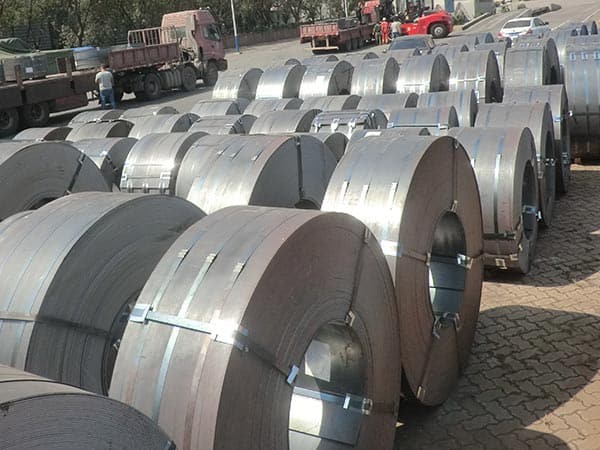
Technical Overview of B750L High-Strength Steel and Welding Dynamics
B750L is a high-strength low-alloy (HSLA) steel primarily utilized in the automotive industry for structural components like truck frames, cross members, and heavy-duty chassis. With a yield strength exceeding 750 MPa, its performance is highly dependent on the integrity of its welded joints. When processing B750L plate zero cut (custom-sized precision plates), welding becomes a critical step. Weld height, also known as weld reinforcement, refers to the excess metal deposited above the surface of the base material. While a slight reinforcement is often required to ensure the throat thickness meets design specifications, excessive height introduces a series of structural and metallurgical vulnerabilities that compromise the high-performance nature of B750L.
The Mechanism of Stress Concentration and Structural Integrity
The most immediate harm of excessive weld height in B750L plates is the creation of severe stress concentration at the weld toe. The weld toe is the junction where the face of the weld meets the base metal. When the reinforcement is too high, the angle between the weld bead and the plate surface becomes sharper. This geometric discontinuity acts as a localized stress raiser.
- Increased Stress Concentration Factor (SCF): A higher weld profile significantly increases the SCF at the toe, making it the most likely point for crack initiation.
- Load Path Disturbance: Excessive metal disrupts the smooth flow of stress lines across the joint, forcing the load to deviate abruptly around the weld bead.
- Micro-cracking Risk: The high cooling rates associated with large weld pools (required for high reinforcement) can lead to micro-cracks in the Heat Affected Zone (HAZ) of B750L.
For B750L, which is engineered for high load-bearing capacity, these stress raisers negate the material's inherent strength advantages. Under static loading, the joint might hold, but the margin of safety is drastically reduced compared to a flush or moderately reinforced weld.
Impact on Fatigue Life and Dynamic Performance
B750L is frequently used in environments subject to cyclic loading, such as vehicle vibrations and heavy machinery operations. Fatigue failure is the primary concern for these applications. Excessive weld height is a known "fatigue killer." Research indicates that reducing the reinforcement height can increase the fatigue life of a welded joint by up to 50% in some cases.
The sharp transition at the weld toe caused by excessive height creates a notch effect. Under cyclic stress, this notch facilitates the rapid initiation of fatigue cracks. Once a crack starts at the toe of a B750L weld, it propagates through the HAZ and into the base metal, leading to catastrophic structural failure. Because B750L relies on a fine-grained microstructure achieved through micro-alloying elements like Niobium (Nb) and Titanium (Ti), the excessive heat input often required to create a high weld bead can coarsen these grains, further reducing the material's resistance to fatigue crack growth.
Dimensional Accuracy and Assembly Interference
In the context of B750L plate zero cut services, precision is paramount. Customers order zero-cut plates to minimize secondary processing and ensure a perfect fit in complex assemblies. Excessive weld height directly interferes with these requirements.
| Issue Category | Impact of Excessive Weld Height | Consequence for B750L Components |
|---|---|---|
| Fit-up Precision | Weld bead protrudes beyond design tolerances. | Inability to stack or mate plates flush with other components. |
| Automated Assembly | Sensors and robotic grippers may miscalculate plate position. | Increased downtime and potential damage to automated lines. |
| Weight Management | Unnecessary metal adds weight across hundreds of units. | Reduced fuel efficiency in automotive applications. |
Furthermore, if the B750L plate is part of a multi-layered structure, an oversized weld bead prevents the layers from sitting tightly together, creating gaps that can trap moisture or lead to fretting wear over time.
Metallurgical Degradation and the Heat Affected Zone (HAZ)
Creating a weld with excessive height usually implies a higher heat input or a slower travel speed during the welding process. For a high-strength steel like B750L, heat management is delicate. Excessive heat input leads to a wider HAZ and promotes grain growth. The high-strength properties of B750L are partially derived from its thermomechanical controlled processing (TMCP). Reheating the material excessively during welding destroys this carefully engineered microstructure.
- Softening of the HAZ: The area adjacent to the weld may become significantly softer than the base B750L metal, creating a weak link in the structure.
- Brittle Phase Formation: In some cooling conditions, excessive weld metal can lead to the formation of brittle phases, increasing the risk of cold cracking.
- Hydrogen Embrittlement: A larger weld pool absorbs more atmospheric moisture, increasing the risk of hydrogen-induced cracking, especially in high-strength grades like B750L.
Surface Treatment and Corrosion Vulnerability
B750L components are often coated, painted, or galvanized to protect against environmental corrosion. Excessive weld height creates irregular surface topography that is difficult to coat uniformly. The "valleys" created at the weld toe are notorious for coating thinning or skipping.
When the protective layer is thinner at the weld toe, corrosion sets in much faster. For vehicle chassis, this leads to localized pitting. Given the high-stress nature of the weld toe, the combination of corrosion and stress (stress corrosion cracking) can lead to premature failure. Additionally, excessive reinforcement makes mechanical cleaning (like grit blasting) less effective, as the shadow of the weld bead prevents the abrasive from reaching the toe area properly.
Economic Inefficiency in Production
From a manufacturing standpoint, excessive weld height represents pure waste. It involves the consumption of unnecessary welding consumables (wire and gas) and increases energy costs. However, the hidden costs are even higher. If the weld height exceeds the specified limit (typically 10% of the plate thickness or a maximum of 3mm in many standards), it must be ground down manually.
Grinding B750L is labor-intensive and carries its own risks. Over-grinding can thin the base metal, while the heat generated during grinding can introduce new residual stresses or localized hardening. By failing to control the weld height during the initial pass, manufacturers incur the double cost of wasted material and corrective labor, undermining the cost-effectiveness of using B750L zero-cut plates.
Optimal Standards for B750L Welding
To maximize the utility of B750L, welding parameters must be strictly controlled to ensure a smooth transition and minimal reinforcement. Industry best practices suggest that for high-strength structural steels, the weld reinforcement should be kept as low as possible while still ensuring a full throat thickness. A convexity that transitions smoothly into the base metal is far superior to a high, "humped" weld bead. Utilizing advanced welding techniques like pulsed MAG (Metal Active Gas) welding can help in achieving a flatter profile with controlled heat input, preserving the mechanical integrity of the B750L plate zero cut.
Leave a message