
What are the welding precautions for B700L steel for construction machinery parts
This technical guide explores the critical welding precautions for B700L high-strength steel used in construction machinery. Learn about heat input control, filler metal selection, and preventing HAZ softening to ensure structural integrity.
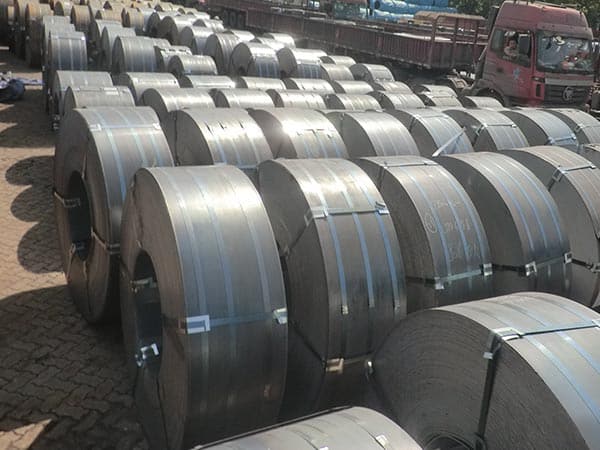
Understanding the Metallurgical Profile of B700L Steel
B700L is a high-strength, low-alloy (HSLA) structural steel specifically designed for the cold-forming requirements of heavy-duty construction machinery. Its popularity stems from a delicate balance of high yield strength (minimum 700 MPa) and excellent impact toughness at low temperatures. Unlike traditional carbon steels, B700L achieves its properties through micro-alloying with elements like Niobium (Nb), Vanadium (V), and Titanium (Ti), combined with thermomechanical controlled processing (TMCP). This complex metallurgical background means that while the steel is inherently weldable, it is highly sensitive to the thermal cycles imposed during the welding process. Ignoring these nuances can lead to a significant loss of strength in the heat-affected zone (HAZ) or the formation of brittle structures that compromise the safety of equipment like crane booms, excavator frames, and concrete pump arms.
Chemical Composition and Weldability Index
The weldability of B700L is primarily determined by its Carbon Equivalent (Ceq). A lower Ceq generally indicates a lower risk of cold cracking. For B700L, the carbon content is typically kept below 0.12%, with manganese around 1.5% to 1.8%. The inclusion of micro-alloying elements ensures fine grain structures, but these elements also influence how the steel reacts to cooling rates after welding.
| Element | C (max) | Mn (max) | Si (max) | P (max) | S (max) | Nb+V+Ti (max) |
|---|---|---|---|---|---|---|
| Weight % | 0.12 | 1.80 | 0.50 | 0.025 | 0.015 | 0.22 |
When calculating the Carbon Equivalent using the CEV (IIW) formula, B700L usually stays within a range that suggests good weldability without mandatory high-temperature preheating for thinner sections. However, as thickness increases or ambient temperatures drop, the risk of hydrogen-induced cracking (HIC) rises, necessitating strict control over moisture and hydrogen levels in consumables.
Critical Precautions for Welding Heat Input
One of the most significant challenges when welding B700L is the "softening effect" in the heat-affected zone. Because B700L relies on fine-grain strengthening and precipitation hardening, excessive heat input can cause grain growth and the dissolution of strengthening precipitates. This results in a localized region where the hardness and yield strength drop below the base metal's specifications.
- Control Energy Input: It is vital to limit the heat input, typically between 10 kJ/cm and 25 kJ/cm depending on the plate thickness. High heat input leads to slow cooling rates (long t8/5 times), which promotes the formation of coarse ferrite and pearlite rather than the desired fine bainitic or martensitic structures.
- Multi-pass Welding: For thicker components, multi-pass welding with low heat input is preferred over single-pass high-heat welding. This approach allows the subsequent passes to refine the grain structure of the previous passes, improving overall toughness.
- Interpass Temperature: Maintain a strict interpass temperature, usually not exceeding 200°C. If the interpass temperature is too high, the cumulative heat buildup will exacerbate the HAZ softening and reduce the joint's load-bearing capacity.
Selecting the Right Filler Materials
Choosing the correct welding wire or electrode is not just about matching the tensile strength of B700L. You must also consider the impact toughness and the potential for hydrogen embrittlement. For B700L, the filler metal should ideally meet or slightly exceed the mechanical properties of the base metal, but "undermatching" is sometimes used in specific fillet weld designs to reduce the risk of cracking in highly restrained joints.
| Welding Process | Recommended Consumable (Example) | Key Characteristics |
|---|---|---|
| MAG (GMAW) | ER110S-G / ER120S-G | High strength, excellent gas shielding performance, low spatter. |
| SMAW | E11018-M / E12018-M | Low hydrogen, high toughness for outdoor on-site repairs. |
| FCAW | E111T1-K3 | High deposition rate, good penetration for heavy chassis parts. |
Using low-hydrogen consumables is non-negotiable. If using SMAW, electrodes must be baked according to the manufacturer's instructions (usually 350°C for 2 hours) and stored in heated quivers. For MAG welding, the shielding gas (typically 80% Ar + 20% CO2) must be of high purity to prevent the introduction of moisture and oxygen into the weld pool.
Groove Preparation and Surface Integrity
The high-strength nature of B700L makes it sensitive to notch effects and surface defects. Before welding, the groove faces must be cleaned meticulously. Any presence of rust, oil, scale, or moisture can introduce hydrogen or cause porosity, leading to catastrophic failure under the dynamic loads typical of construction machinery.
- Mechanical Cleaning: Use grinding or wire brushing to achieve a bright metal finish at least 20mm from the weld edge.
- Groove Geometry: Ensure precise fit-up. Large gaps increase the volume of weld metal required, which in turn increases the total heat input and the risk of distortion.
- Tack Welding: Tack welds should be performed with the same care as the final weld. They should be of sufficient length (at least 50mm) and thickness to resist the shrinkage stresses of the main weld. Any cracked tack welds must be completely ground out.
Environmental Adaptability and Low-Temperature Performance
Construction machinery often operates in extreme environments, from sub-zero arctic conditions to tropical heat. B700L is valued for its -40°C impact toughness. To preserve this property in the welded joint, the cooling rate must be carefully managed. If the cooling is too rapid (t8/5 < 5s), hard and brittle martensite may form, increasing the risk of cold cracking. If it is too slow (t8/5 > 25s), the toughness drops due to grain coarsening. Specialized cooling charts should be consulted to match the specific plate thickness and ambient temperature.
Post-Weld Inspection and Quality Assurance
Given the critical structural roles B700L parts play, non-destructive testing (NDT) is mandatory. However, the timing of these tests is crucial. Hydrogen-induced cracks can be "delayed," appearing hours or even days after the welding is completed. Therefore, final NDT (such as Ultrasonic Testing or Magnetic Particle Inspection) should be conducted at least 24 to 48 hours after the weld has reached ambient temperature.
Visual inspection should look for undercut, as the high strength of B700L makes it more susceptible to stress concentrations at the weld toe. Any undercut must be blended smoothly by grinding to prevent it from becoming a fatigue crack initiation site during the machine's operation.
Optimizing the Manufacturing Workflow
Beyond the arc itself, the sequence of welding plays a massive role in the success of B700L fabrication. Symmetrical welding sequences should be used to balance residual stresses. For large box-section beams used in crane telescopic sections, internal stiffeners should be welded before the final closing seams. This minimizes the accumulation of internal stresses that could lead to lamellar tearing or significant geometric distortion. By integrating these precautions into a robust Welding Procedure Specification (WPS), manufacturers can fully leverage the weight-saving benefits of B700L while ensuring the long-term durability of construction machinery.
Leave a message