
What are the characteristics of qualified en 10149-2 pdf
This comprehensive technical guide explores the characteristics of qualified EN 10149-2 steel. Learn about mechanical properties, chemical composition, and cold forming capabilities for grades S315MC to S700MC.
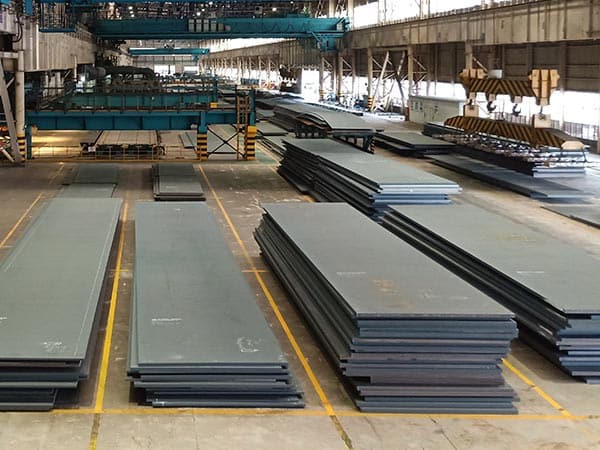
The Fundamentals of EN 10149-2: High Yield Strength for Cold Forming
nThe EN 10149-2 standard specifies the technical delivery conditions for flat products made of high yield strength steels for cold forming. Specifically, Part 2 focuses on thermomechanically rolled steels, designated by the suffix 'MC'. These materials are engineered to provide a unique combination of high strength, excellent weldability, and superior formability. A qualified EN 10149-2 product is not merely defined by its yield strength but by a delicate balance of micro-alloying and controlled rolling processes that ensure consistency across the entire plate or coil.
nThermomechanical Rolling: The Process Behind the Performance
nUnlike traditional normalizing, thermomechanical rolling (TMCP) involves precise temperature control during the rolling process, often followed by accelerated cooling. This process refines the grain structure to a degree that is impossible to achieve through heat treatment alone. The fine-grained ferrite-pearlite or bainitic microstructure is the primary characteristic of a qualified EN 10149-2 steel, providing high toughness even at low temperatures and enhancing the material's resistance to brittle fracture.
nChemical Composition: Precision Micro-alloying
nA qualified EN 10149-2 steel relies on a low-carbon chemistry to ensure weldability and ductility. To achieve high yield strengths without increasing carbon content, manufacturers utilize micro-alloying elements such as Niobium (Nb), Vanadium (V), and Titanium (Ti). These elements form fine precipitates that pin grain boundaries during rolling. The total content of these elements is strictly limited by the standard to maintain the steel's purity and processing performance.
n| Grade | nC % (max) | nMn % (max) | nSi % (max) | nP % (max) | nS % (max) | nAl % (min) | n
|---|---|---|---|---|---|---|
| S315MC | n0.12 | n1.30 | n0.50 | n0.025 | n0.020 | n0.015 | n
| S355MC | n0.12 | n1.50 | n0.50 | n0.025 | n0.020 | n0.015 | n
| S420MC | n0.12 | n1.60 | n0.50 | n0.025 | n0.015 | n0.015 | n
| S500MC | n0.12 | n1.70 | n0.50 | n0.025 | n0.015 | n0.015 | n
| S700MC | n0.12 | n2.10 | n0.60 | n0.025 | n0.015 | n0.015 | n
Mechanical Properties: Yield, Tensile, and Ductility
nThe defining characteristic of EN 10149-2 steel is its yield strength, ranging from 315 MPa to 700 MPa. However, for a product to be considered qualified, it must also meet strict elongation requirements. Ductility is critical because these steels are specifically designed for cold forming. Higher grades like S700MC offer incredible weight-saving potential in structural applications while maintaining the ability to be bent into complex shapes without cracking.
n| Grade | nMin Yield Strength (MPa) | nTensile Strength (MPa) | nMin Elongation (A80 mm %) | nMin Elongation (A5 %) | n
|---|---|---|---|---|
| S315MC | n315 | n390-510 | n20 | n24 | n
| S355MC | n355 | n430-550 | n19 | n23 | n
| S420MC | n420 | n480-620 | n16 | n19 | n
| S500MC | n500 | n550-700 | n12 | n14 | n
| S700MC | n700 | n750-950 | n10 | n12 | n
Cold Forming Characteristics: Bending and Flanging
nQualified EN 10149-2 steels exhibit exceptional cold forming properties. The standard specifies minimum mandrel diameters for 90-degree bends, which vary based on the thickness of the material and the steel grade. A characteristic of high-quality S700MC, for instance, is its ability to be bent with a very tight radius relative to its strength, which is essential for manufacturing compact and lightweight components in the automotive industry.
n- n
- Homogeneity: Consistent mechanical properties throughout the coil prevent springback variations during automated forming. n
- Surface Integrity: A qualified product must be free from slivers, cracks, or inclusions that could initiate failure during the bending process. n
- Edge Quality: For grades like S500MC and above, the quality of the sheared or cut edge is vital to prevent edge cracking during subsequent flanging. n
Superior Weldability: Low Carbon Equivalent
nWeldability is a cornerstone of the EN 10149-2 standard. Due to the low carbon content and the reliance on TMCP rather than alloying for strength, these steels have a very low Carbon Equivalent (CEV). This means they can be welded using standard processes such as MIG/MAG, submerged arc, or laser welding without the need for extensive preheating. This characteristic significantly reduces fabrication costs and lead times in heavy engineering projects.
nEnvironmental Adaptability and Fatigue Resistance
nWhile EN 10149-2 primarily focuses on strength and formability, qualified materials also demonstrate robust environmental adaptability. The fine grain structure improves fatigue resistance, making these steels ideal for dynamic loads found in vehicle chassis and crane booms. Additionally, while not stainless, the dense microstructure provides a slight advantage in atmospheric corrosion resistance compared to traditional structural steels, especially when combined with modern coating systems.
nIndustrial Application Profiles
nThe versatility of EN 10149-2 steels allows them to serve diverse sectors where weight reduction and structural integrity are paramount. By using higher grades like S600MC or S700MC, engineers can reduce the thickness of components without sacrificing safety, leading to lower fuel consumption in transport and higher payload capacities in lifting equipment.
n- n
- Automotive Industry: Used for longitudinal beams, cross members, and chassis components where complex shapes and high energy absorption are required. n
- Heavy Machinery: Essential for the construction of telescopic cranes, excavators, and agricultural equipment that must withstand high stress. n
- Storage Systems: High-strength racking systems benefit from the material's ability to support heavy loads with minimal profile thickness. n
- Cold-Pressed Parts: Any application requiring intricate cold-pressed profiles where traditional S235 or S355 steels would fail due to insufficient strength or ductility. n
Verification of a Qualified Product
nTo ensure a product meets the EN 10149-2 standard, purchasers must verify the Mill Test Certificate (MTC) according to EN 10204 3.1 or 3.2. A qualified MTC will list the specific heat analysis, the thermomechanical rolling condition, and the results of tensile and bend tests. Furthermore, dimensional tolerances must adhere to EN 10051 for continuously rolled products, ensuring that thickness variations do not interfere with precision machining or forming operations.
nThe hallmark of a qualified EN 10149-2 PDF specification is the synergy between high yield strength and the physical capability to undergo severe deformation. By understanding these characteristics, manufacturers can optimize their production lines, reduce material waste, and create products that push the boundaries of modern engineering.
Leave a message