
What are the operation principles to be followed in the S700MC hot rolled plate cutting process
Explore the essential operation principles for cutting S700MC hot-rolled plates. This guide covers thermal management, mechanical performance, and optimization for industrial applications.
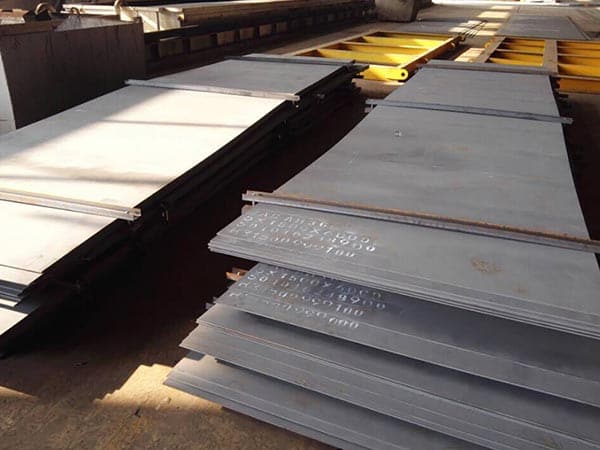
Metallurgical Foundation of S700MC and Its Impact on Cutting
S700MC is a high-strength low-alloy (HSLA) steel produced through thermomechanically controlled rolling (TMCP). Its microstructure consists of extremely fine grains, often enriched with micro-alloying elements like Niobium (Nb), Titanium (Ti), and Vanadium (V). These elements form stable carbonitrides that pin grain boundaries, preventing grain growth during the manufacturing process. When approaching the cutting process, understanding this metallurgical background is vital. Unlike standard structural steels, S700MC derives its 700 MPa yield strength not just from chemistry, but from the precision of its rolling history. Any thermal intervention, such as flame or plasma cutting, threatens to alter this delicate balance by introducing a Heat Affected Zone (HAZ) that can soften the material if not managed correctly.
The primary operation principle when handling S700MC is the preservation of its fine-grained structure. Because the steel relies on precipitation hardening and grain refinement, excessive heat input during cutting can lead to local annealing. This results in a drop in hardness and yield strength at the cut edge, which might compromise the structural integrity of the final component, especially in high-stress applications like crane booms or truck chassis.
Core Operation Principles for Thermal Cutting
Thermal cutting, including laser, plasma, and oxy-fuel, is the most common method for S700MC. However, the high strength of the material necessitates a stricter adherence to specific parameters compared to S355 or other lower-grade steels.
- Principle of Minimal Heat Input: To minimize the width of the HAZ, high-density energy sources are preferred. Laser cutting is the gold standard for S700MC because it concentrates energy into a very small spot, allowing for high speeds and rapid cooling. This limits the time the material spends at critical transformation temperatures.
- Principle of Gas Purity and Pressure: The choice of assist gas—Oxygen for carbon steel or Nitrogen for clean edges—must be optimized. For S700MC, using high-purity Oxygen (99.95% or higher) enhances the exothermic reaction, increasing cutting speed and reducing the total heat transferred to the plate bulk.
- Principle of Constant Feed Rate: Fluctuations in cutting speed lead to uneven heat distribution. If the torch slows down at corners or complex geometries, the heat accumulates, potentially causing the material to lose its tempered properties. Advanced CNC programming with look-ahead features is essential to maintain a consistent thermal profile.
Mechanical Properties and Chemical Composition Reference
To implement effective cutting strategies, operators must be aware of the specific mechanical limits of the S700MC grade. The following tables outline the typical properties that influence how the material reacts to mechanical and thermal stress during the cutting process.
| Element | C (max) | Si (max) | Mn (max) | P (max) | S (max) | Al (min) | Nb+Ti+V (max) |
|---|---|---|---|---|---|---|---|
| Content (%) | 0.12 | 0.60 | 2.10 | 0.025 | 0.015 | 0.015 | 0.22 |
The low carbon content (max 0.12%) is beneficial for weldability and cutting, as it reduces the risk of martensitic hardening at the cut edge, which would otherwise make the edge brittle and prone to cracking during subsequent bending operations.
| Property | Yield Strength (MPa) | Tensile Strength (MPa) | Elongation A5 (%) | Min. Bending Radius (<3mm) |
|---|---|---|---|---|
| Value | ≥ 700 | 750 - 950 | ≥ 12 | 1.0 x t |
Optimizing Laser Cutting for S700MC
Laser cutting is highly recommended for S700MC due to its precision. However, as plate thickness increases, the operation principles must shift. For plates under 6mm, fiber lasers provide exceptional speed. For thicker sections (up to 20mm), CO2 or high-power fiber lasers with specific nozzle geometries are required to ensure the melt is ejected efficiently.
Nozzle Height and Centering: A stable nozzle height (typically 0.5mm to 1.0mm) ensures a consistent gas flow. For S700MC, any turbulence in the gas flow can lead to dross (slag) adhesion. Because S700MC has a high alloying content compared to mild steel, the viscosity of the molten slag is slightly higher, making nozzle centering and gas pressure regulation critical to achieving a "dross-free" finish.
Edge Quality and Fatigue Life: In industries like heavy lifting, the cut edge is often a site for fatigue crack initiation. The operation principle here is to achieve a surface roughness (Rz) that meets ISO 9013 standards. A smooth cut edge on S700MC reduces the need for secondary grinding and preserves the compressive residual stresses that help resist fatigue.
Mechanical Cutting and Cold Processing Principles
While thermal cutting is dominant, mechanical shearing or waterjet cutting is sometimes employed. When shearing S700MC, the high yield strength requires significantly more force—often 2 to 3 times more than S355. The operation principle for shearing involves maintaining a very tight blade gap (typically 5-10% of plate thickness) to prevent the edge from rolling or tearing.
Waterjet cutting is the ideal "cold" method. It follows the principle of zero thermal distortion. Since S700MC is sensitive to heat-induced softening, waterjet cutting preserves 100% of the TMCP-derived properties. This is particularly useful for prototype parts or components where the HAZ must be completely eliminated for ultra-high safety factors.
Environmental Adaptation and Storage Considerations
The condition of the S700MC plate surface significantly affects cutting quality. Hot-rolled plates often carry a layer of mill scale. If the plate has been stored in a humid environment and developed rust, the laser or plasma arc will struggle to maintain stability. The operation principle for pre-processing involves ensuring the plate is clean and dry. Many high-end fabricators utilize shot-blasting or laser-cleaning prior to the main cutting process to ensure the energy beam interacts directly with the steel rather than surface contaminants.
Furthermore, internal stresses within the hot-rolled plate can cause the material to "spring" or bow during cutting. To counteract this, the principle of stress-aware nesting should be applied. This involves leaving "micro-joints" or tabs to hold the part in place and choosing a cutting sequence that allows the plate to expand and contract uniformly without shifting on the cutting bed.
Application-Specific Cutting Strategies
In the automotive industry, where S700MC is used for weight reduction in truck frames, the cutting process must prioritize repeatability. Automated height sensing and real-time beam monitoring are standard operation principles here. In the construction machinery sector, where plates are thicker, the focus shifts to maximizing penetration and minimizing the taper of the cut.
When cutting holes for bolting in S700MC, the diameter of the hole should ideally be no less than the thickness of the plate if using plasma, to avoid excessive taper. For laser cutting, much smaller ratios are possible, but the operator must ensure that the "lead-in" and "lead-out" points are positioned away from critical load-bearing areas of the hole circumference.
Technical Summary of Operational Best Practices
Success in processing S700MC hinges on balancing the high-strength characteristics with the limitations of thermal processing. Operators should always verify the material certificate (MTC) to check the actual silicon and aluminum levels, as these can subtly influence the laser absorption rate. By adhering to the principles of controlled heat input, precise gas dynamics, and surface cleanliness, manufacturers can fully leverage the weight-saving potential of S700MC without compromising the structural safety of the finished product.
Finally, regular maintenance of the cutting equipment—checking lens cleanliness, nozzle wear, and rail alignment—is an overarching principle that cannot be ignored. Given the high value of S700MC plates, minimizing scrap through precise operation is not just a technical requirement but a financial necessity for modern steel fabrication facilities.
Leave a message