
What is S500MC cold forming autobobile steel price mild steel
Explore the comprehensive guide on S500MC high-strength cold-forming steel. Learn about its mechanical properties, chemical composition, processing advantages, and factors influencing its market price for the automotive industry.
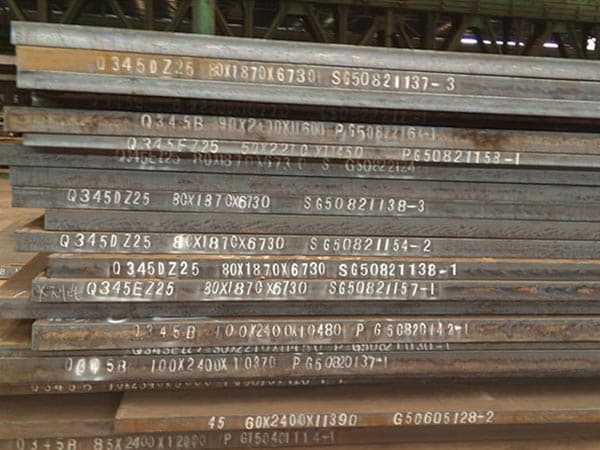
Understanding S500MC High-Strength Cold-Forming Steel
S500MC is a high-strength, low-alloy (HSLA) steel grade specifically designed for cold-forming applications. It is governed by the European standard EN 10149-2, which specifies the technical delivery conditions for hot-rolled flat products with high yield strength for cold forming. The "S" stands for structural steel, "500" represents the minimum yield strength of 500 MPa, and "MC" indicates that the material is thermomechanically rolled (M) and intended for cold forming (C). While some buyers search for it under the term "mild steel," it is technically a sophisticated HSLA steel that offers significantly higher strength-to-weight ratios than traditional mild steels like S235JR.
The development of S500MC was driven by the automotive industry's need to reduce vehicle weight without compromising structural integrity or safety. By using thinner gauges of S500MC to replace thicker sections of standard mild steel, manufacturers can achieve substantial weight savings, leading to improved fuel efficiency and reduced carbon emissions. This material is widely used in the production of chassis, longitudinal beams, cross members, and other structural components of trucks, trailers, and passenger cars.
Chemical Composition and Metallurgical Grain Refinement
The exceptional properties of S500MC are achieved through a precise chemical composition and a specialized thermomechanical rolling process. Unlike traditional hot-rolled steels that rely on high carbon content for strength, S500MC maintains a low carbon level to ensure excellent weldability and ductility. The strength is primarily derived from grain refinement and precipitation hardening through the addition of micro-alloying elements such as Niobium (Nb), Vanadium (V), and Titanium (Ti).
| Element | Max Content (%) |
|---|---|
| Carbon (C) | 0.12 |
| Manganese (Mn) | 1.60 |
| Silicon (Si) | 0.50 |
| Phosphorus (P) | 0.025 |
| Sulfur (S) | 0.015 |
| Aluminum (Al) | 0.015 |
| Niobium (Nb) | 0.09 |
| Vanadium (V) | 0.20 |
| Titanium (Ti) | 0.15 |
The low carbon equivalent (CEV) of S500MC is a critical factor for its superior performance. By keeping carbon levels low, the steel remains highly resistant to cold cracking during welding. The micro-alloying elements work together to inhibit grain growth during the rolling process, resulting in an extremely fine-grained microstructure. This fine grain size is the secret behind the material's ability to combine high yield strength with remarkable toughness, even at low temperatures.
Mechanical Properties and Structural Performance
When evaluating S500MC, the mechanical properties are the most significant indicators of its suitability for demanding structural applications. The thermomechanical rolling process ensures that these properties are consistent throughout the entire length and width of the coil or sheet. This consistency is vital for automated manufacturing processes where precision is paramount.
| Property | Value Range |
|---|---|
| Yield Strength (ReH) | Min 500 MPa |
| Tensile Strength (Rm) | 550 - 700 MPa |
| Elongation (A80mm) | Min 12% (t < 3mm) |
| Elongation (A5) | Min 14% (t ≥ 3mm) |
| Min. Bending Radius (90°) | 1.0t - 1.5t (depending on thickness) |
The high yield strength of 500 MPa allows engineers to design components that can withstand higher loads or reduce the thickness of the material used. For instance, replacing a 6mm S355MC plate with a 4.5mm S500MC plate can maintain the same load-bearing capacity while reducing weight by approximately 25%. This makes it a preferred choice for the heavy transport industry, where every kilogram of weight saved translates into increased payload capacity.
Superior Cold Forming and Fabrication Characteristics
Despite its high strength, S500MC exhibits excellent cold-forming characteristics. This is a result of the clean steel-making process, which minimizes non-metallic inclusions, and the fine-grained structure. It can be bent, flanged, and cold-pressed into complex shapes without the risk of cracking or springback issues, provided the correct bending radii are followed.
- Bending: S500MC can be bent to tight radii. For thicknesses up to 3mm, a minimum bending radius of 1.0 times the thickness (1.0t) is typically achievable. For thicker plates up to 6mm, 1.5t is recommended.
- Stamping and Pressing: The material's uniform mechanical properties ensure consistent behavior in high-speed stamping presses, reducing scrap rates and tool wear.
- Laser and Plasma Cutting: Due to its low alloy content and clean surface, S500MC is ideal for precision laser cutting. The edges remain clean, and the heat-affected zone (HAZ) is minimal.
- Welding: S500MC can be welded using all standard methods, including MAG, TIG, and submerged arc welding. Because of its low carbon content, preheating is generally not required for standard thicknesses, which simplifies the production workflow.
Factors Influencing S500MC Market Prices
The price of S500MC is influenced by several global and regional factors. Unlike standard mild steel, S500MC is a value-added product that requires specialized rolling mills and precise alloying. Therefore, its price is generally higher than S235 or S355 grades, but the total cost of the finished component can be lower due to material savings.
1. Raw Material Costs: The prices of iron ore, coking coal, and scrap steel are the primary drivers. Additionally, the cost of micro-alloying elements like Niobium and Titanium can fluctuate significantly based on global mining output and trade policies.2. Energy and Production Costs: Thermomechanical rolling is an energy-intensive process. Fluctuations in electricity and natural gas prices directly impact the conversion cost from raw steel to high-strength coils.3. Supply and Demand in the Auto Sector: Since the automotive industry is the largest consumer of S500MC, any shift in vehicle production volumes—such as the transition to electric vehicles (EVs)—affects demand. EVs often require even higher-strength steels to protect battery packs, further pushing the demand for grades like S500MC and S700MC.4. Logistics and Trade Barriers: Import duties, anti-dumping measures, and shipping costs play a role in regional pricing. For example, S500MC sourced from Tier-1 mills in Europe or China may have different price points based on local availability and trade agreements.
Environmental Adaptability and Sustainability
S500MC is highly adaptable to various environmental conditions, especially when combined with modern coating technologies. While it does not have the inherent corrosion resistance of stainless steel, its surface is well-suited for hot-dip galvanizing, zinc-nickel plating, or KTL (cathodic dip painting). These coatings provide robust protection against road salt, moisture, and industrial pollutants.
From a sustainability perspective, S500MC contributes to the "circular economy." Its high strength enables "dematerialization"—using less steel to achieve the same function. Furthermore, S500MC is 100% recyclable. At the end of a vehicle's life, the steel can be recovered and melted down to produce new high-quality steel without loss of properties. The reduction in vehicle weight enabled by S500MC also leads to a significant decrease in CO2 emissions over the vehicle's lifetime, aligning with global green manufacturing goals.
Comparing S500MC with Other High-Strength Grades
Choosing the right grade involves balancing strength, formability, and cost. S500MC sits in a "sweet spot" for many structural applications. Compared to S355MC, it offers a 40% increase in yield strength with only a slight reduction in ductility. Compared to S700MC, it is more cost-effective and easier to form, making it suitable for parts that require significant bending or deep drawing.
- S355MC: Lower cost, higher ductility, but requires thicker sections for the same strength.
- S500MC: Optimized balance of strength and formability for chassis and structural frames.
- S700MC: Ultra-high strength for extreme weight saving, but requires larger bending radii and more powerful pressing equipment.
For manufacturers looking to upgrade from mild steel, S500MC provides a manageable transition. The tooling used for S355MC can often be adapted for S500MC with minor adjustments to springback compensation. This makes it an ideal entry point into the world of high-strength lightweighting.
Industrial Applications Beyond the Automotive Sector
While the automotive industry is the primary driver, the versatility of S500MC has led to its adoption in various other sectors. In the construction equipment industry, it is used for crane booms, excavator arms, and support structures where high strength and low weight are critical for stability and reach. In the agricultural sector, S500MC is used for plow frames and trailer chassis, where it must withstand high mechanical stress and fatigue in harsh outdoor environments.
The energy sector also utilizes S500MC for the fabrication of racking systems for solar panels and components for wind turbine transport frames. Its ability to maintain toughness at low temperatures makes it suitable for equipment used in cold climates. As industries continue to seek ways to optimize performance and reduce material costs, the application of S500MC is expected to expand into more specialized engineering fields.
When sourcing S500MC, it is essential to partner with suppliers who provide full mill test certificates (MTC) according to EN 10204 3.1. This ensures that the chemical composition and mechanical properties meet the strict requirements of the EN 10149-2 standard, guaranteeing the safety and reliability of the final product. Whether you are designing a new truck chassis or optimizing an industrial rack, S500MC offers a proven, high-performance solution that bridges the gap between traditional mild steel and ultra-high-strength alloys.
Leave a message