
What are the quality requirements of en 10149-2 s420mc
Explore the rigorous quality requirements of EN 10149-2 S420MC steel, including chemical composition, mechanical properties, and industrial applications.
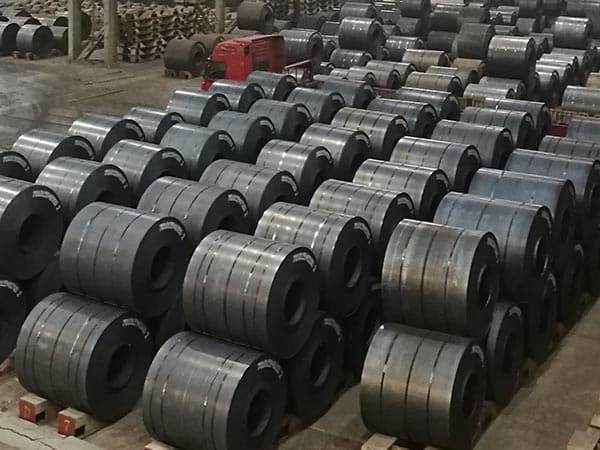
Understanding the Framework of EN 10149-2 S420MC
EN 10149-2 S420MC represents a pinnacle in the evolution of high-yield strength steels specifically engineered for cold forming. The designation itself reveals its technical pedigree: 'S' stands for structural steel, '420' denotes a minimum yield strength of 420 MPa, 'M' indicates its thermomechanically rolled condition, and 'C' signifies its suitability for cold forming. This material is not merely a commodity but a precision-engineered solution for industries demanding weight reduction without compromising structural integrity. The quality requirements stipulated under the EN 10149-2 standard are stringent, ensuring that every batch of material exhibits consistent behavior during complex fabrication processes like deep drawing, bending, and laser cutting.
The Science of Micro-alloying: Chemical Composition Requirements
The exceptional properties of S420MC are rooted in its sophisticated chemical architecture. Unlike traditional carbon steels that rely on high carbon content for strength, S420MC utilizes a low-carbon approach combined with precise micro-alloying. This strategy ensures excellent weldability and toughness. The standard imposes strict limits on elements to prevent the formation of coarse grains and brittle phases.
Carbon (C): Limited to a maximum of 0.12%, the low carbon content is the primary reason for the steel's superior ductility and weldability. It prevents the formation of hard, brittle martensite in the heat-affected zone (HAZ) during welding.
Manganese (Mn): With a maximum of 1.60%, manganese acts as a solid solution strengthener and improves the hardenability of the steel during the thermomechanical rolling process.
Micro-alloying Elements (Nb, V, Ti): These are the 'secret ingredients' of S420MC. Niobium (Nb), Vanadium (V), and Titanium (Ti) are added either individually or in combination. They facilitate grain refinement by forming stable carbides and nitrides, which pin grain boundaries during the rolling process. This results in an ultra-fine grain structure, which is the fundamental requirement for achieving high yield strength alongside high impact toughness.
| Element | C (max) | Mn (max) | Si (max) | P (max) | S (max) | Al (min) | Nb (max) | V (max) | Ti (max) |
|---|---|---|---|---|---|---|---|---|---|
| Value (%) | 0.12 | 1.60 | 0.50 | 0.025 | 0.015 | 0.015 | 0.09 | 0.20 | 0.15 |
Mechanical Performance and Structural Integrity
The quality requirements for mechanical properties are the most critical benchmarks for engineers. S420MC must meet specific thresholds for yield strength, tensile strength, and elongation. These properties are tested on specimens taken transverse to the rolling direction, which is a more demanding test than longitudinal sampling.
- Yield Strength (ReH): A minimum of 420 MPa is mandatory. This high threshold allows designers to use thinner sections compared to standard S355 steel, leading to significant weight savings in vehicle chassis and crane booms.
- Tensile Strength (Rm): The range is set between 480 and 620 MPa. This relatively narrow window ensures that the material behaves predictably during forming and service.
- Elongation (A): Ductility is vital for cold forming. For thicknesses less than 3mm, the minimum elongation (A80) is 16%. For thicknesses of 3mm and above, the minimum elongation (A5) is 19%.
The thermomechanical rolling process (M) is distinct from normalizing. It involves precise temperature control and heavy deformation during the final rolling passes. This process is irreversible; heating the material above 580°C during subsequent processing will lead to grain growth and a significant loss of mechanical properties. Therefore, quality control must extend to the user's fabrication methods.
Superior Cold Forming and Bending Capabilities
One of the defining quality requirements of S420MC is its ability to be bent to tight radii without cracking. This is essential for the production of complex structural profiles. The EN 10149-2 standard specifies minimum bending radii based on the nominal thickness (t) of the material.
For a 180-degree bend test, the requirements are typically as follows:
- For thicknesses ≤ 3mm: Minimum bending radius of 0.5t.
- For thicknesses between 3mm and 6mm: Minimum bending radius of 1.0t.
- For thicknesses > 6mm: Minimum bending radius of 1.5t.
These values demonstrate the steel's exceptional plasticity. However, fabricators must account for springback, which is more pronounced in S420MC than in lower-strength grades due to its higher yield-to-tensile ratio. Achieving precision in the final component requires sophisticated tooling and an understanding of the material's elastic recovery.
Welding Integrity and Thermal Management
Welding S420MC is highly efficient due to its low carbon equivalent (CEV). Unlike traditional high-strength steels, S420MC generally does not require preheating, which reduces production time and energy costs. However, maintaining the quality of the welded joint requires adherence to specific thermal limits.
The heat input during welding must be controlled to prevent excessive grain growth in the heat-affected zone. If the heat input is too high, the fine-grained structure—achieved through thermomechanical rolling—can be compromised, leading to a localized drop in strength and toughness. Standard arc welding processes such as MAG (Metal Active Gas), MIG, and laser welding are all compatible with S420MC, provided that the cooling rate (t8/5 time) is kept within an optimal range to maintain the balance between hardness and ductility.
Surface Quality and Dimensional Tolerances
The aesthetic and functional quality of S420MC is also governed by surface standards. Most S420MC is supplied in the 'as-rolled' or 'pickled and oiled' condition. According to EN 10163-2, the surface must be free from defects such as cracks, shells, or inclusions that could impair its use. For precision applications like automotive body parts, a Class B surface finish is often required to ensure that paint and coatings adhere perfectly.
Dimensional tolerances are usually governed by EN 10051 for continuously hot-rolled plate and strip. Consistency in thickness is paramount, especially for automated welding and assembly lines where even a 0.1mm deviation can cause misalignment or weld defects. High-quality mills utilize AGC (Automatic Gauge Control) systems to ensure that S420MC meets the tightest tolerance requirements.
Broadening Industrial Applications
The unique combination of high strength and excellent formability makes S420MC indispensable across several high-performance sectors. Its adoption is driven by the global trend toward 'lightweighting'—reducing the mass of structures to improve fuel efficiency or increase payload capacity.
Automotive Industry: S420MC is a staple for truck chassis, cross members, and suspension components. Its ability to withstand cyclic loading and fatigue makes it ideal for parts that endure constant stress. The weight reduction achieved by switching from S355 to S420MC can reach up to 20% in certain structural assemblies.
Heavy Machinery: In the manufacturing of cranes, excavators, and agricultural equipment, S420MC provides the necessary strength for telescopic booms and frames while allowing for complex shapes to be formed from a single sheet, reducing the need for excessive welding.
Storage and Racking: High-bay warehouse racking systems utilize S420MC to support massive loads with minimal material volume, optimizing space and reducing the overall carbon footprint of the steel structure.
Environmental Resilience and Fatigue Life
While S420MC is not a 'weathering steel' like Corten, its fine-grained structure provides a degree of environmental resilience. The homogeneity of the microstructure reduces the risk of localized pitting corrosion compared to coarser-grained steels. Furthermore, the fatigue life of S420MC is exceptional. Fatigue cracks often initiate at surface irregularities or grain boundaries; the ultra-fine grain size of S420MC acts as a barrier to crack propagation, extending the service life of components subjected to dynamic loads.
To maximize this fatigue resistance, it is recommended to ensure smooth transitions in design and avoid sharp notches. The quality of the edges—whether sheared, laser-cut, or plasma-cut—also plays a role. Laser cutting is preferred for S420MC as it produces a narrow HAZ and a very smooth edge profile, preserving the material's inherent fatigue properties.
Strategic Value of S420MC in Modern Engineering
Choosing S420MC is a strategic decision that impacts the entire lifecycle of a product. From a procurement perspective, while the cost per ton may be higher than standard carbon steel, the 'cost per unit of strength' is often lower. By using less material to achieve the same structural performance, manufacturers reduce shipping costs, welding consumables, and processing time.
The quality requirements of EN 10149-2 S420MC ensure that the material is not just strong, but also reliable and easy to process. As industries move toward more sustainable and efficient designs, the role of micro-alloyed, thermomechanically rolled steels like S420MC will only continue to grow. Ensuring that suppliers provide full traceability and mill test certificates (MTC) according to EN 10204 3.1 is the final step in guaranteeing that these quality requirements are met, safeguarding the integrity of the finished engineering project.
Leave a message