
What is the rolling automotive industry used steel S355MC plate
Explore the technical specifications of S355MC steel plate. Learn about its chemical composition, mechanical properties, and why it is the preferred choice for automotive chassis and structural components.
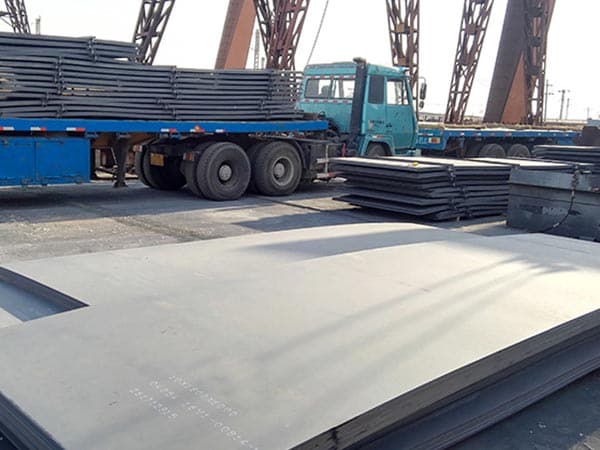
Understanding S355MC: The High-Strength Standard for Automotive Engineering
S355MC is a high-yield-strength, hot-rolled steel specifically designed for cold forming. Governed by the EN 10149-2 standard, this material represents a significant leap in metallurgical engineering, providing a balance between high strength, excellent ductility, and superior weldability. The designation "S" refers to structural steel, "355" indicates a minimum yield strength of 355 MPa, "M" signifies that the steel is thermomechanically rolled, and "C" confirms its suitability for cold forming operations.
Within the automotive sector, the demand for materials that reduce vehicle weight while maintaining structural integrity has never been higher. S355MC meets these requirements by allowing engineers to use thinner sections of steel without compromising the safety or load-bearing capacity of the vehicle. This characteristic is vital for improving fuel efficiency and reducing carbon emissions across the transport industry.
The Thermomechanical Rolling Process (TMCP)
The superior properties of S355MC are primarily a result of Thermomechanically Controlled Processing (TMCP). Unlike traditional normalization processes, TMCP involves strict control over the heating and rolling temperatures, as well as the cooling rates. This process refines the grain structure of the steel at a microscopic level.
By rolling the steel at specific temperature ranges where recrystallization is inhibited, a very fine-grained ferrite-pearlite structure is achieved. This fine grain size is the secret behind the dual advantage of S355MC: it is significantly stronger than standard structural steels like s355jr, yet it remains highly ductile and easy to shape. This refined microstructure also enhances the material's toughness at low temperatures, a critical factor for vehicles operating in diverse climates.
Chemical Composition and Micro-Alloying Strategy
The chemical profile of S355MC is meticulously balanced to ensure performance. A key feature is the low carbon content, which is essential for maintaining excellent weldability and preventing brittleness. To achieve high strength without high carbon, micro-alloying elements such as Niobium (Nb), Vanadium (V), and Titanium (Ti) are added.
| Element | Maximum Content (%) |
|---|---|
| Carbon (C) | 0.12 |
| Manganese (Mn) | 1.50 | Silicon (Si) | 0.50 |
| Phosphorus (P) | 0.025 |
| Sulphur (S) | 0.020 |
| Aluminium (Al) | 0.015 |
| Niobium (Nb) | 0.09 |
| Vanadium (V) | 0.20 |
| Titanium (Ti) | 0.15 |
These micro-alloying elements work by forming stable carbides and nitrides that pin grain boundaries during the rolling process, preventing grain growth. This grain refinement is the most effective way to increase both strength and toughness simultaneously. The low sulfur and phosphorus levels further ensure that the steel has high internal purity, reducing the risk of lamellar tearing or cracking during intensive fabrication.
Mechanical Performance and Structural Integrity
The mechanical properties of S355MC are what make it a staple in heavy-duty automotive applications. It offers a high yield-to-tensile ratio, which is particularly useful for parts that must absorb energy during an impact or resist permanent deformation under heavy loads.
| Property | Value (Thickness ≤ 16mm) |
|---|---|
| Minimum Yield Strength | 355 MPa |
| Tensile Strength | 430 - 550 MPa |
| Minimum Elongation (t < 3mm) | 19% |
| Minimum Elongation (t ≥ 3mm) | 23% |
The high elongation values indicate that despite its strength, the material can undergo significant deformation before failure. This is a critical safety feature in automotive design, as it allows structural components to buckle and absorb energy during a collision, protecting the occupants of the vehicle.
Exceptional Cold Forming and Bending Capabilities
The "C" in S355MC stands for cold forming, and this is where the material truly shines. Automotive manufacturers rely on complex stamping and bending processes to create chassis components, cross members, and longitudinal beams. S355MC is engineered to handle tight bending radii without surface cracking or edge failure.
When bending S355MC, it is important to consider the direction of the rolling. The material exhibits excellent formability both transverse and longitudinal to the rolling direction. For a 90-degree bend, the minimum recommended bending radius is typically 0.5 to 1.5 times the thickness of the plate, depending on the specific thickness and the orientation of the bend. This flexibility allows for the design of compact, complex parts that would be impossible to manufacture with more brittle steel grades.
Welding Performance in Automated Production
Modern automotive assembly lines rely heavily on robotic welding, including MIG, TIG, and spot welding. S355MC is exceptionally well-suited for these automated environments. Due to its low Carbon Equivalent Value (CEV), the steel is not prone to cold cracking in the heat-affected zone (HAZ).
The consistency of the chemical composition across different batches ensures that welding parameters can be standardized, leading to high-quality, repeatable joints. Furthermore, because the steel is thermomechanically rolled rather than heat-treated, the loss of strength in the weld area is minimal compared to other high-strength steels. This ensures that the entire assembly maintains its structural integrity after fabrication.
Key Applications in the Automotive Industry
S355MC is utilized across a wide spectrum of vehicle types, from passenger cars to heavy-duty trucks and specialized machinery. Its versatility makes it the go-to choice for components that require a high strength-to-weight ratio.
- Truck Chassis and Frames: The longitudinal and cross members of truck frames are subjected to massive torsional and bending stresses. S355MC provides the necessary rigidity while allowing for weight savings that translate into higher payload capacities.
- Cold Pressed Parts: Complex structural brackets, suspension supports, and engine mounts are often cold-pressed from S355MC due to its superior formability.
- Wheels and Rims: The durability and fatigue resistance of S355MC make it ideal for the production of steel wheels for commercial vehicles.
- Crane Arms and Booms: In the heavy equipment sector, the high yield strength allows for the construction of lighter, longer crane booms that can lift heavier loads.
Environmental Adaptation and Sustainability
In today's industrial climate, the environmental footprint of a material is as important as its mechanical properties. S355MC contributes to sustainability in two primary ways. First, the weight reduction achieved through its high strength directly reduces the fuel consumption and CO2 emissions of the vehicles it is built into. Second, the steel is 100% recyclable. At the end of a vehicle's life cycle, S355MC can be melted down and repurposed without any loss of quality.
Furthermore, the TMCP process itself is more energy-efficient than traditional quenching and tempering methods, as it utilizes the heat from the rolling process to achieve the desired microstructure, reducing the need for secondary heat treatment cycles. This makes S355MC a technically superior and environmentally responsible choice for modern manufacturing.
Strategic Value in Modern Manufacturing
The adoption of S355MC steel plate represents a strategic move for manufacturers looking to optimize their production chains. Its ease of processing—ranging from laser cutting to high-speed stamping—reduces tool wear and shortens production cycles. When compared to standard S355JR steel, S355MC offers better surface quality and tighter dimensional tolerances, which are essential for precision automotive engineering.
By integrating S355MC into their designs, companies can achieve a competitive edge through improved product performance and reduced material costs. As the automotive industry continues to evolve towards electric vehicles and more stringent safety standards, high-strength low-alloy (HSLA) steels like S355MC will remain at the forefront of material innovation.
Leave a message