
What is the available size of s460 steel welding?
Comprehensive guide on available sizes, welding parameters, and mechanical properties of S460 steel, covering plates, sections, and technical considerations for heavy engineering.
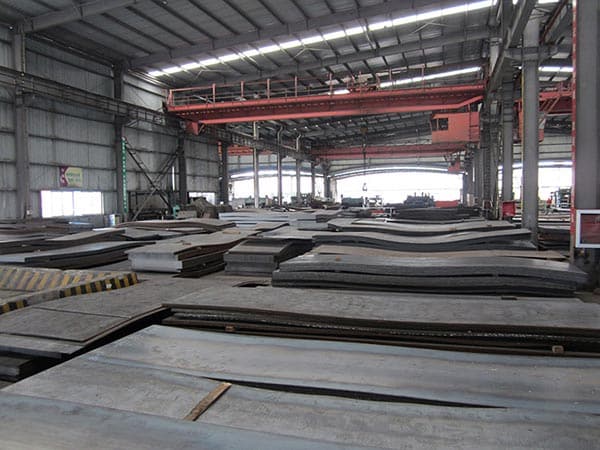
The Dimensional Landscape of S460 steel for Welding Applications
S460 steel is a high-strength structural grade that has become a cornerstone in modern engineering projects requiring a balance between weight reduction and load-bearing capacity. When discussing the available size of S460 steel for welding, it is essential to distinguish between the various forms this material takes, primarily plates, sections, and hollow profiles. The availability is governed by European standards such as EN 10025-3 (normalized/normalized rolled fine grain steels), EN 10025-4 (thermomechanically rolled fine grain steels), and EN 10025-6 (quenched and tempered steels).
For structural engineers and fabricators, understanding the thickness and width limitations is critical because these dimensions directly influence the welding procedure specification (WPS). S460 steel plates are typically available in thicknesses ranging from 6mm to over 150mm, depending on the specific sub-grade (N, M, or Q) and the capabilities of the manufacturing mill. Large-scale projects often utilize widths up to 3,500mm and lengths reaching 12,000mm to 18,000mm to minimize the number of transverse welds, thereby enhancing structural integrity.
Standard Plate Thickness and Width Availability
The most common form of S460 used in welding is the heavy plate. The production process—whether it is thermomechanical rolling (S460M) or quenching and tempering (S460Q)—determines the maximum thickness while maintaining the required yield strength of 460 MPa. Unlike lower grades, S460 maintains a high yield point even as thickness increases, though slight reductions occur in very thick sections.
| Product Form | Thickness Range (mm) | Common Widths (mm) | Typical Lengths (mm) |
|---|---|---|---|
| Hot Rolled Plates (S460M/ML) | 8 - 120 | 2000, 2500, 3000 | 6000 - 12000 |
| Quenched & Tempered (S460Q/QL) | 6 - 150 | 1500 - 3500 | Up to 18000 |
| Normalized Plates (S460N/NL) | 10 - 100 | 2000 - 3000 | 6000 - 12000 |
Welders must account for the fact that as the plate thickness exceeds 40mm, the cooling rate of the weld pool changes significantly. This necessitates stricter control over preheat temperatures to prevent hydrogen-induced cracking, especially in the heat-affected zone (HAZ). The available size of S460 steel welding components is not just a matter of physical dimensions but also a matter of metallurgical feasibility during the joining process.
Structural Sections and Profile Dimensions
Beyond flat plates, S460 is frequently supplied as structural sections, including H-beams (HEA, HEB, HEM), I-beams (IPE), and channels. These profiles are essential for skeleton structures in skyscrapers and industrial plants. The available sizes for these sections follow international standard tables, but S460 allows for thinner webs and flanges compared to S355 while supporting the same loads.
- H-Beams: Available in heights from 100mm to 1000mm, with flange thicknesses often reaching 40mm in S460M grades.
- Square and Rectangular Hollow Sections (SHS/RHS): Produced according to EN 10210, these are available in wall thicknesses up to 20mm and external dimensions up to 500x500mm.
- L-Profiles and Channels: Used for bracing, these are available in standard sizes but offer superior strength-to-weight ratios in S460.
When welding these sections, the geometry of the joint becomes complex. The available size of the welding throat must be calculated based on the flange thickness to ensure the joint is not the weakest link in the assembly. Fabricators often prefer S460M for these sections due to its excellent weldability and low carbon equivalent (CEV) values.
Mechanical Properties and Welding Compatibility
The "460" in S460 denotes a minimum yield strength of 460 MPa for thicknesses ≤ 16mm. As the size increases, the yield strength may slightly decrease, which is a vital consideration for heavy-duty welding. The mechanical properties are not uniform across all sizes; they are a function of the rolling reduction ratio and heat treatment.
| Thickness (t) mm | Min Yield Strength (MPa) | Tensile Strength (MPa) | Min Elongation (%) |
|---|---|---|---|
| t ≤ 16 | 460 | 540 - 720 | 17 |
| 16 < t ≤ 40 | 440 | 540 - 720 | 17 |
| 40 < t ≤ 63 | 430 | 540 - 720 | 17 |
| 63 < t ≤ 80 | 410 | 540 - 720 | 17 |
The weldability of S460 is generally excellent, particularly for the S460M (Thermomechanically Rolled) variant. This grade utilizes a micro-alloying design with elements like Niobium, Vanadium, and Titanium, which refine the grain size. This grain refinement allows the steel to maintain high toughness at low temperatures (down to -50°C for ML/QL grades), making it suitable for offshore structures and arctic environments. The available size of the steel does not compromise these properties, provided the welding heat input is controlled within the range of 10-25 kJ/cm.
Welding Processes for Various S460 Sizes
The choice of welding process is dictated by the thickness of the S460 material. For thin sheets and light sections, Gas Metal Arc Welding (GMAW/MAG) is the standard. For heavy plates exceeding 25mm, Submerged Arc Welding (SAW) is preferred for its high deposition rate and consistent penetration.
MAG Welding: Ideal for S460 plates up to 20mm. It offers high flexibility for positional welding. Using a shielding gas mix of Argon and CO2 ensures a stable arc and minimal spatter.
Submerged Arc Welding (SAW): Used for long longitudinal and circumferential welds in thick-walled S460 pipes or bridge girders. The flux provides a protective cover that slows the cooling rate, which is beneficial for maintaining the ductility of the HAZ in S460Q grades.
Flux-Cored Arc Welding (FCAW): Often used in onsite construction for S460 structural welding. It provides better penetration than solid wire MAG and is less sensitive to wind, which is crucial for high-rise steel frame assembly.
Environmental Adaptability and Long-term Durability
S460 steel is frequently selected for its resilience in harsh environments. The "L" designation (e.g., S460ML, S460QL) indicates that the steel has been tested for impact energy at temperatures as low as -50°C. This makes it an ideal candidate for bridge construction in cold climates or for offshore wind turbine foundations where cyclic loading and corrosive seawater are constant factors.
The corrosion resistance of S460 can be further enhanced through specialized coatings or by choosing weathering variants, although standard S460 requires protective painting or galvanizing. When welding galvanized S460, extra care must be taken to remove the zinc layer near the weld zone to prevent zinc embrittlement and porosity in the weld metal. The available size of the components must also account for the dimensions of galvanizing baths if hot-dip galvanizing is the chosen protection method.
Application Extension: Where S460 Sizes Matter Most
The versatility of S460 sizes allows it to permeate multiple heavy industries. In the crane and lifting equipment sector, S460Q is used for telescopic booms. Here, the available size—specifically the thinness of the high-strength plate—allows for longer reach without increasing the weight of the crane. In bridge engineering, thick S460M plates are used for primary girders, where the high yield strength allows for longer spans between piers.
In the offshore oil and gas industry, S460ML is used for jacket structures. The large available sizes of these plates minimize the number of welds required in the "splash zone," where corrosion and fatigue are most aggressive. By using larger plates, engineers reduce the total length of weld seams, which are traditionally the most vulnerable points for fatigue crack initiation.
Technical Considerations for S460 Welding Design
Designing a welded joint for S460 requires more than just selecting a size; it requires an understanding of the Carbon Equivalent Value (CEV). A lower CEV means better weldability and less need for high preheat temperatures. S460M typically has a CEV of around 0.39 to 0.43, which is remarkably low for its strength level. This allows for welding thick sections with minimal preheating, saving time and energy costs in the fabrication shop.
Edge preparation is another factor influenced by size. For S460 plates over 12mm, a V-groove or X-groove preparation is standard. Precision plasma or laser cutting is used to ensure the edges are clean and accurately beveled, which is essential for achieving full penetration welds in high-strength applications. The available size of the welding equipment must match the scale of the S460 components, particularly when dealing with large-diameter tubular sections used in foundation piles.
Optimizing S460 Selection for Fabrication
When sourcing S460, it is vital to match the grade to the specific welding and forming requirements. S460N is suitable for applications where subsequent heat treatment might be required, as its properties are derived from a normalized grain structure. S460M is the go-to for cost-effective welding due to its low alloy content and excellent HAZ properties. S460Q is the choice when the absolute highest strength-to-weight ratio is needed for very thick sections.
The available size of S460 steel welding materials continues to expand as steel mills invest in more powerful rolling stands and advanced cooling systems. This evolution enables the construction of safer, lighter, and more sustainable infrastructure globally. By leveraging the full range of available thicknesses and profiles, engineers can push the boundaries of what is possible in structural design.
Leave a message