
grade 460 steel equivalent prices continue to be weak and downward
A comprehensive technical and market analysis of Grade 460 steel equivalents. Explore mechanical properties, welding specifications, and the factors driving the current downward price trend in the global steel market.
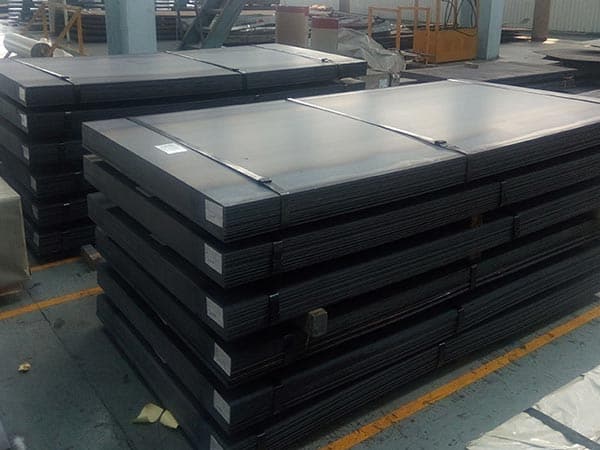
Understanding Grade 460 High-Strength Low-Alloy (HSLA) Steel
Grade 460 steel represents a critical class of high-strength structural materials characterized by a minimum yield strength of 460 MPa. As engineering projects demand higher load-bearing capacities with reduced dead weight, materials like S460, Q460, and their international equivalents have become indispensable. The current market trajectory shows that grade 460 steel equivalent prices continue to be weak and downward, a phenomenon driven by a complex interplay of global supply chain adjustments, shifting demand in heavy infrastructure, and fluctuating raw material costs. Despite the pricing volatility, the technical superiority of this grade remains a focal point for structural engineers and procurement specialists.
International Equivalents and Standards Comparison
Navigating the global procurement landscape requires a deep understanding of how different national standards define Grade 460 steel. While the core yield strength remains consistent, variations in impact testing temperatures and delivery conditions (such as normalized or TMCP) distinguish the sub-grades. The following table provides a clear comparison of the most common equivalents encountered in the international market.
| Standard | Grade Designation | Delivery Condition | Typical Application |
|---|---|---|---|
| EN 10025-3/4 | S460N / S460M | Normalized / TMCP | Offshore structures, bridges |
| GB/T 1591 | Q460C / Q460D / Q460E | Normalized / Quenched & Tempered | High-rise buildings, heavy machinery |
| ASTM | A572 Grade 65 (Approx.) | As-rolled | General construction, transmission towers |
| JIS G3106 | SM460 (Specialized) | Controlled Rolling | Shipbuilding, structural frames |
The distinction between S460M (thermomechanically rolled) and S460N (normalized) is particularly important for fabrication. TMCP steels offer better weldability due to lower carbon equivalents, whereas normalized steels provide excellent uniformity in mechanical properties across varying thicknesses.
Mechanical Performance and Metallurgical Integrity
The mechanical prowess of Grade 460 steel is not merely about its yield strength. Its utility is defined by its ductility, toughness, and fatigue resistance. For instance, Q460D must maintain significant impact energy absorption at -20°C, making it suitable for arctic environments or dynamic loading conditions. The microstructure of these steels is typically a fine-grained ferrite-pearlite or tempered martensite, achieved through precise micro-alloying with elements such as Niobium (Nb), Vanadium (V), and Titanium (Ti).
- Yield Strength: Minimum 460 MPa for thicknesses ≤ 16mm, with slight reductions as thickness increases.
- Tensile Strength: Generally ranges between 520 and 670 MPa, providing a robust safety margin.
- Elongation: Typically exceeds 17%, ensuring the material can undergo plastic deformation before failure.
- Impact Toughness: Sub-grades like 'E' or 'L' are tested at -40°C or -50°C to prevent brittle fracture.
The micro-alloying elements facilitate grain refinement during the rolling process. Niobium, for example, raises the recrystallization temperature, allowing for more effective deformation during the finishing stages of rolling. This results in a finer grain size, which simultaneously improves both strength and toughness—a rare combination in metallurgy.
Fabrication and Welding Considerations
As grade 460 steel equivalent prices continue to be weak and downward, manufacturers are focusing on optimizing fabrication costs to maintain margins. Welding high-strength steel requires stricter adherence to thermal cycles than standard S235 or S355 grades. The Carbon Equivalent (CEV) is the primary indicator of weldability. Most Grade 460 steels are designed with a CEV below 0.45% to minimize the risk of Hydrogen Induced Cold Cracking (HICC).
Preheating is often necessary for thicker sections to slow the cooling rate of the Heat Affected Zone (HAZ). If the cooling rate is too fast, brittle martensite may form; if it is too slow, grain growth can occur, reducing the toughness of the joint. Using low-hydrogen consumables (e.g., E8018-G electrodes or matching flux-cored wires) is mandatory for maintaining the integrity of the 460 MPa yield threshold across the weldment.
Environmental Adaptability and Corrosion Protection
Grade 460 steel is frequently deployed in harsh environments, from offshore wind farms to high-altitude mining equipment. Its environmental adaptability is enhanced through specialized coating systems or by specifying atmospheric corrosion-resistant variants (similar to Corten, but at higher strength levels). In marine environments, the fine-grained structure of S460ML provides a stable substrate for heavy-duty epoxy coatings, ensuring a service life exceeding 25 years with minimal maintenance.
Resistance to lamellar tearing is another critical factor for heavy structural nodes. Specifying Z-grade properties (Z25 or Z35) for Grade 460 ensures that the steel possesses sufficient through-thickness ductility, preventing internal delamination under high welding shrinkage stresses in T-joints and corner joints.
Market Dynamics: Why Prices Are Weak
The current downward pressure on grade 460 steel equivalent prices is attributed to several macroeconomic factors. First, the global slowdown in commercial real estate has reduced the demand for high-rise structural sections. Second, the surge in steel production capacity in emerging markets has led to an oversupply of HSLA plates and coils. While raw material costs like iron ore remain volatile, the lack of aggressive infrastructure spending in key regions has prevented a price floor from forming.
Furthermore, the energy transition has shifted demand patterns. While wind energy requires significant amounts of S460, the transition of the automotive and heavy machinery sectors toward lighter, even higher-strength materials (like 700MPa or 900MPa grades) has left the 460MPa market in a state of high competition and low pricing power. Procurement officers are currently leveraging this weakness to secure long-term contracts, anticipating a potential rebound as global interest rates stabilize and infrastructure projects resume.
Strategic Application in Modern Engineering
Despite the pricing downturn, the engineering value proposition of Grade 460 remains unmatched for specific applications. In bridge engineering, switching from S355 to S460 can result in a 20-30% reduction in steel weight, which translates to lower transportation costs, smaller foundations, and faster erection times. This "strength-to-weight" advantage is the primary driver for its continued specification in technical drawings.
- Lattice Towers: Used in high-voltage transmission lines to withstand extreme wind loads.
- Heavy Lifting: Crane booms and chassis benefit from the high yield point to maximize lifting capacity.
- Pressure Vessels: Specific 460 MPa grades are used for storage tanks where weight reduction is critical for transportable units.
- Mining Equipment: Used in the frames of heavy haul trucks and underground support structures.
The selection of the correct equivalent grade must be balanced with the specific processing capabilities of the fabricator. While S460M offers superior weldability, it may not be suitable for applications requiring extensive heat treatment after fabrication, as the TMCP properties can be lost if heated above the transformation temperature. In such cases, normalized S460N is the technically superior choice, despite the current market price fluctuations.
The trajectory of grade 460 steel equivalent prices serves as a barometer for the broader industrial economy. For stakeholders, the current weak pricing environment offers a window of opportunity to upgrade material specifications from lower grades to Grade 460, enhancing the structural integrity and longevity of projects without the traditional price premium. Monitoring the chemical composition, delivery conditions, and impact requirements remains essential to ensuring that the lower cost does not come at the expense of metallurgical quality.
Leave a message