
What is the s420 steel mechanical properties smelt
Comprehensive guide to S420 steel mechanical properties and smelting techniques. Learn about its chemical composition, yield strength, and industrial applications.
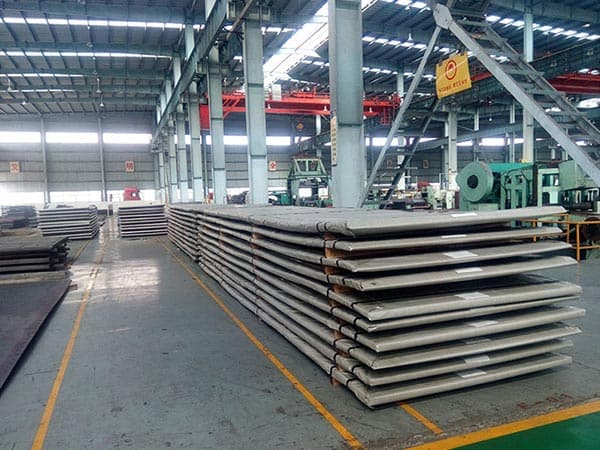
The Fundamentals of S420 Structural Steel
S420 steel represents a critical category of high-strength low-alloy (HSLA) structural steels, primarily governed by the European standard EN 10025. This material is engineered to provide a superior strength-to-weight ratio compared to traditional carbon steels like S235 or S355. The '420' designation signifies its minimum yield strength of 420 MPa for thicknesses up to 16mm. Understanding the mechanical properties and the smelting process of S420 is essential for engineers and manufacturers who require materials capable of withstanding extreme loads while maintaining structural integrity.
S420 steel is typically available in two main conditions: S420N (normalized or normalized rolled) and S420M (thermomechanically rolled). Each variant offers distinct advantages depending on the fabrication requirements and the final operating environment. The choice between these grades often hinges on the balance between weldability, toughness, and the complexity of the forming process.
The Smelting Process and Chemical Composition Control
The smelting of S420 steel is a precision-driven metallurgical operation. To achieve the high strength and toughness required, manufacturers utilize either the Electric Arc Furnace (EAF) or the Basic Oxygen Furnace (BOF) route, followed by intensive secondary refining. The goal of the smelting process is to achieve a clean steel with minimal impurities such as phosphorus and sulfur, which can significantly degrade the material's ductility and impact resistance.
Micro-alloying is the cornerstone of S420 production. Elements such as Niobium (Nb), Vanadium (V), and Titanium (Ti) are added in precise quantities. These elements facilitate grain refinement during the cooling process, which is the primary mechanism for increasing strength without sacrificing toughness. The smelting process also involves vacuum degassing (VD) or vacuum oxygen decarburization (VOD) to remove dissolved gases like hydrogen and nitrogen, preventing internal defects such as hydrogen-induced cracking.
| Element | Max Percentage (%) |
|---|---|
| Carbon (C) | 0.20 |
| Silicon (Si) | 0.60 |
| Manganese (Mn) | 1.70 |
| Phosphorus (P) | 0.030 |
| Sulfur (S) | 0.025 |
| Niobium (Nb) | 0.05 |
| Vanadium (V) | 0.12 |
The control of the Carbon Equivalent Value (CEV) is vital during smelting to ensure the steel remains weldable. A lower CEV reduces the risk of cold cracking in the heat-affected zone (HAZ) during welding, making S420 a preferred choice for large-scale welded structures.
Mechanical Properties: Strength, Ductility, and Toughness
The mechanical performance of S420 steel is what defines its utility in heavy engineering. The yield strength is the most critical parameter, allowing for thinner sections to carry the same load as thicker, heavier sections of lower-grade steel. This weight reduction translates directly into cost savings in transport, foundation design, and material procurement.
- Yield Strength (ReH): Minimum 420 MPa for thicknesses ≤ 16mm. As thickness increases, the yield strength slightly decreases due to the slower cooling rates in the core of the plate.
- Tensile Strength (Rm): Ranges between 520 and 680 MPa. This range ensures that the material has a significant safety margin between yielding and ultimate failure.
- Elongation (A): Typically a minimum of 19% for S420N and S420M. High elongation indicates excellent ductility, allowing the steel to deform plastically before fracturing.
- Impact Energy (KV): S420 grades are tested for impact toughness at various temperatures. For example, S420ML is tested at -50°C, ensuring the material does not undergo brittle fracture in arctic or sub-zero conditions.
| Property | S420N (Normalized) | S420M (TMCP) |
|---|---|---|
| Min Yield Strength (MPa) | 420 | 420 |
| Tensile Strength (MPa) | 520-680 | 500-660 |
| Min Elongation (%) | 19 | 19 |
| Impact Test Temp (°C) | -20 to -50 | -20 to -50 |
Thermomechanical Rolling vs. Normalizing
The mechanical properties of S420 are heavily influenced by the rolling process used after smelting. S420N is produced by normalizing, where the steel is heated above its transformation temperature and then cooled in air. This results in a uniform, fine-grained pearlite and ferrite microstructure. Normalized steel is highly stable and suitable for subsequent hot forming processes.
S420M, on the other hand, utilizes Thermomechanically Controlled Processing (TMCP). This involves controlled rolling at specific temperatures and cooling rates (often using accelerated cooling). TMCP steel achieves high strength and excellent toughness with a lower carbon equivalent than normalized steel. This makes S420M exceptionally easy to weld, although it cannot be hot-formed or stress-relieved at high temperatures without losing its mechanical properties.
Environmental Adaptability and Corrosion Resistance
While S420 is not a stainless steel, its refined microstructure provides better resistance to atmospheric corrosion than standard carbon steels. In offshore or coastal environments, S420 is often used in conjunction with protective coatings or cathodic protection. The material's ability to maintain its toughness at low temperatures (down to -50°C for 'L' grades) makes it indispensable for oil and gas platforms in the North Sea or Arctic regions.
Furthermore, the smelting process can be adjusted to produce Z-grade S420 steel. This involves additional refining to ensure high ductility in the thickness direction (Z-direction), which prevents lamellar tearing in complex welded joints subjected to high through-thickness stresses.
Industrial Applications and Fabrication Insights
The versatility of S420 steel allows it to be utilized across a wide spectrum of demanding industries. Its high strength makes it ideal for heavy lifting equipment, such as mobile cranes and excavators, where reducing the dead weight of the boom or chassis increases the lifting capacity and fuel efficiency. In bridge construction, S420 allows for longer spans and more slender designs, providing aesthetic and economic benefits.
In the renewable energy sector, S420 is a primary material for wind turbine towers. The cyclic loading and high wind forces require a material with high fatigue resistance and consistent mechanical properties. The welding of S420 requires careful attention to preheat temperatures and the selection of low-hydrogen consumables to prevent hydrogen-induced cracking, especially in thicker sections.
- Offshore Structures: Jackets, decks, and piling for oil platforms and offshore wind substations.
- Mining Equipment: Large-scale conveyors, crushers, and support structures.
- High-Rise Buildings: Columns and trusses where space-saving through thinner steel sections is required.
- Pressure Vessels: Used in certain storage tanks where high pressure and temperature variations occur.
Technical Considerations for Procurement
When sourcing S420 steel, it is vital to verify the mill test certificates (MTC) against the specific requirements of the project. Key data points to check include the actual yield and tensile values, the impact energy results at the required temperature, and the chemical analysis (specifically the CEV). For projects involving heavy welding, requesting Z-direction testing (Z25 or Z35) is a prudent step to ensure the long-term reliability of the structure.
The smelting quality is the foundation of the steel's performance. Steel produced via modern ladle furnace (LF) and vacuum degassing (VD) routes will consistently outperform steel with higher levels of non-metallic inclusions. As the industry moves towards more sustainable practices, many mills are now offering 'green' S420 steel produced using renewable energy and high scrap content in EAFs, reducing the carbon footprint of large-scale infrastructure projects.
Leave a message