
What is the difference between alloy steel and s460mc mechanical properties
Discover the technical differences between S460MC and traditional alloy steels. This expert guide analyzes yield strength, ductility, weldability, and thermomechanical processing for industrial applications.
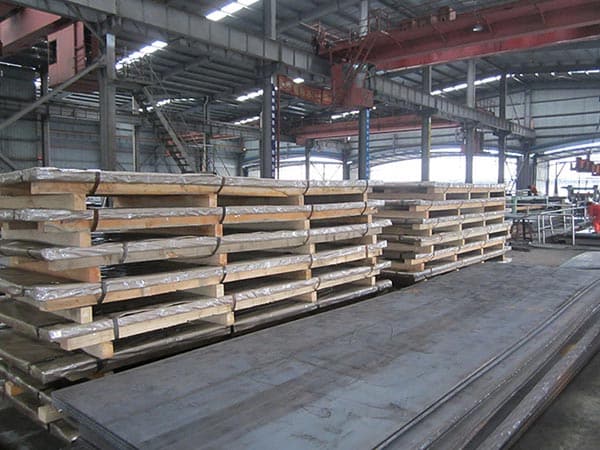
Understanding the Core Identity: S460MC vs. Traditional Alloy Steel
To grasp the difference between alloy steel and S460MC mechanical properties, we must first define their metallurgical origins. S460MC is a high-strength low-alloy (HSLA) steel specifically designed for cold forming, governed by the EN 10149-2 standard. Its name reflects its minimum yield strength of 460 MPa and its production via thermomechanical rolling (the 'MC' designation). On the other hand, alloy steel is a broad classification that includes any steel alloyed with elements like chromium, nickel, molybdenum, or vanadium in significant quantities to enhance specific characteristics such as hardness, corrosion resistance, or high-temperature stability.
While S460MC is technically a type of low-alloy steel, the industry usually distinguishes it from 'traditional' alloy steels (like 42CrMo4 or AISI 4140) because S460MC focuses on a balance of high strength and extreme ductility without the need for post-rolling heat treatment. Traditional alloy steels often require quenching and tempering (Q+T) to reach their peak mechanical potential, whereas S460MC achieves its properties through precisely controlled rolling temperatures and cooling rates.
Mechanical Property Comparison: Yield and Tensile Strength
The most immediate difference lies in the strength-to-weight ratio and how that strength is achieved. S460MC offers a guaranteed minimum yield strength of 460 MPa. Its tensile strength typically ranges between 520 and 670 MPa. This makes it significantly stronger than standard structural steels like S235 or S355, allowing engineers to reduce material thickness and overall vehicle or structure weight.
In contrast, the mechanical properties of general alloy steels are highly variable. A low-alloy steel in an annealed state might have lower yield strength than S460MC, but once heat-treated, it can reach yield strengths exceeding 1000 MPa. However, this high strength in traditional alloy steels often comes at the cost of weldability and formability, areas where S460MC is specifically engineered to excel.
| Property | S460MC (HSLA) | Typical Alloy Steel (e.g., 4140 Q+T) |
|---|---|---|
| Yield Strength (MPa) | ≥ 460 | 650 - 950+ |
| Tensile Strength (MPa) | 520 - 670 | 850 - 1100+ |
| Elongation (%) | ≥ 14 (t < 3mm) | 12 - 18 |
| Processing Method | Thermomechanical Rolling | Quenching & Tempering |
Ductility and Cold Forming Capabilities
One of the standout features of S460MC is its exceptional cold formability. Despite its high yield strength, S460MC maintains high elongation values, allowing it to be bent and folded into complex shapes without cracking. This is achieved through a very fine grain structure, a direct result of the thermomechanical rolling process. Manufacturers of truck frames, crane arms, and cold-pressed components rely on this property to create lightweight, durable parts.
Traditional alloy steels, particularly those with higher carbon or chromium content, tend to be much more brittle. If you attempt to cold-bend a high-strength alloy steel without specialized heating or annealing, the risk of stress fractures is high. S460MC is specifically micro-alloyed with elements like niobium (Nb), vanadium (V), and titanium (Ti) to refine the grain size, which provides the unique combination of strength and the ability to withstand tight bending radii.
Weldability and Thermal Stability
Weldability is a critical differentiator. S460MC is designed with a low carbon equivalent (CEV). Because it relies on grain refinement rather than high carbon or high alloy content for its strength, it can be welded using standard methods (MIG/MAG, TIG, SMAW) without the intensive pre-heating or post-weld heat treatment (PWHT) often required by high-performance alloy steels.
When welding traditional alloy steels, the heat-affected zone (HAZ) often becomes a point of failure due to the formation of brittle martensite. S460MC’s chemistry is optimized to minimize this risk, ensuring that the welded joint retains mechanical integrity comparable to the base metal. This makes S460MC the preferred choice for mass-production environments where welding speed and reliability are paramount.
Environmental Adaptability and Impact Toughness
Mechanical properties are not just about static strength; they also involve how a material performs under dynamic loads and extreme temperatures. S460MC exhibits excellent impact toughness, even at low temperatures. This is vital for machinery operating in cold climates or for structural components subject to sudden shocks. The fine-grained structure prevents crack propagation more effectively than the coarser grains found in some hot-rolled alloy steels.
While some specialized alloy steels (like those containing nickel) are specifically designed for cryogenic or high-corrosion environments, S460MC provides a cost-effective balance for general outdoor and industrial use. It does not possess the inherent corrosion resistance of stainless or high-chromium alloy steels, so it typically requires coating or painting, but its structural reliability in varying thermal conditions is superior to many standard carbon steels.
Industrial Application Expansion
The choice between S460MC and a broader alloy steel often comes down to the specific manufacturing process. S460MC is the workhorse of the automotive and heavy transport industries. It is used extensively in:
- Chassis and Frames: Providing high strength to handle heavy loads while remaining light enough to improve fuel efficiency.
- Lifting Equipment: Crane booms and telescopic arms benefit from the high yield strength and weldability.
- Cold Pressed Parts: Brackets, cross-members, and structural reinforcements.
Alloy steels, conversely, dominate in applications requiring extreme hardness or wear resistance, such as gears, crankshafts, and heavy-duty fasteners. If the application requires surface hardening (like nitriding or induction hardening), a traditional alloy steel is the better choice. If the goal is a structural component that needs to be formed, welded, and put into service with high load-bearing capacity, S460MC is the superior engineering solution.
Economic Efficiency and Material Selection
From a marketing and procurement perspective, S460MC offers significant cost advantages for large-scale structural projects. Because its properties are 'built-in' during the rolling process at the mill, the end-user saves on the time and energy costs associated with additional heat treatment. Furthermore, the ability to use thinner sections of S460MC to achieve the same strength as thicker S355 steel leads to direct savings in material weight and shipping costs.
Selecting between these materials requires a deep dive into the lifecycle of the product. If the component will undergo significant machining or requires a specific surface chemistry for wear resistance, the investment in a high-grade alloy steel is justified. However, for structural efficiency, weldability, and ease of fabrication, S460MC represents the pinnacle of modern HSLA steel technology.
Leave a message