
What are the requirements for welding thick hot rolled automotive steel grade S960MC
Comprehensive technical guide on welding S960MC high-strength steel, covering heat input control, filler metal selection, and mechanical property retention.
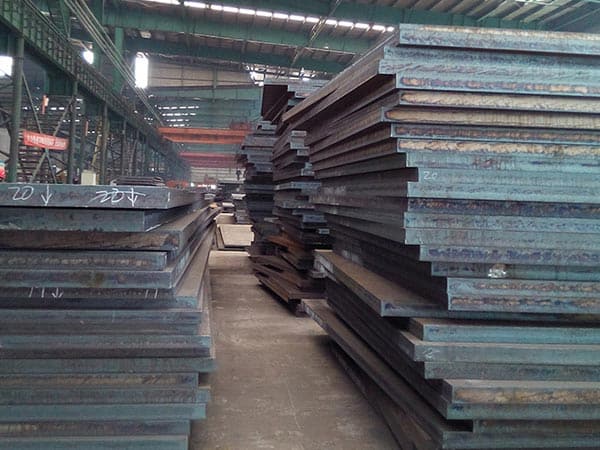
Understanding the Metallurgical Foundation of S960MC
S960MC is a high-strength, thermomechanically rolled (TMCP) structural steel specifically engineered for weight reduction in the automotive and heavy machinery sectors. The 'S' denotes structural steel, '960' represents the minimum yield strength of 960 MPa, and 'MC' indicates its production via thermomechanical rolling followed by accelerated cooling. Unlike traditional quenched and tempered steels, S960MC derives its strength from a fine-grained bainitic or martensitic-bainitic microstructure combined with micro-alloying elements like niobium, vanadium, and titanium.
When dealing with thick hot-rolled sections of S960MC, the primary challenge during welding is preserving this delicate microstructure. The high energy input from welding can lead to grain growth and the destruction of the dislocation density achieved during the TMCP process. Therefore, welding S960MC is not merely about joining two plates; it is about managing a thermal cycle that maintains the integrity of the Heat Affected Zone (HAZ).
Critical Heat Input and Cooling Time (t8/5) Management
The most vital requirement for welding thick S960MC is the strict control of heat input. Heat input directly influences the cooling rate, typically measured as the time it takes for the weld and HAZ to cool from 800°C to 500°C, known as the t8/5 value. For S960MC, this window is narrow. If the cooling rate is too slow (high t8/5), the HAZ undergoes significant softening, where the hardness drops below the base metal's specifications, leading to potential structural failure at the joint.
- Recommended Heat Input: Generally kept between 0.5 kJ/mm and 1.5 kJ/mm depending on the plate thickness and welding process.
- t8/5 Range: Ideally maintained between 5 and 15 seconds to ensure a balance between hardness and toughness.
- Interpass Temperature: Must be kept low, typically below 150°C, to prevent heat accumulation that would extend the cooling time.
Filler Metal Selection and Matching Strategies
Selecting the correct filler metal is a strategic decision. While one might instinctively reach for a matching filler metal (960 MPa yield), this is not always the optimal choice for thick sections. The higher the strength of the weld metal, the more susceptible it is to cold cracking and reduced ductility.
| Welding Strategy | Filler Metal Strength | Typical Application |
|---|---|---|
| Matching | ≥ 960 MPa | Highly stressed joints where full strength is mandatory. |
| Undermatching | 700 - 890 MPa | Joints with high restraint or where ductility and crack resistance are prioritized. |
Using an undermatching filler metal can significantly reduce the risk of hydrogen-induced cracking. In many automotive structural designs, the weld seam is positioned in lower-stress areas, allowing the use of slightly lower-strength filler materials which offer superior toughness and easier processing.
Preheating Requirements and Cold Cracking Prevention
Despite its high strength, S960MC has a relatively low carbon equivalent (CEV), which improves its weldability compared to traditional high-strength steels. However, as the thickness increases, the risk of cold cracking rises due to increased restraint and hydrogen diffusion. Hydrogen management is paramount.
Hydrogen Control: Only use low-hydrogen welding processes. If using Shielded Metal Arc Welding (SMAW), electrodes must be baked according to manufacturer instructions. For Gas Metal Arc Welding (GMAW/MAG), ensure the shielding gas is dry and the wire is free from lubricants or moisture.
Preheating: For thicknesses below 10mm, preheating is often unnecessary if the steel is dry and clean. For thicker sections (e.g., 15mm+), a modest preheat of 75°C to 100°C may be applied to remove moisture and slow the initial cooling rate just enough to allow hydrogen escape, without exceeding the interpass temperature limits that would cause HAZ softening.
Joint Preparation and Geometric Precision
The geometry of the weld joint significantly impacts the final mechanical properties. For thick S960MC plates, V-butt or X-butt preparations are common. However, the root gap and bevel angle must be precisely controlled to minimize the volume of weld metal required. Excess weld metal means excess heat, which increases the risk of distortion and softening.
- Bevel Angles: Narrow gap welding techniques are preferred to reduce the total heat input.
- Cleanliness: The weld area must be ground to a bright metal finish to remove mill scale, rust, and oils, which are primary sources of hydrogen and porosity.
- Tack Welding: Tack welds should be of sufficient length (at least 50mm) and performed with the same care and parameters as the final weld to avoid localized brittle spots.
Mechanical Property Retention in the HAZ
The "Soft Zone" is an inevitable characteristic of welding TMCP steels like S960MC. This zone occurs where the peak temperature during welding reaches the sub-critical or inter-critical range. To mitigate the impact of this softening:
1. Multi-pass Welding: Use multiple thin passes rather than a single heavy pass. This distributes the heat and allows each subsequent pass to provide a tempering effect on the previous one, refining the grain structure.
2. Stringer Beads: Avoid wide weaving. Stringer beads keep the heat input localized and the cooling rate fast.
3. Cooling Control: In extreme cases, copper backing bars can be used to accelerate heat dissipation, though this must be balanced against the risk of creating a brittle martensitic structure if the cooling is too rapid.
Advanced Welding Processes for S960MC
Beyond traditional MAG welding, advanced processes are increasingly utilized to meet the stringent requirements of S960MC. Laser-Arc Hybrid welding is particularly effective for thick automotive components. The laser provides deep penetration with very low heat input, while the arc manages the gap bridging and metallurgical chemistry via the filler wire. This combination results in a significantly narrower HAZ and minimal distortion.
Automated robotic welding is also highly recommended. Robots provide the consistency in travel speed and torch positioning that is nearly impossible to maintain manually over long seams. Consistency is the key to ensuring that the t8/5 cooling time remains uniform across the entire length of the structural component.
Environmental and Service Adaptability
S960MC is often used in equipment operating in harsh environments, such as mobile cranes in sub-zero temperatures or mining trucks in abrasive conditions. The welding requirements must therefore account for low-temperature impact toughness. Ensuring that the weld metal and the HAZ maintain a minimum Charpy V-notch energy (e.g., 27J at -40°C) is often a design requirement. This is achieved by selecting filler metals with high nickel content and maintaining the strict heat input controls mentioned previously.
Industry-Specific Implementation
In the crane and lifting industry, the boom sections made of S960MC require 100% Non-Destructive Testing (NDT) after welding. Ultrasonic testing (UT) and Magnetic Particle Inspection (MPI) are standard. It is often required to wait 24 to 48 hours after welding before performing NDT to ensure that any delayed hydrogen cracking is detected.
For automotive chassis and trailer frames, the focus is on fatigue life. The transition between the weld bead and the base metal must be smooth to avoid stress concentrations. Post-weld treatments like High-Frequency Mechanical Impact (HFMI) or toe grinding are sometimes employed to improve the fatigue strength of the welded joints in these high-strength applications.
Leave a message