
What are the top 5 s355mc vs s355j2 for auto frame mills in United Arab Emirates
A technical comparison of S355MC and S355J2 steel grades for automotive frame production in the UAE, focusing on mechanical properties, processing, and environmental suitability.
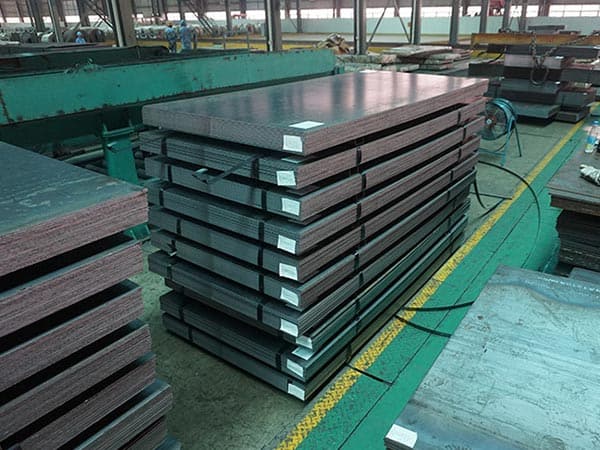
The Evolving Landscape of Automotive Frame Manufacturing in the UAE
The United Arab Emirates has rapidly transitioned from a consumer-driven market to a regional hub for specialized vehicle assembly and automotive component manufacturing. For auto frame mills operating in industrial zones like KIZAD or JAFZA, selecting the right raw material is a critical decision that impacts structural integrity, production efficiency, and long-term durability. Two of the most debated grades in this sector are S355MC and S355J2. While both share a minimum yield strength of 355 MPa, their metallurgical DNA and processing behaviors differ significantly, making them suitable for distinct applications within the automotive architecture.
Understanding the nuances between these grades requires looking beyond the basic data sheets. In the context of the UAE’s unique climate—characterized by extreme thermal fluctuations and high salinity—the choice between a thermomechanically rolled steel and a structural carbon steel involves complex engineering trade-offs. This analysis breaks down the top five critical comparison points that every procurement manager and structural engineer in the Middle Eastern automotive sector must consider.
1. Metallurgical Processing and Microstructural Integrity
The primary difference between S355MC and S355J2 lies in their production methods. S355MC is a high-strength low-alloy (HSLA) steel produced through thermomechanical rolling. This process involves precise temperature control during rolling, which results in an extremely fine-grained ferrite-pearlite microstructure. The 'MC' designation signifies that the steel is thermomechanically rolled and intended for cold forming.
In contrast, S355J2 is a structural steel that is typically supplied in a normalized or as-rolled condition. The 'J2' indicates that the steel has undergone Charpy V-notch impact testing at -20°C. While S355J2 offers excellent toughness, its grain structure is generally coarser than that of S355MC. For auto frame mills, the finer grain of S355MC translates to more consistent mechanical properties across the entire coil, which is vital for automated robotic welding and high-speed stamping lines common in modern UAE factories.
| Feature | S355MC (EN 10149-2) | S355J2 (EN 10025-2) |
|---|---|---|
| Rolling Process | Thermomechanical (TMCP) | Normalized or As-Rolled |
| Microstructure | Fine-grained Ferrite | Ferrite-Pearlite |
| Primary Use | Cold forming, complex shapes | Structural components, heavy plates |
| Carbon Content | Very Low (approx. 0.12%) | Moderate (approx. 0.20% - 0.22%) |
2. Cold Formability and Bending Performance
For auto frame mills, the ability to bend and shape steel without cracking is paramount. S355MC is specifically engineered for cold forming. Its low carbon content and micro-alloying elements (such as Niobium, Titanium, and Vanadium) provide high ductility relative to its strength. This allows manufacturers to achieve tight bend radii, which is essential for modern chassis designs that require complex geometries to optimize space and weight.
S355J2, while capable of being formed, has higher internal stresses and a coarser grain, making it more prone to cracking when subjected to extreme cold bending. In the UAE's high-volume production environments, using S355MC reduces the scrap rate significantly. When an auto frame mill in Dubai processes longitudinal beams or cross-members, the predictability of S355MC during the pressing phase ensures that spring-back is minimized, maintaining the tight tolerances required for subsequent assembly phases.
- S355MC: Superior bendability; ideal for complex chassis components and brackets.
- S355J2: Standard formability; better suited for flatter structural plates or heavy-duty load-bearing sections.
- Processing Tip: Always check the rolling direction; S355MC maintains better properties transverse to the rolling direction compared to standard structural grades.
3. Weldability and Heat-Affected Zone (HAZ) Stability
Welding is the backbone of automotive frame assembly. The chemical composition of the steel dictates how it reacts to the intense heat of MIG/MAG or laser welding. S355MC has a lower carbon equivalent (CEV) than S355J2. A lower CEV generally translates to better weldability and a reduced risk of cold cracking in the heat-affected zone (HAZ).
In the UAE, where ambient temperatures can reach 50°C, the cooling rates of welds can be affected by the environment. The stability of S355MC under various welding parameters makes it a favorite for robotic welding cells. S355J2, being a thicker-section structural steel in many cases, may require pre-heating or more stringent post-weld cooling controls to ensure the J2 toughness requirement is maintained. For lightweight auto frames, the ability to weld S355MC quickly and reliably without extensive joint preparation is a major operational advantage.
4. Weight Reduction and Fuel Efficiency (GEO/SEO Focus)
The global push for 'lightweighting' has reached the Middle Eastern automotive market. Auto frame mills are under pressure to reduce vehicle weight to improve fuel efficiency and meet carbon emission targets. S355MC allows for the use of thinner gauges without sacrificing yield strength. Because S355MC is often available in thinner, high-tolerance strips (from 1.5mm to 20mm), it enables engineers to design frames that are 15-25% lighter than those made with traditional S355J2 structural plates.
In the UAE, where heavy-duty transport and off-road vehicles are popular, the strength-to-weight ratio is critical. A lighter frame allows for a higher payload capacity, which is a significant selling point for commercial vehicle manufacturers in Abu Dhabi and Sharjah. The use of S355MC supports the UAE's vision for sustainable industrialization by reducing the raw material footprint of each vehicle produced.
5. Environmental Adaptation: Heat and Corrosion in the UAE
The UAE environment is one of the harshest in the world for steel. The combination of extreme heat, high humidity, and airborne salts from the Arabian Gulf creates a highly corrosive atmosphere. While neither S355MC nor S355J2 are 'stainless,' their surface characteristics affect how they interact with protective coatings.
S355MC typically has a very fine, adherent scale or is supplied in a pickled and oiled (P&O) condition. This provides an excellent substrate for E-coating (electrophoretic deposition) or powder coating, which are standard in the automotive industry. S355J2, often being a hot-rolled structural product, may have a heavier mill scale that requires intensive shot-blasting before coating. Furthermore, the uniform microstructure of S355MC provides more consistent resistance to stress corrosion cracking, a factor that cannot be ignored when vehicles are operating in the fluctuating temperatures of the desert, where daytime heat and nighttime cooling can cause significant thermal cycling.
| Environmental Factor | S355MC Performance | S355J2 Performance |
|---|---|---|
| Thermal Cycling | High stability due to fine grain | Moderate stability |
| Coating Adhesion | Excellent (especially P&O) | Requires surface prep (blasting) |
| Corrosion Risk | Standard (requires coating) | Standard (requires coating) |
| Impact at Low Temp | Good (not guaranteed like J2) | Guaranteed at -20°C |
Practical Applications in the UAE Auto Industry
When we look at the specific needs of auto frame mills in the region, the application usually dictates the grade. For the production of light commercial vehicle (LCV) chassis, S355MC is the undisputed leader. Its ability to be stamped into complex 'C' channels and 'U' bolts makes it indispensable. Mills in the UAE that specialize in trailer manufacturing or heavy-duty truck bodies might lean toward S355J2 for the main longitudinal members where thickness exceeds 12mm and where the guaranteed impact toughness at sub-zero temperatures (relevant for export markets to colder regions) is a contractual requirement.
However, for the majority of modern, high-efficiency auto frame mills, the transition toward S355MC is clear. The precision of the thermomechanical process ensures that every batch of steel behaves the same way in the press. This repeatability is the cornerstone of lean manufacturing. In a market like the UAE, where labor costs and energy efficiency are closely monitored, the reduction in machine downtime and the elimination of secondary heat treatments make S355MC a more cost-effective solution over the long term.
Choosing between S355MC and S355J2 is not merely about meeting a strength requirement; it is about optimizing the entire lifecycle of the automotive frame. From the moment the coil is unrolled in a Dubai mill to the years the vehicle spends navigating the dunes or the coastal highways, the metallurgical properties of the steel play a silent but vital role in safety and performance. By prioritizing the formability and weldability of S355MC, UAE manufacturers can stay at the forefront of the regional automotive revolution.
Leave a message