
Which s355mc steel equivalent material for auto frame is the best?
A professional comparison of S355MC steel equivalents for automotive frames, analyzing mechanical properties, weldability, and processing performance for Q355MC, ASTM A1011, and SPFH 540.
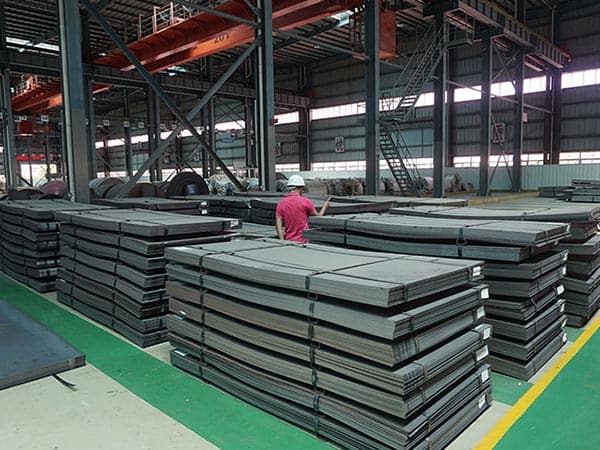
The Critical Role of S355MC in Modern Vehicle Architecture
The automotive industry is undergoing a radical transformation where lightweighting and structural integrity are no longer mutually exclusive. S355MC steel, governed by the EN 10149-2 standard, represents a pinnacle of high-yield strength steel designed specifically for cold forming. This thermomechanically rolled material provides the perfect balance of ductility and strength, making it the preferred choice for truck chassis, longitudinal beams, and complex cross members. When engineers ask which equivalent material is the best, the answer depends on a multifaceted analysis of chemical composition, mechanical consistency, and regional availability.
Defining S355MC: More Than Just Yield Strength
To understand its equivalents, one must first grasp the unique properties of S355MC. The "S" stands for structural steel, "355" denotes a minimum yield strength of 355 MPa, "M" indicates its thermomechanically rolled condition, and "C" signifies its suitability for cold forming. Unlike traditional structural steels like s355jr, the MC variant undergoes a controlled rolling process at specific temperatures to achieve a fine-grained microstructure. This refinement allows for tighter bending radii and superior weldability without the risk of cold cracking.
Global Equivalents: A Comparative Analysis
When sourcing materials across different continents, several standards emerge as direct or near-direct equivalents to S355MC. The most prominent include China's Q355MC (GB/T 3273 or GB/T 1591), the United States' ASTM A1011 HSLAS Grade 50, and Japan's JIS G3134 SPFH 540. Each of these materials aims to replicate the performance of S355MC, but subtle differences in their metallurgical DNA can influence the manufacturing outcome.
| Standard | Grade | Yield Strength (MPa) | Tensile Strength (MPa) | Elongation (min %) | Key Characteristic |
|---|---|---|---|---|---|
| EN 10149-2 | S355MC | ≥ 355 | 430 - 550 | 19 - 23 | High consistency, fine grain |
| GB/T 3273 | Q355MC | ≥ 355 | 430 - 550 | 21 | Cost-effective, high availability |
| ASTM A1011 | HSLAS Gr 50 | ≥ 345 | ≥ 450 | 20 - 22 | Broad industrial application |
| JIS G3134 | SPFH 540 | ≥ 355 | ≥ 540 | 21 | Excellent fatigue resistance |
Chemical Composition and Weldability Factors
The weldability of an auto frame material is paramount. S355MC maintains a low Carbon Equivalent (CEV), typically achieved by keeping carbon content below 0.12%. It utilizes micro-alloying elements such as Niobium (Nb), Vanadium (V), and Titanium (Ti) to increase strength without sacrificing toughness. Q355MC closely mirrors this approach, often proving to be the most seamless substitute in global supply chains. The use of these micro-alloys ensures that the heat-affected zone (HAZ) during welding does not become brittle, maintaining the frame's energy absorption capabilities during a collision.
Processing Performance: Bending and Forming
In the production of automotive longitudinal beams, the steel must endure severe cold bending. S355MC is celebrated for its ability to be bent 180 degrees with a very small inner radius (often 0.5 times the thickness). While ASTM A1011 Grade 50 is a robust alternative, its forming limits can be slightly more restrictive than the European S355MC or the Chinese Q355MC. For manufacturers utilizing automated stamping lines, the consistency of the yield-to-tensile ratio in S355MC ensures predictable springback, reducing the need for frequent tool adjustments.
Fatigue Resistance and Environmental Adaptation
Auto frames are subjected to cyclic loading throughout their lifespan. The fine-grained structure of S355MC provides excellent fatigue strength, which is vital for the durability of commercial vehicles. SPFH 540 from the Japanese JIS standard is often cited as a superior equivalent in terms of surface quality and fatigue life, frequently used by major Asian automakers for chassis components that require high hole-expansion ratios. Furthermore, the low sulfur content in these high-grade steels improves lamellar tearing resistance, a critical factor for vehicles operating in harsh, uneven terrains.
Economic and Logistics Considerations
The "best" equivalent is often dictated by the geographical location of the assembly plant. Within the Asian market, Q355MC is widely regarded as the best choice due to the massive production capacity of Chinese mills, which ensures competitive pricing and stable lead times. For North American operations, ASTM A1011 or A1018 variants are more readily available, avoiding the complexities of cross-continental shipping and import tariffs. However, from a purely technical standpoint, Q355MC remains the closest match to S355MC's mechanical profile.
Optimizing Material Selection for Chassis Engineering
Choosing between these equivalents requires a deep dive into the specific stress points of the frame design. If the design involves complex geometries with deep draws, the high elongation of S355MC or Q355MC is indispensable. If the priority is maximum tensile strength for safety cages, the SPFH 540 might offer a slight edge. Modern CAD/CAE simulations rely on the precise stress-strain curves of these materials; therefore, ensuring that the equivalent material's batch-to-batch variation is minimal is more important than the nominal grade name itself.
Future Trends: Moving Beyond 355 MPa
While S355MC remains the industry workhorse, there is a visible shift toward even higher strength grades like S420MC, S500MC, and S700MC. These materials allow for thinner gauges, further reducing vehicle weight and increasing fuel efficiency. When substituting S355MC, engineers must ensure that the replacement does not compromise the vehicle's crashworthiness or the longevity of the welding joints. The evolution of thermomechanical rolling technology continues to push the boundaries of what these low-alloy steels can achieve.
Strategic Implementation of Equivalent Materials
Successful integration of an equivalent material involves rigorous testing protocols. This includes Charpy V-notch impact testing at low temperatures (e.g., -20°C or -40°C) to ensure the frame won't suffer brittle fracture in cold climates. Practical experience shows that while Q355MC and S355MC are nearly identical on paper, verifying the actual mill test reports (MTRs) for trace elements like Phosphorus and Sulfur is essential for maintaining high-quality standards in automotive manufacturing. By focusing on these granular details, manufacturers can confidently select the best equivalent that meets both technical requirements and budgetary constraints.
Leave a message