
What are the top 7 S900MC steel for car axle heavy plates mills in Turkey
Explore the top 7 S900MC steel grades and mills dominating the Turkish car axle and heavy plate market. Detailed technical analysis of mechanical properties and processing.
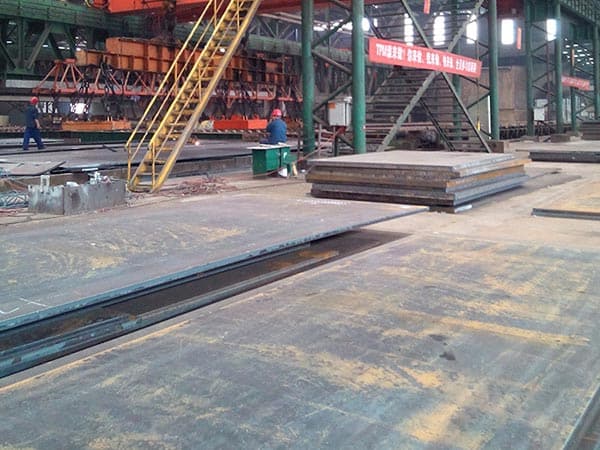
The Strategic Importance of S900MC in Turkey's Automotive Manufacturing
Turkey has established itself as a global powerhouse in commercial vehicle and automotive component manufacturing. The demand for S900MC high-strength low-alloy (HSLA) steel has surged as manufacturers seek to reduce vehicle weight while increasing payload capacity. S900MC, governed by the EN 10149-2 standard, is a thermomechanically rolled steel that offers a minimum yield strength of 900 MPa. This material is critical for heavy-duty car axles, chassis components, and crane structures where weight-to-strength ratios determine competitive advantage.
The Turkish market relies on a mix of high-end European imports and specialized domestic processing capabilities. For heavy plate mills and axle fabricators in regions like Kocaeli, Bursa, and Ankara, selecting the right mill source is not just about the chemistry of the steel; it is about the consistency of the microstructure and the precision of the thermomechanical rolling process. Below is a detailed analysis of the top 7 S900MC steel sources and brands currently dominating the Turkish industrial landscape.
1. SSAB Strenx 900MC: The Benchmark for Toughness
SSAB’s Strenx 900MC is arguably the most recognized brand in Turkey for high-performance structural steel. Its popularity in the Turkish axle industry stems from its exceptional thickness tolerances and flatness. For heavy plate applications, Strenx 900MC provides a level of consistency that reduces machine downtime during automated welding and laser cutting.
- Mechanical Excellence: It maintains high impact toughness even at temperatures as low as -40°C, making it suitable for vehicles exported to colder climates.
- Processing Advantage: The steel is known for its clean surface, which extends the life of cutting tools and improves the quality of the final paint coating on axles.
2. ThyssenKrupp PERFORM 900: Precision Engineering
ThyssenKrupp’s PERFORM series is a staple for Turkish heavy plate mills. PERFORM 900 is specifically designed for cold forming, which is a critical requirement for axle housing and complex bracketry. The low carbon equivalent (CEV) of this grade ensures that it can be welded without the need for extensive preheating, a major cost-saver for high-volume production lines.
The grain refinement in PERFORM 900 is achieved through precise additions of Niobium (Nb) and Titanium (Ti), resulting in a fine-grained ferrite-bainite microstructure that resists fatigue crack propagation under cyclic loading conditions typical of car axles.
3. Voestalpine alform 900 x-tra: Extreme Formability
Austrian producer Voestalpine supplies the alform 900 x-tra grade to the Turkish market, targeting manufacturers who require extreme bending radii. In axle manufacturing, tight bends are often necessary to clear suspension components. alform 900 x-tra offers a smaller minimum bending radius compared to standard S900MC, reducing the risk of micro-cracking on the outer tension zone of the bend.
| Property | Typical Value (alform 900) | Standard Requirement (EN 10149-2) |
|---|---|---|
| Yield Strength (MPa) | 940 - 980 | min. 900 |
| Tensile Strength (MPa) | 980 - 1150 | 930 - 1200 |
| Elongation A5 (%) | 10 - 12 | min. 8 |
| Bending Radius (90°) | 2.5 x t | 3.0 x t |
4. ArcelorMittal Amstrong 900: Global Scale and Reliability
ArcelorMittal’s Amstrong 900 is widely used in Turkey due to the company's strong logistical presence in the Mediterranean. Amstrong 900 is optimized for weight reduction in heavy-duty vehicles. By switching from S355 or S700MC to Amstrong 900, Turkish axle mills can reduce the plate thickness by up to 40% without compromising structural integrity.
This grade is particularly resilient to environmental stressors. Its chemical composition is tightly controlled to limit impurities like sulfur and phosphorus, which enhances the Z-direction ductility, preventing lamellar tearing in complex welded joints.
5. Tata Steel Ympress S900: Consistency in Coil and Plate
Tata Steel’s Ympress S900 is favored by Turkish manufacturers who operate high-speed decoiling and leveling lines. The Ympress range is known for its internal stress relief, meaning that when the heavy plate is laser cut, it remains flat and does not "bow" or "spring back" excessively. This is vital for the precision assembly of car axles where tolerances are measured in tenths of a millimeter.
- Surface Quality: The tight scale layer allows for faster pickling and better adhesion for anti-corrosion treatments.
- Weldability: Excellent compatibility with MAG welding processes using G Mn4Ni1.5CrMo or similar high-strength filler wires.
6. Salzgitter Flachstahl PAS 900: The Specialist Choice
Salzgitter’s PAS (Perforated-Alloyed-Steel) 900 is a specialized high-strength grade that has found a niche in the Turkish heavy-duty trailer and axle sector. The PAS 900 grade is characterized by its micro-cleanliness. In the context of heavy plate mills, this means fewer non-metallic inclusions, which significantly improves the fatigue life of the steel under the constant vibration and stress of road transport.
Turkish engineers often specify PAS 900 for components that undergo shot peening or other surface hardening treatments, as the base material provides a stable and uniform substrate.
7. Erdemir and Strategic Imports: The Local Integration
While Erdemir (Ereğli Demir ve Çelik Fabrikaları) is Turkey's primary steel producer, the production of S900MC in heavy plate form often involves strategic partnerships or specialized processing of imported slabs. Erdemir plays a crucial role in the supply chain ecosystem by providing the logistical and service center support required to customize S900MC plates for local axle manufacturers.
The integration of local service centers allows for "Just-in-Time" delivery to automotive hubs like Bursa. These centers provide precision slitting, leveling, and edge-trimming of S900MC, ensuring that the heavy plates are ready for immediate use in robotic welding cells.
Advanced Processing of S900MC for Car Axles
Working with 900 MPa steel requires a different approach than standard carbon steels. In Turkey, the most successful mills and fabricators focus on three core processing areas: thermal cutting, cold forming, and welding metallurgy.
Thermal Cutting: Laser cutting is preferred over plasma for S900MC to minimize the Heat Affected Zone (HAZ). If the HAZ is too wide, the localized strength of the steel can drop below the 900 MPa threshold, creating a weak point in the axle. Modern Turkish facilities use fiber lasers with nitrogen shielding to maintain the integrity of the cut edge.
Welding Parameters: Welding S900MC requires low heat input to prevent grain coarsening. The t8/5 cooling time (the time it takes for the weld to cool from 800°C to 500°C) must be strictly controlled. Turkish manufacturers typically aim for a t8/5 between 5 and 15 seconds to ensure the optimal balance between hardness and toughness in the weld seam.
Environmental Adaptability and Lifecycle Benefits
The transition to S900MC in the Turkish axle industry is also driven by environmental regulations and the push for green logistics. Lighter axles lead to lower fuel consumption and reduced CO2 emissions for the end-user. Furthermore, the high fatigue resistance of these top 7 S900MC brands means that the components have a longer service life, reducing the need for replacement parts and lowering the total cost of ownership.
The steel's resistance to atmospheric corrosion can be further enhanced through cataphoretic painting (KTL), a process widely available in Turkey's advanced automotive clusters. This combination of high-strength metallurgy and superior surface treatment makes S900MC the ideal choice for the demanding conditions of Eurasian transport routes.
Technical Comparison of Chemical Compositions
To understand why these seven sources lead the market, one must look at the micro-alloying strategy. The use of Vanadium (V) and Niobium (Nb) is balanced to ensure that the steel remains weldable while achieving its massive strength.
| Element (Max %) | C | Si | Mn | P | S | Al |
|---|---|---|---|---|---|---|
| S900MC Typical | 0.20 | 0.60 | 2.20 | 0.025 | 0.010 | 0.015 |
The low Sulfur (S) content is particularly important for heavy plate mills in Turkey, as it ensures that the steel is isotropic—meaning it has similar properties both longitudinal and transverse to the rolling direction. This is essential for axles, which experience complex multi-axial stresses during vehicle maneuvers.
Future Trends in the Turkish S900MC Market
As Turkey moves towards the production of electric heavy-duty vehicles (EVs), the role of S900MC will expand. Battery packs add significant weight to vehicles, making the use of ultra-high-strength steels like S900MC even more critical to offset this weight. The top 7 mills mentioned are already collaborating with Turkish R&D centers to optimize S900MC for the next generation of electric truck axles and chassis frames, focusing on enhanced crashworthiness and vibration damping properties.
The expertise of Turkish engineers in handling S900MC, combined with the reliable supply from these top-tier mills, ensures that Turkey remains a competitive hub for high-tech automotive components. Whether it is through the extreme toughness of Strenx or the precision of PERFORM, the Turkish axle industry has a robust menu of S900MC options to meet the challenges of modern transport engineering.
Leave a message