
What are the top five ZQS700L 1.2mm coil hot rolled plates mills in Myanmar
Explore the top suppliers and technical specifications of ZQS700L 1.2mm hot rolled coils in Myanmar. This guide covers mechanical properties, industrial applications, and sourcing insights.
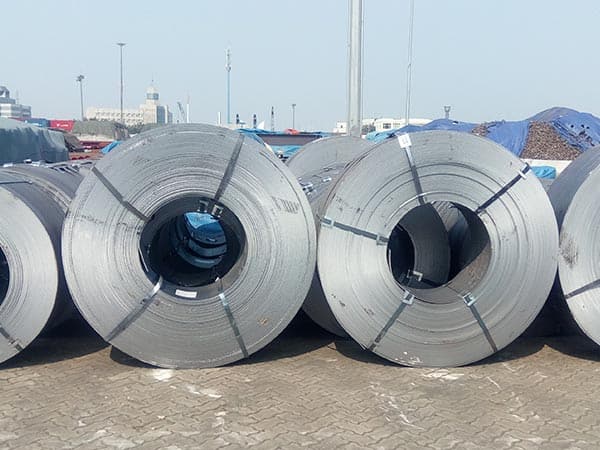
The Evolution of High-Strength Steel in the Myanmar Market
Myanmar's industrial landscape is undergoing a rapid transformation, shifting from traditional construction materials to advanced high-strength low-alloy (HSLA) steels. Among these, ZQS700L has emerged as a critical grade for industries requiring a balance between weight reduction and structural integrity. The demand for 1.2mm thickness in hot rolled coils is particularly unique, as achieving such a thin gauge while maintaining a yield strength of 700 MPa requires sophisticated rolling technology and precise temperature control.
Technical Profile of ZQS700L: Beyond the Yield Strength
ZQS700L is not merely defined by its 700 MPa yield strength; its value lies in its micro-alloyed composition. By incorporating trace amounts of Niobium (Nb), Vanadium (V), and Titanium (Ti), mills can refine the grain structure, which significantly enhances toughness and weldability. For a 1.2mm hot rolled plate, the surface quality and thickness tolerance are paramount. Unlike thicker plates, a 1.2mm coil must exhibit exceptional flatness to prevent warping during subsequent laser cutting or cold forming processes.
Mechanical Properties Overview:
| Property | Typical Value (ZQS700L) | Significance in 1.2mm Gauge |
|---|---|---|
| Yield Strength (ReH) | ≥ 700 MPa | Ensures high load-bearing capacity with minimal material. |
| Tensile Strength (Rm) | 750 - 950 MPa | Provides a safety margin against structural failure. |
| Elongation (A50mm) | ≥ 12% | Allows for complex bending without cracking. |
| Cold Bending (180°) | d=3a | Crucial for forming chassis and structural frames. |
The environmental adaptability of ZQS700L is another factor driving its adoption in Myanmar. Given the tropical climate with high humidity and monsoon seasons, the material's resistance to atmospheric corrosion—often enhanced by specific pickling and oiling (P&O) processes—is vital for long-term durability in outdoor applications.
Top Five Sourcing Channels and Mills for ZQS700L in Myanmar
While Myanmar is developing its domestic steel production, the high-precision rolling required for 1.2mm ZQS700L is currently dominated by major international mills that export heavily to the region. These mills are selected based on their technological capability to produce "extra-thin" hot rolled strips.
- Baosteel (Baoshan Iron & Steel): Known for its ultra-high-strength steel (UHSS) series, Baosteel provides the most consistent 1.2mm ZQS700L coils. Their Continuous Variable Crown (CVC) rolling technology ensures that the thickness deviation is kept within microns, which is essential for Myanmar’s automotive assembly plants.
- Ansteel (Angang Steel): Ansteel is a primary supplier for heavy machinery components in Southeast Asia. Their ZQS700L product line is favored for its excellent weldability, making it a top choice for Myanmar’s burgeoning logistics and trailer manufacturing sectors.
- Shougang Group: Shougang has mastered the thin-gauge hot rolling process. Their 1.2mm coils are frequently used in the production of high-strength racking systems and solar mounting structures, where weight-to-strength ratios are critical.
- HBIS Group (Hesteel): HBIS offers customized ZQS700L solutions with superior surface finishes. Their pickled and oiled coils are highly sought after by Myanmar’s precision stamping factories that require a clean surface for immediate painting or coating.
- TISCO (Taiyuan Iron and Steel): While often associated with stainless steel, TISCO’s high-strength carbon steel division produces ZQS700L with exceptional grain uniformity, which translates to predictable behavior during high-speed automated fabrication.
Processing Performance and Fabricator Requirements
Working with 1.2mm ZQS700L presents specific challenges to fabricators in Myanmar. Because the material is so thin yet incredibly strong, the "springback" effect during bending is much more pronounced than with standard Q235 or Q355 grades. Fabricators must utilize CNC-controlled press brakes with compensated pressure settings to achieve accurate angles.
Weldability: Despite its high strength, ZQS700L maintains a low carbon equivalent (Ceq). This means it can be welded using standard MAG or MIG processes without the need for extensive preheating, which is a significant advantage in the fast-paced construction environments of Yangon and Mandalay. However, using the correct filler wire (matching the 700MPa strength) is non-negotiable to ensure the joint does not become the weak point of the structure.
Diversified Industrial Applications in the Myanmar Economy
The application of ZQS700L 1.2mm coils extends far beyond traditional uses. In the Automotive and Transportation sector, it is used to manufacture lightweight cross-members and reinforcement brackets. By replacing 2.0mm standard steel with 1.2mm ZQS700L, manufacturers can reduce component weight by nearly 40% without sacrificing safety.
In the Renewable Energy sector, specifically solar farm installations across the central dry zone of Myanmar, ZQS700L provides the necessary stiffness to withstand wind loads while keeping the total weight of the mounting structures low. This reduces transportation costs to remote sites and simplifies the installation process.
Infrastructure and Urban Development: The use of high-strength thin-gauge steel is increasing in the production of high-end door frames, elevator guide rails, and specialized scaffolding systems. These applications benefit from the material's high yield point, which prevents permanent deformation under accidental impact or heavy loading.
Quality Control and Procurement Strategy
For procurement managers in Myanmar, verifying the authenticity of ZQS700L is essential. Mill Test Certificates (MTC) should be scrutinized for the actual chemical composition and mechanical test results rather than just the nominal values. Given the 1.2mm thickness, checking the "edge drop" and "crown" measurements is vital, as excessive variation can lead to tracking issues in roll-forming lines.
Strategic sourcing involves looking at the lead times and logistics routes. Most ZQS700L enters Myanmar through the Port of Yangon or via land routes from neighboring manufacturing hubs. Establishing relationships with Tier-1 distributors of the aforementioned mills ensures a steady supply of prime material, avoiding the risks associated with secondary market "over-rolled" stock which may lack the necessary fatigue resistance.
Choosing the right mill involves balancing the cost of the material against the processing savings. While ZQS700L carries a premium over standard grades, the reduction in total steel volume required for a project often results in a lower overall cost per unit, especially when factoring in the reduced logistics and assembly labor associated with lighter components.
Leave a message