
What are the requirements for welding thick S420MC chemical composition
A comprehensive guide on the welding requirements for thick S420MC steel, focusing on its chemical composition, micro-alloying effects, and technical parameters for structural integrity.
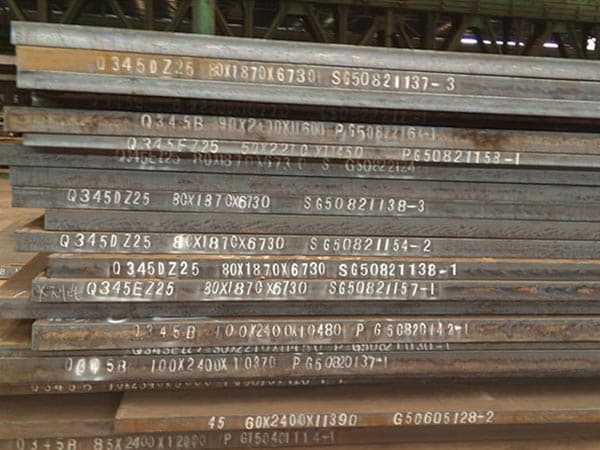
Understanding S420MC: Beyond the Standard HSLA Steel
S420MC is a high-strength low-alloy (HSLA) steel specifically designed for cold forming, governed by the EN 10149-2 standard. Unlike traditional structural steels, S420MC undergoes thermomechanically rolled processing, which allows it to achieve high yield strengths while maintaining exceptional ductility and weldability. When we discuss 'thick' S420MC—typically referring to the upper range of its production thickness, which can reach up to 20mm or more depending on the mill—the welding requirements become significantly more complex. The interplay between its refined grain structure and the thermal cycles of welding necessitates a deep understanding of its chemical makeup.
The Critical Role of Chemical Composition in S420MC Weldability
The weldability of S420MC is primarily dictated by its low carbon content and the strategic use of micro-alloying elements. To maintain structural integrity in thick sections, the chemical composition must be strictly controlled. High-quality S420MC usually features a carbon content well below 0.12%, which is the primary reason for its low susceptibility to cold cracking.
| Element | Maximum Percentage (%) | Impact on Welding |
|---|---|---|
| Carbon (C) | 0.12 | Lowers risk of martensite formation in the HAZ. |
| Manganese (Mn) | 1.60 | Enhances strength and hardenability without sacrificing weldability. |
| Silicon (Si) | 0.50 | Acts as a deoxidizer; improves fluidity of the weld pool. |
| Phosphorus (P) | 0.025 | Minimized to prevent hot shortness and brittleness. |
| Sulfur (S) | 0.015 | Kept low to reduce the risk of lamellar tearing in thick plates. |
| Niobium (Nb) | 0.09 | Refines grain size, critical for toughness in the HAZ. |
| Titanium (Ti) | 0.15 | Prevents grain growth at high temperatures during welding. |
Calculating Carbon Equivalent (CEV) for Thick Sections
For thick S420MC plates, the Carbon Equivalent (CEV) is a more accurate predictor of weldability than individual element percentages. A typical CEV for S420MC is around 0.30 to 0.38. When welding thick sections, the cooling rate is naturally slower, which can lead to grain coarsening in the Heat Affected Zone (HAZ). However, if the CEV is too high, the risk of hydrogen-induced cracking (HIC) increases. Engineers must ensure that the filler metals and preheating strategies are aligned with the specific CEV of the batch being utilized.
Metallurgical Challenges: Grain Growth and Softening
One of the primary requirements for welding thick S420MC is managing the thermal cycle to prevent HAZ softening. Because S420MC derives its strength from thermomechanical rolling and micro-alloying (Nb, V, Ti), excessive heat input can 'undo' the grain refinement achieved at the mill. In thick plates, the heat stays longer, potentially leading to a loss of yield strength in the area adjacent to the weld. To mitigate this, heat input should be kept within a range of 10 to 25 kJ/cm, depending on the specific joint geometry and thickness.
Preheating Requirements for Thick S420MC
While S420MC is often marketed as a steel that requires no preheating, this rule of thumb changes as thickness increases. For plates exceeding 12mm, or when welding in high-humidity environments, a modest preheat of 75°C to 100°C is often recommended. This serves two purposes: it slows the cooling rate just enough to allow hydrogen to escape (preventing cold cracks) and reduces the residual stress levels across the thick cross-section. Strict adherence to interpass temperature control is equally vital; allowing the plate to exceed 200°C between passes can significantly degrade the impact toughness of the base metal.
Filler Metal Selection and Shielding Gas Optimization
Choosing the right consumables is paramount. The filler metal should ideally be 'under-matched' or 'matched' in terms of yield strength. For S420MC, electrodes or wires meeting the AWS A5.28 ER80S-D2 or EN ISO 14341-A G 42 standards are common.
- Hydrogen Control: Use low-hydrogen consumables (H5 or H10) to eliminate the risk of delayed cracking in thick joints.
- Shielding Gas: An Argon-CO2 mix (80/20 or 90/10) is preferred for Gas Metal Arc Welding (GMAW) to ensure stable arc characteristics and deep penetration in thick bevels.
- Flux Cored Welding: For very thick sections, flux-cored arc welding (FCAW) can provide better side-wall fusion and higher deposition rates.
Edge Preparation and Joint Design
For thick S420MC, the joint design must facilitate full penetration while minimizing the volume of weld metal to reduce distortion. Single-V or Double-V butt joints with a 60-degree opening angle are standard. It is critical to remove the mill scale (the oxide layer) at least 20mm back from the weld prep edge. S420MC's chemistry can react with surface oxides to form inclusions, which are more problematic in thick-section multi-pass welds where they can be trapped between layers.
Mechanical Property Retention Post-Welding
The success of welding thick S420MC is measured by the retention of its mechanical properties. The standard requires a minimum yield strength of 420 MPa. In thick-plate welding, the tensile strength usually remains within specification, but the Charpy V-notch impact energy is the real test. S420MC is often required to meet 40J at -20°C. High heat input or improper cooling in thick sections can drop these values significantly. Testing the weld procedure (WPS) on actual thickness samples is non-negotiable for safety-critical applications.
Expanding Applications: Heavy Machinery and Structural Engineering
The demand for thick S420MC is growing in sectors that require a high strength-to-weight ratio. This includes the manufacturing of crane booms, chassis for heavy-duty trailers, and agricultural equipment. In these industries, the welding of thick sections must account for dynamic loading and fatigue. By strictly following the chemical composition-based welding requirements, manufacturers can produce lighter components that do not sacrifice the ruggedness required for earthmoving and heavy transport. The micro-alloyed nature of S420MC ensures that even in these demanding environments, the welded joints perform reliably under stress.
Advanced Welding Techniques: Laser-Hybrid and Robotic Systems
Modern fabrication shops are increasingly using laser-hybrid welding for thick S420MC. This process combines the deep penetration of a laser with the gap-bridging capability of GMAW. Because the heat-affected zone is much narrower in laser-hybrid welding, the softening effect mentioned earlier is greatly reduced. For thick plates, this means higher productivity and better mechanical integrity. Furthermore, robotic welding ensures consistent heat input, which is the most critical variable when dealing with the sensitive chemistry of HSLA steels like S420MC.
Leave a message