
What is the S460MC sheet chemistry price export to Russia
Explore the technical specifications of S460MC steel, including chemistry, mechanical properties, and the current market price for export to Russia.
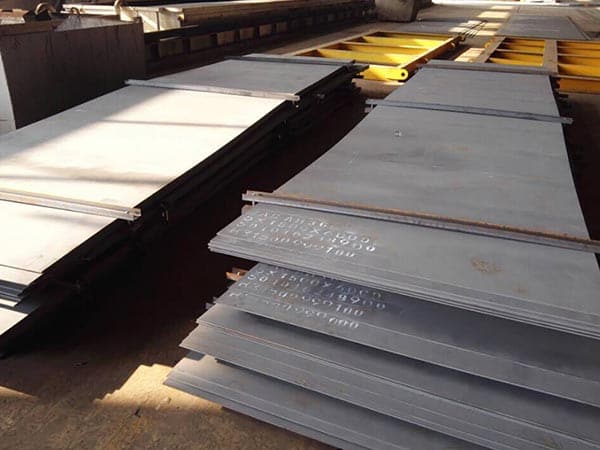
Understanding S460MC: The Backbone of High-Strength Engineering
S460MC is a high-yield strength, thermomechanically rolled steel designed specifically for cold forming. Governed by the EN 10149-2 standard, this material represents a pinnacle of metallurgical engineering, balancing extreme strength with the ductility required for complex shaping. Unlike traditional hot-rolled steels, S460MC undergoes a controlled rolling process where the temperature and deformation are precisely managed to refine the grain structure. This refinement is what gives the steel its superior mechanical properties without the need for excessive alloying elements. For Russian industrial buyers, S460MC serves as a high-performance alternative to traditional GOST standards like 09G2S, offering weight reduction and improved structural integrity in demanding environments.
Chemical Composition: The Science of Micro-Alloying
The performance of S460MC is rooted in its sophisticated chemical blueprint. By maintaining a low carbon equivalent, the steel ensures excellent weldability, while micro-alloying elements like Niobium (Nb), Vanadium (V), and Titanium (Ti) provide the necessary strength. These elements form fine carbides and nitrides that pin grain boundaries during the rolling process, preventing grain growth and enhancing toughness. This is particularly critical for the Russian market, where materials must often withstand sub-zero temperatures without becoming brittle.
| Element | Maximum Content (%) | Function in S460MC |
|---|---|---|
| Carbon (C) | 0.12 | Ensures strength while maintaining weldability. |
| Manganese (Mn) | 1.60 | Increases hardenability and tensile strength. |
| Silicon (Si) | 0.50 | Acts as a deoxidizer and improves yield strength. |
| Phosphorus (P) | 0.025 | Kept low to prevent cold shortness. |
| Sulfur (S) | 0.015 | Minimized to improve ductility and surface quality. |
| Aluminum (Al) | 0.015 (min) | Used for grain refinement and deoxidation. |
| Nb + V + Ti | 0.22 (total) | Micro-alloying for grain refinement and precipitation hardening. |
The strict control of Sulfur and Phosphorus is vital for ensuring that the steel does not develop internal cracks during heavy bending or stamping operations. For Russian manufacturers in the automotive and heavy machinery sectors, this chemical purity translates to lower scrap rates and higher production efficiency.
Mechanical Properties and Environmental Adaptability
The primary draw of S460MC is its minimum yield strength of 460 MPa. This allows engineers to use thinner sheets to achieve the same structural load-bearing capacity as thicker, lower-grade steels. In the context of Russian logistics and heavy transport, weight reduction is a direct driver of fuel efficiency and payload capacity. Beyond yield strength, the elongation properties of S460MC ensure that it can be bent to tight radii without fracturing.
- Yield Strength: Minimum 460 MPa (for thicknesses ≤ 16mm).
- Tensile Strength: 520 - 670 MPa.
- Elongation: Minimum 14% to 17% depending on thickness.
- Impact Toughness: While EN 10149-2 does not always mandate impact testing, many Russian buyers specify -20°C or -40°C Charpy V-notch tests to ensure performance in Siberian climates.
The thermomechanical rolling process (TMCP) creates a fine-grained ferrite-pearlite structure. This structure is inherently more resistant to cleavage fracture than the coarse-grained structures found in standard hot-rolled plates. This makes S460MC an ideal candidate for crane booms, chassis frames, and agricultural equipment operating in the Urals or the Russian Far East.
Processing Performance: Bending, Welding, and Cutting
One of the most significant advantages of S460MC is its ease of processing. Despite its high strength, it behaves predictably under various manufacturing conditions. Cold Forming: S460MC is specifically designed for cold bending. It can handle a minimum bending radius of 1.0 to 1.5 times the thickness, depending on the orientation of the bend relative to the rolling direction. Welding: Due to its low carbon content (C ≤ 0.12%), S460MC has an exceptionally low Carbon Equivalent (CEV). This means it can be welded using standard methods like MIG/MAG, TIG, and submerged arc welding without the need for extensive preheating, which is a major cost-saver in large-scale assembly plants in cities like Nizhny Novgorod or Tolyatti.
Exporting S460MC to Russia: Market Dynamics and Pricing
The price of S460MC sheet for export to Russia is influenced by a complex interplay of global raw material costs, logistics, and geopolitical factors. Currently, the Russian market relies heavily on imports from major steel-producing hubs in Asia, particularly China, due to shifts in global trade routes. Price Components: The base price for S460MC typically ranges from $680 to $820 per metric ton (FOB), depending on the thickness, width, and order volume. However, the final landed price in Russia (DAP or CIF) must account for several variables.
- Logistics: Rail transport via Manzhouli or Zabaikalsk remains a primary route, while sea freight to Vladivostok or Novorossiysk offers an alternative. Logistics can add $60 to $130 per ton.
- Currency Fluctuations: The RUB/CNY and RUB/USD exchange rates significantly impact the purchasing power of Russian buyers.
- Customs and Duties: Import duties and VAT (typically 20% in Russia) must be factored into the final cost analysis.
- Certification: Compliance with GOST R or other EAEU technical regulations is essential for seamless customs clearance.
Demand in Russia is currently driven by the localization of automotive parts and the expansion of the domestic agricultural machinery industry. As Russian manufacturers seek to replace European brands, the demand for high-strength grades like S460MC continues to rise, creating a competitive market for high-quality suppliers.
Applications Across Russian Industries
The versatility of S460MC makes it a staple in several key Russian sectors. In the Automotive Industry, it is used for truck chassis, cross members, and reinforcement parts where weight reduction is critical for meeting Euro 5 or Euro 6 equivalent emission standards. In Heavy Machinery, S460MC is the material of choice for telescopic crane arms and excavator buckets, where the high yield strength prevents permanent deformation under heavy loads. Construction and Infrastructure: The steel is used in the fabrication of cold-formed sections for warehouses and industrial buildings, providing a high strength-to-weight ratio that simplifies installation in remote regions with limited heavy lifting equipment. The ability of S460MC to maintain its properties after welding and forming ensures that these structures remain safe and durable throughout their service life, even under the extreme thermal cycles characteristic of the Russian climate.
Leave a message