
How to improve the quality of S960MC with EN10204-3.1 certificate
Explore advanced methods to enhance S960MC steel quality, focusing on metallurgical control, TMCP processing, and the significance of EN 10204-3.1 certification for high-load applications.
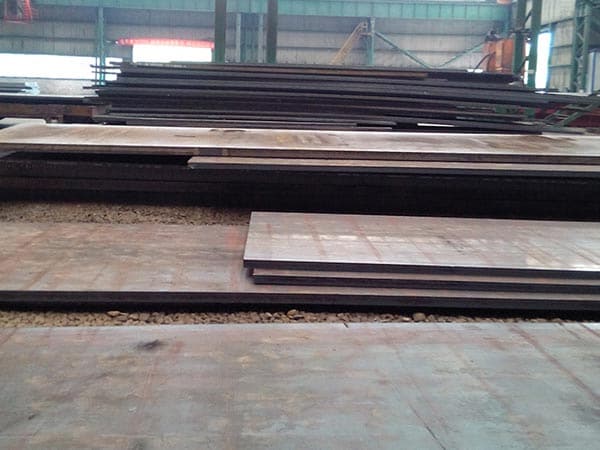
The Metallurgical Foundation of S960MC Excellence
S960MC is a high-strength structural steel produced through thermomechanical rolling, designed specifically for cold forming. Achieving a minimum yield strength of 960 MPa requires more than just standard manufacturing; it demands a sophisticated approach to micro-alloying and grain refinement. To improve the quality of S960MC, the initial focus must be on the chemical composition. By strictly controlling the carbon equivalent (CEV), manufacturers can enhance weldability while maintaining extreme strength. The addition of micro-alloying elements such as Niobium (Nb), Vanadium (V), and Titanium (Ti) is essential. These elements facilitate grain size reduction during the rolling process, which is the primary mechanism for increasing both strength and toughness simultaneously.
Quality improvement also hinges on the purity of the melt. Reducing impurities like Sulfur (S) and Phosphorus (P) to ultra-low levels—often below 0.005% for sulfur—minimizes the risk of lamellar tearing and improves the steel's isotropic properties. This level of purity ensures that the material performs consistently across different batches, a requirement that is strictly documented in the EN 10204-3.1 certificate.
Optimizing the Thermomechanical Controlled Processing (TMCP)
The core of S960MC quality lies in the TMCP route. Unlike traditional normalized steels, S960MC derives its properties from a combination of precise temperature control and specific deformation rates. Improving quality in this phase involves fine-tuning the cooling rates after the final rolling pass. Accelerated cooling (ACC) must be managed with high-precision spray systems to ensure a uniform microstructure of fine-grained bainite or tempered martensite across the entire width and length of the plate.
Uniformity is the hallmark of premium S960MC. Variations in temperature during rolling can lead to internal stresses and uneven hardness distribution. Implementing real-time monitoring systems and automated feedback loops during the rolling mill process allows for micro-adjustments that prevent these issues. This results in a product with superior flatness and tighter thickness tolerances, which are critical for automated laser cutting and robotic welding processes in downstream manufacturing.
The Strategic Importance of EN 10204-3.1 Certification
An EN 10204-3.1 certificate is not merely a piece of paper; it is a guarantee of traceability and verified mechanical integrity. This certificate is issued by the manufacturer's authorized inspection representative, who is independent of the manufacturing department. To improve the perceived and actual quality of S960MC, the 3.1 certificate must include comprehensive data beyond the basics. This includes heat analysis, results of tensile tests, and Charpy V-notch impact tests at specified temperatures (often -20°C or -40°C).
| Mechanical Property | Requirement (EN 10149-2) | Quality Enhancement Target |
|---|---|---|
| Yield Strength (MPa) | min. 960 | 980 - 1050 |
| Tensile Strength (MPa) | 980 - 1250 | 1000 - 1150 |
| Elongation A5 (%) | min. 7 | min. 10 |
| Impact Energy (J) | Optional / Specified | min. 27J at -40°C |
By providing detailed 3.1 certification that demonstrates values well above the minimum standards, suppliers offer engineers the confidence to reduce safety factors and optimize structural weight. This transparency in data allows for better simulation in Finite Element Analysis (FEA), leading to more efficient designs in heavy lifting and transport industries.
Enhancing Surface Quality and Dimensional Precision
For high-strength steels like S960MC, surface defects can act as stress concentrators, leading to premature fatigue failure. Quality improvement must include advanced descaling techniques during the rolling process. High-pressure water jets are used to remove primary and secondary scale, ensuring a smooth, clean surface finish. This is particularly important for S960MC, as it is frequently used in applications where aesthetics and coating adhesion are vital.
Furthermore, cold-forming performance is a key quality metric. S960MC is often bent into complex shapes for crane booms or trailer chassis. To improve this, the steel must exhibit low planar anisotropy. This means the mechanical properties should be nearly identical whether measured longitudinal or transverse to the rolling direction. Achieving this requires meticulous control over the rolling reduction ratios and the final microstructure, ensuring that the material can be bent to tight radii without cracking.
Advanced Welding Protocols for S960MC
The high strength of S960MC makes it sensitive to heat input during welding. To maintain the quality of the finished structure, it is imperative to follow strict welding guidelines. The Heat Affected Zone (HAZ) can experience softening if the heat input is too high, or embrittlement if the cooling rate is too fast. Improving the quality of the welded joint involves using low-hydrogen consumables and maintaining a precise interpass temperature.
- Low Heat Input: Keep heat input between 0.5 and 1.5 kJ/mm to minimize the width of the softened zone.
- Consumable Selection: Use matching or slightly under-matching strength welding wires to improve ductility in the joint.
- Preheating: Generally, S960MC does not require preheating due to its low carbon equivalent, but removing moisture from the joint is essential to prevent hydrogen-induced cracking.
- Post-Weld Inspection: Non-destructive testing (NDT) such as ultrasonic or magnetic particle inspection should be standard practice, verified against the 3.1 certificate's base metal properties.
Environmental Adaptability and Long-term Durability
S960MC is frequently deployed in harsh environments, from arctic oil fields to tropical mining sites. Improving its quality means ensuring high environmental adaptability. This is achieved through atmospheric corrosion resistance and low-temperature toughness. By optimizing the balance of Manganese and Silicon, the steel can develop a more stable oxide layer, providing a degree of protection against the elements even before painting.
Fatigue resistance is another critical factor. In dynamic applications like mobile cranes, the steel undergoes millions of load cycles. Improving quality here involves ensuring a homogenous grain structure that resists crack initiation. The EN 10204-3.1 certificate acts as the primary record that the material has undergone the necessary testing to prove it can withstand these cyclic stresses. When the steel is produced with consistent internal cleanliness and minimal non-metallic inclusions, its fatigue life is significantly extended, reducing maintenance costs and increasing the lifespan of the equipment.
Expanding Industry Applications through Quality Assurance
The push for lightweighting in the automotive and heavy machinery sectors has made S960MC an indispensable material. By improving the quality through the methods discussed, its application can be extended into even more demanding fields. For instance, in the renewable energy sector, S960MC can be used for high-stress components in wind turbine installation vessels. In the transport sector, using higher quality S960MC allows for thinner sections, increasing the payload capacity of trailers while reducing fuel consumption and carbon emissions.
The synergy between advanced manufacturing technology and rigorous EN 10204-3.1 certification ensures that S960MC remains at the forefront of structural engineering. Every step, from the electric arc furnace to the final leveling line, must be synchronized to produce a material that meets the highest expectations of safety and performance. When quality is treated as a continuous improvement process rather than a static target, S960MC becomes more than just steel—it becomes a high-performance solution for the challenges of modern infrastructure.
Leave a message