
What is the automotive steel coil grade S500MC price export to Iran
A comprehensive guide on S500MC automotive steel coil pricing for the Iranian market, covering technical specifications, mechanical properties, and export logistics.
The Strategic Importance of S500MC Steel in the Automotive Supply Chain
The automotive industry is undergoing a radical transformation, driven by the dual needs of fuel efficiency and enhanced safety. At the heart of this evolution lies the demand for High-Strength Low-Alloy (HSLA) steels. Among these, S500MC, a grade defined by the EN 10149-2 standard, has emerged as a critical material for manufacturers. When discussing the export of S500MC steel coils to Iran, one must look beyond simple price per ton. This material represents a sophisticated balance of metallurgy and engineering, designed to reduce vehicle weight without compromising structural integrity. For Iranian automotive giants like IKCO and SAIPA, sourcing high-quality S500MC is essential for producing chassis, cross members, and other structural components that meet modern crash-test standards.
Technical Specifications: The Foundation of S500MC Performance
S500MC is a thermomechanically rolled steel. This process involves controlled rolling at specific temperatures, which refines the grain structure of the steel. Unlike traditional hot-rolled steels, the properties of S500MC are achieved through this precise thermal-mechanical treatment rather than through heavy alloying or subsequent heat treatment. This results in a steel that is not only strong but also exceptionally ductile and weldable.
The chemical composition of S500MC is strictly controlled to ensure consistency. The low carbon content is a primary factor in its excellent weldability, while micro-alloying elements like Niobium (Nb), Vanadium (V), and Titanium (Ti) provide the necessary strength through precipitation hardening and grain refinement.
| Element | C (max %) | Mn (max %) | Si (max %) | P (max %) | S (max %) | Al (min %) | Nb (max %) | Ti (max %) |
|---|---|---|---|---|---|---|---|---|
| S500MC Value | 0.12 | 1.60 | 0.50 | 0.025 | 0.015 | 0.015 | 0.09 | 0.15 |
These chemical parameters ensure that the material remains stable during high-speed manufacturing processes. For Iranian importers, verifying the mill test certificate (MTC) against these standards is the first step in ensuring the quality of the imported coils.
Mechanical Properties and Structural Advantages
The "500" in S500MC denotes a minimum yield strength of 500 MPa. This high yield strength allows engineers to use thinner gauges of steel to achieve the same structural performance as thicker, conventional mild steels. This "down-gauging" is the primary driver for weight reduction in commercial vehicles, trailers, and heavy-duty trucks.
The mechanical performance is characterized by the following parameters:
- Yield Strength (ReH): Minimum 500 MPa.
- Tensile Strength (Rm): 550-700 MPa.
- Elongation (A80mm): Minimum 12% to 14% depending on thickness.
- Bending Radius: Excellent cold-forming properties allow for tight bending radii without cracking.
In the context of the Iranian market, where heavy-duty transport is vital for the national economy, S500MC is frequently used in the manufacturing of truck frames and crane arms. The ability of the steel to withstand high stress while maintaining a degree of flexibility is crucial for vehicles traversing the varied terrains of the Iranian plateau.
Advanced Processing Capabilities: Welding and Forming
One of the reasons S500MC is highly valued in the automotive sector is its ease of processing. High-strength steels can sometimes be difficult to weld or form, but S500MC is engineered to mitigate these issues. Its low carbon equivalent (CEV) ensures that it can be welded using standard methods such as MAG (Metal Active Gas) and laser welding without the need for pre-heating in most applications.
Furthermore, its cold-forming capabilities are superior. It can be deep-drawn and bent into complex shapes, which is essential for modern automotive design where aerodynamic curves and integrated structural components are common. When exporting to Iran, manufacturers often look for coils with consistent mechanical properties across the entire length and width of the coil to ensure that automated stamping lines run smoothly without downtime.
Environmental Adaptability and Durability
Iran's climate ranges from the humid Caspian coast to the arid central deserts and the freezing mountainous regions of the Zagros. S500MC demonstrates remarkable environmental adaptability. Its fine-grained structure provides good impact toughness even at lower temperatures, which is a critical safety factor for vehicles operating in cold climates. While S500MC is not a corrosion-resistant steel like stainless or galvanized steel, its surface quality allows for excellent adhesion of protective coatings and paints, which are necessary to prevent oxidation in humid environments.
Analyzing the S500MC Price Export to Iran
The price of S500MC steel coils for export to Iran is influenced by a complex interplay of global market trends, regional logistics, and economic factors. As of the current market cycle, prices are generally quoted on a CFR (Cost and Freight) Bandar Abbas or Anzali basis. Several factors dictate the final invoice price:
- Global Hot Rolled Coil (HRC) Base Price: Since S500MC is a specialized HRC product, its price tracks the global benchmark but carries a premium due to the micro-alloying elements and the thermomechanical rolling process.
- Thickness and Width Extras: Thinner gauges (e.g., 2.0mm to 3.0mm) usually command a higher price per ton than thicker plates (6.0mm and above) due to the increased rolling time and energy required.
- Shipping and Logistics: Freight rates from major export hubs like Tianjin or Shanghai to Bandar Abbas can fluctuate based on fuel costs and vessel availability. Containerized shipping vs. break-bulk also impacts the cost.
- Financial and Compliance Costs: Exporting to Iran involves specific financial routing and compliance checks. These administrative costs are often factored into the final price by exporters.
- Import Duties and Local Taxes: The Iranian customs regulations and potential seasonal tariffs on steel imports can affect the landed cost for the end-user.
Typically, the price for S500MC export to Iran might range from $650 to $800 per metric ton, depending on the specific order volume and technical requirements. Bulk orders for large automotive projects often benefit from economies of scale.
The Iranian Automotive Industry Demand
The demand for S500MC in Iran is primarily driven by the modernization of the commercial vehicle fleet. The government's initiatives to replace aging trucks with more fuel-efficient and safer models have created a steady requirement for HSLA steels. Local manufacturers are increasingly adopting European standards for trailer construction, where S500MC and even higher grades like S700MC are used to maximize payload capacity by reducing the tare weight of the vehicle.
The shift towards localized production of high-end automotive components in Iran has also spurred the need for reliable steel suppliers who can provide consistent quality. This consistency is vital for the automated robotic welding systems used in modern Iranian factories.
Logistical Pathways: From Global Mills to Iranian Ports
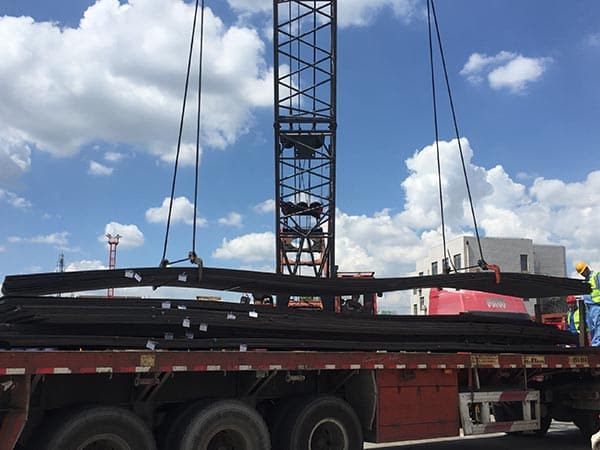
The logistics of exporting S500MC to Iran require meticulous planning. Most shipments arrive via Bandar Abbas, the country's primary maritime gateway. From there, the coils are transported by rail or truck to industrial hubs like Tehran, Karaj, and Tabriz. For suppliers in Russia or Kazakhstan, the International North-South Transport Corridor (INSTC) provides an alternative route via the Caspian Sea to ports like Anzali or Amirabad, offering shorter transit times for northern Iranian industrial zones.
Packaging is another critical aspect. Since S500MC is often used in precision manufacturing, the coils must be protected from sea salt and moisture during transit. High-quality export packaging, including VCI (Volatile Corrosion Inhibitor) paper and steel strapping, is a standard requirement for these shipments.
Future Outlook for S500MC in the Region
As global standards for vehicle safety and emissions continue to tighten, the role of S500MC will only grow. The Iranian market is expected to see a continued shift toward these high-performance materials. Future developments may include the introduction of even higher strength grades and improved surface treatments to enhance the longevity of the steel in harsh environments. Suppliers who can offer not just the material, but also technical support in terms of forming and welding parameters, will find a competitive edge in the Iranian automotive sector.
The synergy between advanced metallurgy and the growing industrial base in Iran creates a robust market for S500MC. By understanding the technical nuances and the logistical realities, both exporters and Iranian manufacturers can optimize their supply chains for better performance and cost-efficiency.
Leave a message