
What characteristics should the S355MC steel complete specifications have
A comprehensive guide to S355MC steel specifications, detailing its chemical composition, mechanical properties, processing capabilities, and industry-wide applications for engineering excellence.
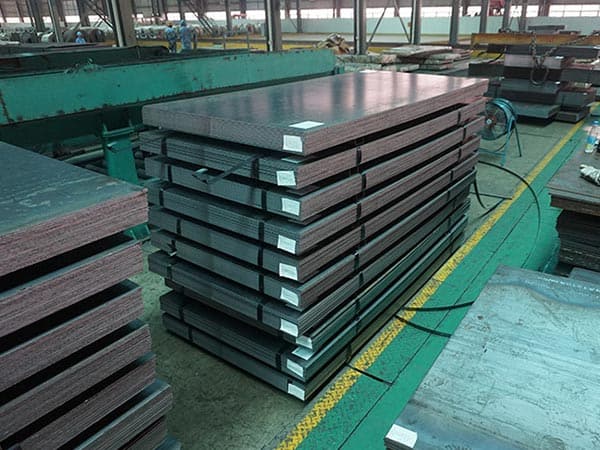
Defining the Essence of S355MC Steel Specifications
S355MC steel represents a cornerstone in the evolution of high-strength low-alloy (HSLA) structural steels. Governed by the European standard EN 10149-2, this thermomechanically rolled steel is specifically engineered for cold forming applications where weight reduction and structural integrity are paramount. To understand what characteristics a complete specification should have, one must look beyond simple yield strength and delve into the synergy of metallurgy, processing flexibility, and environmental resilience.
The Chemical Blueprint: Precision Micro-alloying
The performance of S355MC is rooted in its sophisticated chemical composition. Unlike traditional carbon steels, S355MC utilizes micro-alloying elements to achieve high strength without compromising weldability or ductility. A complete specification must detail the precise limits of these elements to ensure batch-to-batch consistency.
| Element | Maximum Content (%) | Role in S355MC Performance |
|---|---|---|
| Carbon (C) | 0.12 | Ensures excellent weldability and prevents brittleness. |
| Manganese (Mn) | 1.50 | Enhances strength and hardness through solid solution strengthening. |
| Silicon (Si) | 0.50 | Acts as a deoxidizer and improves yield strength. |
| Phosphorus (P) | 0.025 | Kept low to maintain toughness and prevent cold shortness. |
| Sulfur (S) | 0.020 | Minimized to improve lamellar tearing resistance and surface quality. |
| Niobium (Nb) / Titanium (Ti) | 0.09 / 0.15 | Refines grain size, which is critical for the 'MC' (thermomechanically rolled) designation. |
By maintaining a low carbon equivalent (CEV), S355MC offers a significant advantage in fabrication. This chemical balance allows the steel to remain stable during rapid cooling phases and provides a clean microstructure that is essential for high-precision laser cutting and automated welding processes.
Mechanical Prowess: Balancing Strength and Elasticity
The "355" in S355MC denotes its minimum yield strength of 355 MPa. However, a robust specification must also account for tensile strength, elongation, and impact energy. These factors determine how the material behaves under load and during the forming process.
- Yield Strength (Reh): Minimum 355 MPa for thicknesses ≤ 16mm. This ensures the material can withstand significant stress before permanent deformation occurs.
- Tensile Strength (Rm): Ranges between 430 and 550 MPa. This window provides the necessary safety margin for structural components.
- Elongation (A80/A5): Typically ≥ 19% (for thickness < 3mm) or ≥ 23% (for thickness ≥ 3mm). High elongation is the hallmark of S355MC, allowing for complex bends without cracking.
- Impact Toughness: While not always mandated for all MC grades, high-quality specifications often include Charpy V-notch testing at -20°C or -40°C to guarantee performance in cold climates.
Exceptional Cold Forming and Bending Characteristics
One of the most sought-after characteristics of S355MC is its superior cold forming capability. Manufacturers favor this grade because it allows for tighter bend radii compared to standard S355J2 grades. This is achieved through the thermomechanical rolling process, which produces a fine-grained ferritic-pearlitic structure.
When specifying S355MC, the minimum bending radius is a critical parameter. For a 90-degree bend, the recommended radius is often as low as 0.5 to 1.5 times the material thickness, depending on the orientation (transverse or longitudinal). This flexibility enables the design of complex, lightweight components in the automotive and machinery sectors, reducing the need for multiple welded joints and thus increasing overall structural reliability.
Weldability and Thermal Processing
S355MC is designed to be welded using all conventional methods, including MIG/MAG, TIG, and submerged arc welding. Because of its low carbon and alloy content, it does not require preheating in most thickness ranges, which significantly reduces production time and energy costs.
However, it is vital to note that S355MC should not be subjected to high-temperature heat treatments (such as normalizing) after forming. Since its strength is derived from the thermomechanical rolling process, reheating above 580°C can lead to grain growth and a substantial loss of mechanical properties. A complete specification should include guidelines on maintaining the integrity of the heat-affected zone (HAZ) during welding.
Surface Quality and Dimensional Tolerances
For industries like automotive manufacturing and precision engineering, the surface finish of the steel is as important as its strength. S355MC is typically supplied in a pickled and oiled condition or as-rolled (black).
- Pickled and Oiled: Removes mill scale, providing a clean surface for painting, galvanizing, or powder coating. This also protects the steel from flash rusting during transport.
- Dimensional Accuracy: Specifications should adhere to EN 10051, ensuring tight tolerances on thickness, width, and flatness. This is crucial for automated robotic handling and CNC machining.
- Internal Soundness: High-grade S355MC must be free from internal defects like inclusions or laminations, often verified through ultrasonic testing for critical applications.
Environmental Adaptability and Fatigue Life
In modern engineering, the longevity of a component is measured by its fatigue resistance. S355MC’s fine grain structure provides excellent resistance to cyclic loading. This makes it the preferred choice for truck chassis, crane arms, and agricultural equipment that undergo constant stress fluctuations.
Furthermore, while S355MC is not a dedicated "weathering steel," its clean chemistry allows for effective protective coatings. When properly galvanized or coated, it exhibits excellent corrosion resistance in diverse environments, from coastal regions to industrial zones. The material's ability to maintain its ductility at low temperatures also ensures that it does not become brittle in arctic or high-altitude conditions.
Diverse Industry Applications
The versatility of S355MC allows it to bridge the gap between standard structural steels and high-performance specialty alloys. Its adoption is widespread across several demanding sectors:
- Automotive Industry: Used for chassis frames, cross members, and suspension parts where weight reduction is necessary to improve fuel efficiency without sacrificing safety.
- Lifting and Excavation: Ideal for telescopic booms, crane structures, and excavator buckets due to its high strength-to-weight ratio.
- Storage and Logistics: Utilized in high-load racking systems and container frames that require both strength and the ability to be cold-formed into specific profiles.
- Renewable Energy: Components for solar tracking systems and wind turbine internal structures benefit from its reliability and ease of fabrication.
Optimizing Procurement: What to Look for in a Mill Certificate
When sourcing S355MC, the Mill Test Certificate (MTC) according to EN 10204 3.1 is the ultimate proof of quality. A comprehensive MTC for S355MC should include the actual heat analysis, the results of the tensile and bend tests, and a confirmation of the thermomechanical rolling process.
Buyers should also verify the flatness tolerances and surface class. For laser cutting applications, requesting "extra-flat" material can prevent issues with nozzle interference and ensure higher precision in the finished parts. By demanding these specific characteristics, engineers can fully leverage the potential of S355MC to create safer, lighter, and more efficient structures.
Leave a message