
What is the S315MC pickled steel coil flaw detection process
A professional guide to S315MC pickled steel coil flaw detection, covering mechanical properties, ultrasonic and eddy current testing, and industrial applications.
Understanding S315MC: The Foundation of High-Strength Cold-Forming Steel
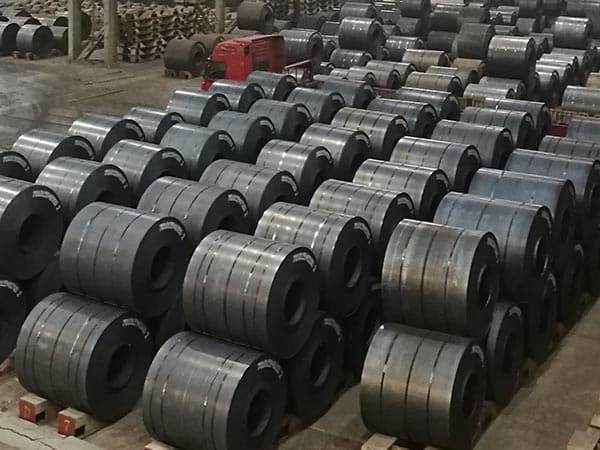
S315MC represents a specific grade of high-yield-strength steel designed for cold forming, governed by the EN 10149-2 standard. The "MC" designation indicates that the material has undergone thermomechanically rolled processing, which results in a fine-grained microstructure that balances strength with exceptional ductility. When this steel is "pickled," it has passed through an acid bath (typically hydrochloric acid) to remove surface oxides and scale, leaving a clean, smooth finish that is often oiled for corrosion protection. This surface quality is critical because it directly impacts the effectiveness of subsequent flaw detection processes.
The Critical Role of Pickling in Flaw Detection
Before any sophisticated non-destructive testing (NDT) can occur, the surface of the S315MC coil must be pristine. Pickling removes the dark, abrasive iron oxide layer formed during hot rolling. Without this step, surface defects like slivers, cracks, or pits could be hidden beneath the scale, and electronic sensors used in flaw detection would struggle with signal interference. A pickled surface provides the necessary "signal-to-noise" ratio required for high-precision automated inspection systems to distinguish between minor surface irregularities and structural integrity threats.
Primary Flaw Detection Methodologies for S315MC Coils
The flaw detection process for S315MC pickled steel coils is multi-layered, focusing on both surface-level imperfections and internal structural consistency. Manufacturers employ several advanced techniques to ensure the material meets the rigorous safety standards required by modern engineering.
1. Visual and Optical Inspection (VT)
Automated Optical Inspection (AOI) systems utilize high-speed cameras and stroboscopic lighting to scan the surface of the moving coil. These systems are programmed to detect visual anomalies such as scratches, roll marks, and pickling stains. Because S315MC is often used in visible structural components, surface uniformity is as much a functional requirement as it is an aesthetic one.
2. Ultrasonic Testing (UT) for Internal Integrity
Ultrasonic testing is the gold standard for detecting internal laminations or inclusions. High-frequency sound waves are transmitted into the steel; any internal void or foreign particle reflects the sound back to the transducer prematurely. For S315MC, which is frequently used in load-bearing automotive frames, ensuring there are no internal "sandwiched" layers (laminations) is vital for preventing catastrophic failure under fatigue.
3. Eddy Current Testing (ET)
Eddy current testing is particularly effective for pickled surfaces. It uses electromagnetic induction to detect surface-breaking cracks and sub-surface flaws. As the coil passes through a magnetic field, any discontinuity in the metal alters the flow of the eddy currents. This method is highly sensitive and can operate at high production speeds, making it ideal for continuous coil processing lines.
Technical Specifications and Chemical Composition
The reliability of S315MC is rooted in its precise chemical makeup. The use of micro-alloying elements like Niobium (Nb) and Titanium (Ti) allows the steel to achieve high strength without the brittleness associated with high carbon content.
| Element | C (max %) | Mn (max %) | Si (max %) | P (max %) | S (max %) | Al (min %) | Nb (max %) | Ti (max %) |
|---|---|---|---|---|---|---|---|---|
| S315MC Value | 0.12 | 1.30 | 0.50 | 0.025 | 0.020 | 0.015 | 0.09 | 0.15 |
Mechanical Performance and Structural Reliability
The flaw detection process validates that the material will perform according to its mechanical ratings. S315MC is prized for its high yield point, which allows engineers to reduce material thickness (lightweighting) without sacrificing safety.
| Property | Yield Strength (MPa) | Tensile Strength (MPa) | Elongation (min %) | Bending (180°) |
|---|---|---|---|---|
| Specification | ≥ 315 | 390 - 510 | ≥ 20 - 24 | 0.5a (thickness) |
Processing Performance: Weldability and Formability
Beyond its strength, S315MC is engineered for excellent processability. Its low carbon equivalent (CEV) ensures that it can be welded using standard MIG, TIG, or spot-welding techniques without the risk of cold cracking in the heat-affected zone (HAZ). During the flaw detection phase, any areas showing chemical segregation are flagged, as these could lead to inconsistent weld penetration.
In terms of formability, the fine-grained structure allows for tight bending radii. S315MC can be cold-formed into complex geometries, such as C-channels or U-profiles, which are common in truck chassis construction. Flaw detection ensures that the material is free of micro-cracks that could propagate during these intense bending operations.
Environmental Adaptability and Corrosion Resistance
While S315MC is not a stainless steel, its pickled and oiled surface provides a significant advantage in temporary storage and transport. The pickling process removes the porous scale that can trap moisture and accelerate rust. By applying a uniform layer of protective oil immediately after flaw detection, the steel remains protected against atmospheric corrosion. For long-term environmental adaptability, S315MC serves as an excellent substrate for subsequent coating processes like galvanizing or E-coating (electrophoretic deposition), as the clean surface ensures maximum adhesion.
Industrial Application Expansion
The rigorous flaw detection of S315MC pickled coils makes them indispensable in sectors where failure is not an option. Automotive manufacturers utilize this grade for cross-members, chassis frames, and suspension parts. In the heavy machinery sector, it is used for crane booms and agricultural equipment frames where a high strength-to-weight ratio is required.
Furthermore, the construction industry employs S315MC for cold-formed sections and purlins. The assurance provided by ultrasonic and eddy current testing allows structural engineers to calculate load capacities with higher confidence, knowing the material is free from hidden defects that could compromise the integrity of a building or bridge component.
Quality Assurance and Certification Standards
Every S315MC pickled coil that undergoes flaw detection is typically accompanied by a Mill Test Certificate (MTC) according to EN 10204 3.1. This document details the chemical analysis, mechanical test results, and the outcome of the NDT inspections. Maintaining traceability from the melt shop through the pickling line and flaw detection station is essential for modern supply chain management, particularly in the automotive and aerospace-adjacent industries where safety documentation is mandatory.
The synergy between advanced metallurgy and rigorous flaw detection ensures that S315MC remains a top choice for engineers seeking a reliable, high-performance steel that can withstand the demands of modern manufacturing and environmental stress.
Leave a message