
What characteristics should the BS700MC cold forming autobobile steel have
Discover the essential characteristics of BS700MC cold forming automobile steel, including its mechanical properties, chemical composition, and industrial applications.
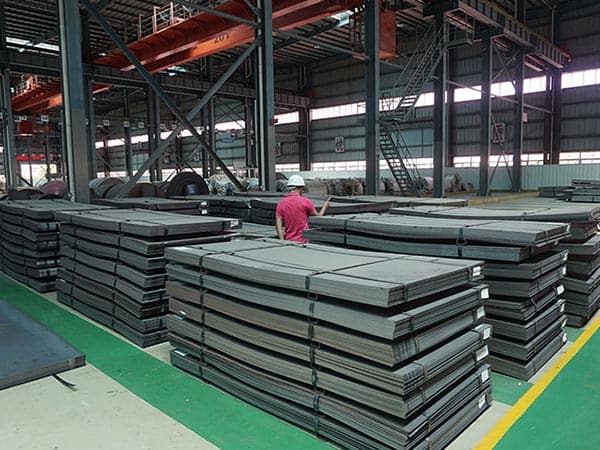
The Core Identity of BS700MC High-Strength Steel
BS700MC represents a pinnacle in the evolution of high-strength low-alloy (HSLA) steels specifically engineered for the automotive industry. As a thermomechanically rolled steel, it adheres to stringent standards such as EN 10149-2 (often designated as S700MC). The "700" signifies a minimum yield strength of 700 MPa, while the "MC" indicates its suitability for cold forming (M) and its controlled rolling process (C). This material is designed to meet the modern automotive industry's demand for lightweighting without compromising structural integrity or safety. The primary objective of using BS700MC is to reduce the weight of vehicle components, such as truck frames, chassis systems, and structural cross beams, thereby improving fuel efficiency and increasing payload capacity.
Chemical Composition and Micro-alloying Logic
The exceptional performance of BS700MC is rooted in its precise chemical architecture. Unlike traditional carbon steels that rely on high carbon content for strength, BS700MC utilizes a low-carbon design combined with micro-alloying elements. This approach ensures excellent weldability and toughness. The carbon content is typically kept below 0.12%, which minimizes the formation of brittle martensite during rapid cooling, such as in welding processes. Manganese (Mn) is used up to 2.10% to provide solid solution strengthening and improve hardenability.
The true secret to its strength lies in the addition of Niobium (Nb), Vanadium (V), and Titanium (Ti). These elements serve two critical functions: grain refinement and precipitation hardening. Niobium increases the recrystallization temperature of austenite, allowing for rolling at lower temperatures where the grains do not grow. This results in an ultra-fine grain structure in the final product. Titanium forms stable nitrides that prevent grain coarsening during the reheating phase of production. The synergistic effect of these micro-alloys creates a material that is both incredibly strong and remarkably ductile.
| Element | C (%) | Si (%) | Mn (%) | P (%) | S (%) | Al (%) | Nb (%) | Ti (%) |
|---|---|---|---|---|---|---|---|---|
| BS700MC Max | 0.12 | 0.50 | 2.10 | 0.025 | 0.015 | 0.015 | 0.09 | 0.22 |
Mechanical Performance and Yield Strength Dominance
The mechanical properties of BS700MC are tailored for heavy-duty applications. The yield strength, being at least 700 MPa, allows engineers to use thinner gauges of steel to carry the same loads as thicker, lower-grade materials. This is the cornerstone of the "lightweighting" strategy in commercial vehicle manufacturing. The tensile strength ranges between 750 and 950 MPa, providing a robust safety margin against structural failure.
Despite its high strength, BS700MC maintains a minimum elongation of 12% (for thicknesses less than 3mm). This ductility is vital for absorbing energy during a collision and for the actual manufacturing process where the steel must be bent or stamped into complex shapes. Furthermore, the material exhibits excellent impact toughness at low temperatures, often tested at -20°C or -40°C, ensuring that vehicles operating in arctic or high-altitude environments do not suffer from brittle fractures.
Cold Forming Characteristics and Ductility
One of the most critical characteristics of BS700MC is its cold forming capability. The "MC" designation specifically highlights that this steel is optimized for bending and folding at room temperature. For a steel with such high yield strength, the ability to achieve a tight bending radius without cracking is a significant technological achievement. Typically, BS700MC can achieve a minimum bending radius of 1.5 to 2.0 times the material thickness (t) for a 90-degree bend, depending on the rolling direction.
However, processing BS700MC requires an understanding of springback. Because the yield strength is high, the elastic recovery after forming is much greater than that of standard S355 or S235 steels. Tooling must be designed with compensation for this springback to ensure dimensional accuracy. Additionally, the hole expansion ratio (HER) is an important metric for BS700MC, as it indicates the material's resistance to edge cracking during flanging or punching operations. The low sulfur content and inclusion shape control (often through calcium treatment) are essential to maintaining high HER values.
Welding Performance and Structural Integrity
In the assembly of automotive chassis and frames, welding is the primary joining method. BS700MC is designed with a low carbon equivalent (Cev), making it highly compatible with modern welding techniques such as MAG (Metal Active Gas), laser welding, and electron beam welding. The low Cev reduces the risk of cold cracking in the heat-affected zone (HAZ), eliminating the need for preheating in most thickness ranges.
A specific characteristic to monitor during welding is the potential for softening in the HAZ. Because the strength of BS700MC is partially derived from the thermomechanical rolling process and fine-grain structure, excessive heat input during welding can lead to grain growth or over-tempering of the micro-alloyed precipitates. To maintain the structural integrity of the joint, it is recommended to use low heat input welding parameters and high-quality filler metals that match or exceed the strength of the base material. When executed correctly, the welded joints of BS700MC exhibit fatigue resistance comparable to the parent metal.
Industrial Applications and Lightweighting Trends
The adoption of BS700MC is widespread across the transportation and logistics equipment sectors. Its most prominent application is in the manufacturing of longitudinal beams for heavy-duty trucks and semi-trailers. By switching from S500MC to BS700MC, manufacturers can often reduce the weight of a chassis by 20% to 30%, which translates directly into lower fuel consumption and reduced carbon emissions over the vehicle's lifecycle.
- Truck Chassis: Longitudinal and cross members that require high stiffness and low weight.
- Crane Booms: Telescopic crane sections where high strength-to-weight ratios are critical for lifting capacity.
- Agricultural Machinery: Frames for plows and harvesters that must withstand high stress in rugged environments.
- Container Frames: Corner posts and structural rails for shipping containers.
- Cold-Formed Sections: C-channels and Z-purlins used in specialized construction and vehicle bodies.
Processing Recommendations and Tooling Considerations
Working with BS700MC requires specialized knowledge in the workshop. Due to its high strength, the cutting forces required for shearing or punching are significantly higher than those for conventional steels. Laser cutting is the preferred method for BS700MC, as it provides high precision and a narrow HAZ. When mechanical shearing is used, the blades must be made of high-wear-resistant tool steel and maintained with a sharp edge to prevent burrs and micro-cracks at the cut edge.
During the bending process, the orientation of the bend relative to the rolling direction should be considered. Bending transverse to the rolling direction is generally easier and allows for a tighter radius compared to bending parallel to the rolling direction. Lubrication is also vital during stamping to reduce friction and heat generation, which can affect the surface quality and tool life. The surface of BS700MC is typically supplied in a pickled and oiled condition, providing a clean substrate for subsequent coating or painting, ensuring long-term corrosion resistance in harsh road environments.
Environmental Adaptability and Fatigue Life
Automobile components are subjected to dynamic loading and environmental stress throughout their service life. BS700MC excels in fatigue performance due to its fine-grained microstructure, which hinders the initiation and propagation of fatigue cracks. This makes it ideal for parts subjected to constant vibration and cyclic loading, such as suspension components and engine mounts. Furthermore, the environmental adaptability of BS700MC is enhanced by its clean steel chemistry. Low levels of impurities like phosphorus and sulfur improve its resistance to stress corrosion cracking and hydrogen-induced cracking, which are critical factors for vehicles operating in coastal areas or regions where road salts are heavily used during winter.
Future Perspectives on High-Strength Steel
The evolution of BS700MC is ongoing, with research focusing on even higher strength levels, such as 900MPa and 1100MPa grades, while attempting to maintain the excellent cold forming characteristics of the 700MPa class. The integration of BS700MC into multi-material vehicle designs—combining steel with aluminum or composites—is also a growing trend. As the automotive industry moves toward electrification, the need for high-strength steel like BS700MC becomes even more critical to offset the weight of heavy battery packs. The strategic use of this material ensures that the next generation of vehicles will be lighter, safer, and more sustainable, reflecting the sophisticated balance of metallurgy and mechanical engineering inherent in BS700MC.
Leave a message