
What industries are medium and heavy S355MC, S500MC, S550MC steel for boom cutting used in
Discover the diverse industrial applications of S355MC, S500MC, and S550MC high-strength steels. Learn why these grades are essential for boom cutting, crane manufacturing, and heavy-duty transportation.
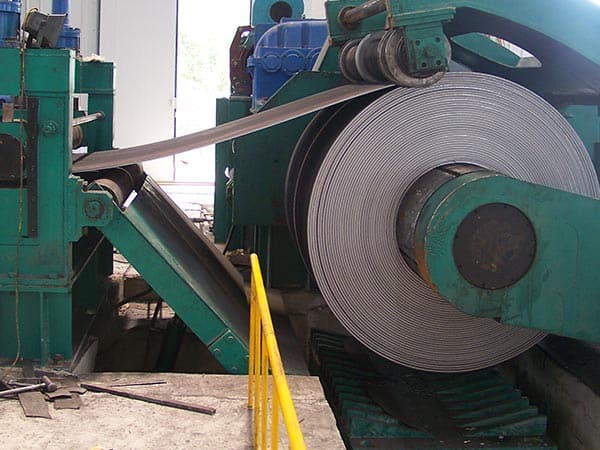
The Evolution of High-Strength Steels in Modern Engineering
In the contemporary industrial landscape, the demand for materials that combine high load-bearing capacity with reduced weight has led to the widespread adoption of thermomechanically rolled steels. Specifically, S355MC, S500MC, and S550MC have emerged as the backbone of structural engineering where 'boom cutting' and precision fabrication are paramount. These grades, defined under the EN 10149-2 standard, are not merely raw materials; they are engineered solutions designed to meet the rigorous demands of dynamic stress and environmental challenges.
Medium and heavy plates of these grades offer a unique balance of high yield strength and excellent cold-forming properties. Unlike traditional structural steels, the 'MC' designation signifies a thermomechanical rolling process that refines the grain structure, providing superior toughness and weldability without the need for excessive alloying elements. This makes them ideal for the complex geometries required in telescopic booms, chassis components, and heavy-duty lifting equipment.
Core Mechanical Properties and Material Science
The transition from S355MC to S550MC represents a significant leap in yield strength, which directly translates to the ability to design thinner, lighter components. S355MC offers a minimum yield strength of 355 MPa, providing a reliable baseline for general structural applications. S500MC and S550MC push these limits further, with 500 MPa and 550 MPa respectively, allowing engineers to reduce the dead weight of machinery by up to 30% compared to standard s355jr steels.
| Steel Grade | Min. Yield Strength (MPa) | Tensile Strength (MPa) | Min. Elongation (%) | Typical Application Focus |
|---|---|---|---|---|
| S355MC | 355 | 430 - 550 | 19 - 23 | General structural, automotive frames |
| S500MC | 500 | 550 - 700 | 12 - 14 | Crane booms, heavy trailers |
| S550MC | 550 | 600 - 760 | 12 | High-load telescopic arms, concrete pumps |
Beyond simple strength, the low carbon equivalent (CEV) of these steels ensures exceptional weldability. This is critical for boom cutting and assembly, where multiple plates are welded to form box sections. The fine-grain structure also contributes to high fatigue resistance, a vital attribute for machinery subjected to millions of loading cycles over its operational lifespan.
The Critical Role in Lifting and Construction Machinery
The primary consumer of S500MC and S550MC medium-heavy plates is the lifting equipment industry. Mobile cranes, crawler cranes, and tower cranes rely on these materials for their telescopic and lattice booms. The 'boom cutting' process involves precision laser or plasma cutting of these plates into specific shapes that are then bent and welded into hexagonal or decagonal profiles. The high strength-to-weight ratio allows for longer boom reaches and higher lifting capacities without increasing the overall footprint of the vehicle.
Concrete pump trucks also utilize S550MC for their multi-section placing booms. These booms must withstand not only the weight of the concrete and the structure itself but also the intense vibrations and pressure surges during pumping operations. The high elasticity and toughness of S550MC prevent brittle fractures, ensuring safety on high-rise construction sites.
Advancements in the Transportation and Logistics Sector
Heavy-duty transportation is another major industry where these steel grades are indispensable. The manufacturing of truck chassis, semi-trailers, and specialized heavy-haulage trailers requires materials that can endure massive payloads while remaining fuel-efficient. By utilizing S500MC and S550MC, manufacturers can design thinner longitudinal beams that maintain structural integrity under torsional stress.
- Truck Frames: S355MC is frequently used for cross-members and brackets, while S500MC is reserved for the main side rails.
- Container Chassis: Lightweight designs using S550MC allow for higher legal payloads, directly impacting the profitability of logistics operations.
- Automotive Safety Components: Parts that require high energy absorption during impacts benefit from the controlled deformation characteristics of these grades.
Agricultural and Mining Equipment Durability
The agricultural sector has seen a shift toward larger, more efficient machinery. Large-scale harvesters, seeders, and tillage equipment utilize S355MC and S500MC for their primary frames. These machines operate in harsh outdoor environments, dealing with soil abrasion and varying moisture levels. The consistent surface quality of thermomechanically rolled plates allows for superior paint adhesion and corrosion protection, extending the service life of the equipment.
In the mining industry, S550MC is often used in the construction of underground support systems and specialized transport vehicles. While not a traditional 'wear-resistant' steel like Hardox, its high yield strength makes it suitable for structural components that must resist permanent deformation under the extreme pressures found in deep-mining environments.
Processing Performance: Cutting, Bending, and Welding
For manufacturers involved in boom cutting, the 'MC' series steels offer significant processing advantages. Their chemical composition is optimized for modern fabrication techniques:
Precision Cutting: The internal stress levels in S500MC and S550MC are carefully controlled during the cooling process at the mill. This ensures that when plates are cut into long, narrow strips for boom sections, they remain flat and do not 'bow' or distort, which is a common issue with lower-quality structural steels.
Cold Forming: Despite their high strength, these steels are designed for cold bending. Small internal radii can be achieved without cracking, which is essential for forming the complex polygonal shapes of modern crane booms. This formability reduces the need for hot processing, saving energy and maintaining the integrity of the grain structure.
Welding Integrity: The low alloy content means that pre-heating is often unnecessary for medium thicknesses, reducing production time. The heat-affected zone (HAZ) retains much of the base metal's toughness, ensuring that the welded joints are not the 'weak link' in the boom assembly.
Environmental Adaptability and Sustainability
The move toward S500MC and S550MC is also driven by the global push for sustainability. By reducing the amount of steel required to achieve the same structural performance, the carbon footprint of the manufacturing process is significantly lowered. Lighter vehicles and machinery consume less fuel and produce fewer emissions during their decades of service.
Furthermore, these steels perform exceptionally well in low-temperature environments. Many construction and mining projects take place in arctic or sub-arctic regions where standard steels become brittle. S355MC through S550MC are often specified with guaranteed impact energy values at -20°C or even -40°C, providing a safety margin against catastrophic failure in extreme cold.
Future Trends in High-Strength Plate Utilization
As the industry moves toward even higher grades like S700MC and S960MC, the roles of S355MC, S500MC, and S550MC remain critical as the 'workhorse' materials. They provide the most cost-effective balance of performance and processability for the majority of medium and heavy-duty applications. The integration of these materials into the renewable energy sector—specifically for specialized transport frames for wind turbine blades and tower sections—is a growing trend that highlights their versatility.
The selection of the specific grade—whether S355MC for its versatility, S500MC for its balanced strength, or S550MC for maximum weight reduction—depends on a comprehensive analysis of the dynamic loads, weight targets, and fabrication capabilities of the manufacturer. Regardless of the choice, these thermomechanically rolled steels represent the pinnacle of current metallurgical technology for the heavy machinery and boom cutting industries.
Leave a message