
What are the production technical requirements of BS700MC high strength alloy steel
Explore the rigorous production technical requirements of BS700MC high-strength alloy steel, including chemical composition, TMCP processing, and mechanical performance.
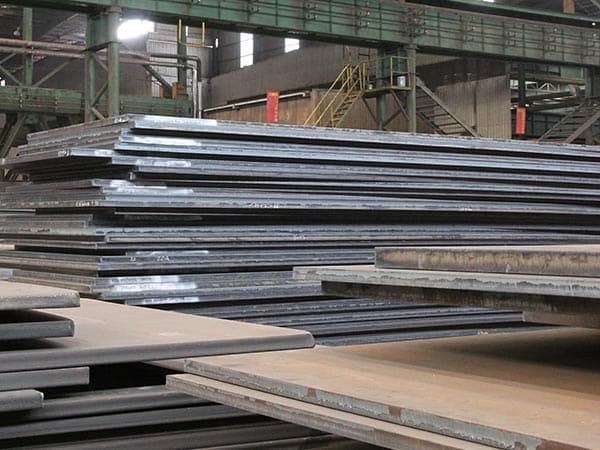
The Core Essence of BS700MC High-Strength Alloy Steel
BS700MC is a high-strength, low-alloy (HSLA) structural steel specifically designed for cold forming. It is characterized by a minimum yield strength of 700 MPa, making it a critical material for industries requiring weight reduction without compromising structural integrity. The "MC" suffix indicates that the steel is produced using thermomechanically controlled processing (TMCP), a sophisticated manufacturing route that optimizes grain structure. Achieving the balance between extreme strength, excellent toughness, and superior weldability requires stringent control over every phase of production, from the molten steel stage to the final cooling bed.
Strict Control of Chemical Composition
The production of BS700MC begins with a highly refined chemical recipe. Unlike traditional carbon steels, BS700MC relies on micro-alloying rather than high carbon content to achieve its strength. This approach ensures that the material remains weldable and ductile. The technical requirements demand ultra-low levels of impurities like sulfur and phosphorus to prevent brittle fracture and improve fatigue life.
Key alloying elements include:
- Carbon (C): Kept exceptionally low (usually below 0.12%) to ensure excellent weldability and prevent the formation of brittle martensite in the heat-affected zone.
- Manganese (Mn): Used as a primary solid solution strengthener, typically ranging between 1.50% and 2.10%.
- Niobium (Nb), Vanadium (V), and Titanium (Ti): These micro-alloying elements are the secret to BS700MC's performance. They form fine carbides and nitrides that pin grain boundaries during rolling, resulting in an ultra-fine grain size.
- Silicon (Si) and Aluminum (Al): Used for deoxidation and to further refine the microstructure.
| Element | C (max) | Mn (max) | Si (max) | P (max) | S (max) | Al (min) | Nb+Ti+V (max) |
|---|---|---|---|---|---|---|---|
| Typical Value (%) | 0.12 | 2.10 | 0.50 | 0.025 | 0.015 | 0.015 | 0.22 |
The TMCP Process: The Engine of Performance
The most critical technical requirement for BS700MC is the Thermomechanically Controlled Processing (TMCP). This is not a standard hot rolling process. It involves precise temperature control and specific deformation sequences to manipulate the austenite-to-ferrite transformation.
During the reheating phase, slabs are heated to a temperature that ensures all micro-alloying elements are in solid solution. The rolling phase is then divided into two stages: the recrystallization region and the non-recrystallization region. By applying heavy reduction at lower temperatures (just above the Ar3 temperature), the grains are flattened and elongated, creating a high density of nucleation sites for the subsequent ferrite transformation.
Following rolling, accelerated cooling (AcC) is employed. This prevents grain growth and promotes the formation of a fine-grained ferritic-bainitic microstructure. The cooling rate must be meticulously managed; too slow, and the strength drops; too fast, and the material becomes too hard and loses its cold-forming capabilities.
Mechanical Property Requirements and Testing
BS700MC must meet rigorous mechanical standards to ensure safety in heavy-duty applications. The primary focus is on the yield-to-tensile ratio and elongation. High yield strength allows for thinner sections, while sufficient elongation ensures the material can be bent and shaped without cracking.
- Yield Strength (ReH): Minimum 700 MPa. This is the threshold for permanent deformation.
- Tensile Strength (Rm): Typically ranges between 750 and 950 MPa.
- Elongation (A5): Usually requires a minimum of 10% to 12%, depending on the thickness, to facilitate complex cold-forming operations.
- Impact Toughness: Often tested at -20°C or -40°C. High-strength steels can be prone to cold brittleness, so ensuring high V-notch Charpy energy values is a vital production requirement.
Cold Forming and Fabrication Technicalities
One of the primary reasons engineers select BS700MC is its ability to be cold-formed into complex shapes like U-channels, C-sections, and specialized crane boom profiles. However, the high strength of the material introduces challenges such as springback and the need for higher forming pressures.
Production technical requirements specify a minimum bending radius to prevent surface cracking. For BS700MC, the recommended inner bend radius is typically 2.0 to 2.5 times the material thickness for a 90-degree bend. Manufacturers must also ensure the steel surface is free from deep scratches or scale, as these can act as stress concentrators during the bending process. The edge quality after shearing or laser cutting is equally important; hardened edges from thermal cutting should be ground down if tight-radius bending is required.
Welding Requirements and Heat Input Control
Despite its high strength, BS700MC offers excellent weldability due to its low carbon equivalent (CEV). However, the technical requirements for welding are strict to avoid softening the heat-affected zone (HAZ). Because the strength of BS700MC is derived from the TMCP grain refinement, excessive heat input can cause grain coarsening, leading to a localized drop in strength.
Low heat input welding techniques, such as MIG/MAG or laser welding, are preferred. Preheating is generally not required for thinner sections, which is a significant advantage in high-volume manufacturing. The choice of filler metal should match the strength of the base material while ensuring adequate toughness in the weld metal.
Industry Applications and Environmental Adaptability
The technical requirements of BS700MC make it the "gold standard" for the transport and construction machinery sectors. Its high strength-to-weight ratio allows for the design of lighter trailers, which translates to higher payloads and lower fuel consumption. In the crane industry, BS700MC is used for telescopic booms where weight at the tip must be minimized to maximize lifting capacity.
Furthermore, BS700MC demonstrates remarkable environmental adaptability. Its fine-grained structure provides better resistance to atmospheric corrosion compared to conventional hot-rolled steels. When treated with appropriate coatings, it can withstand harsh offshore or industrial environments for decades. The move toward "Green Steel" also means that BS700MC is increasingly produced using Electric Arc Furnace (EAF) routes with recycled scrap, meeting modern sustainability requirements without sacrificing technical performance.
Surface Quality and Dimensional Tolerances
For automated manufacturing processes, such as robotic welding and CNC bending, dimensional consistency is paramount. BS700MC is produced to tight tolerances according to standards like EN 10149. This includes strict limits on thickness variation, flatness, and camber. A flat sheet ensures that laser cutting heads maintain a consistent focal point, and uniform thickness ensures that bending angles remain consistent across a production run.
The surface finish is typically pickled and oiled (P&O) or shot-blasted to remove mill scale. This clean surface is essential for high-quality painting and coating adhesion, which is a standard requirement in the automotive and heavy machinery industries.
Leave a message